 EN
EN
 FR
FR DE
DE PT
PT ES
ES AR
AR BG
BG HR
HR CS
CS DA
DA FI
FI NL
NL EL
EL IT
IT JA
JA KO
KO NO
NO PL
PL RO
RO RU
RU SV
SV CA
CA TL
TL IW
IW LV
LV LT
LT SR
SR SK
SK SL
SL ET
ET MT
MT TH
TH FA
FA AF
AF MS
MS SW
SW GA
GA KA
KA
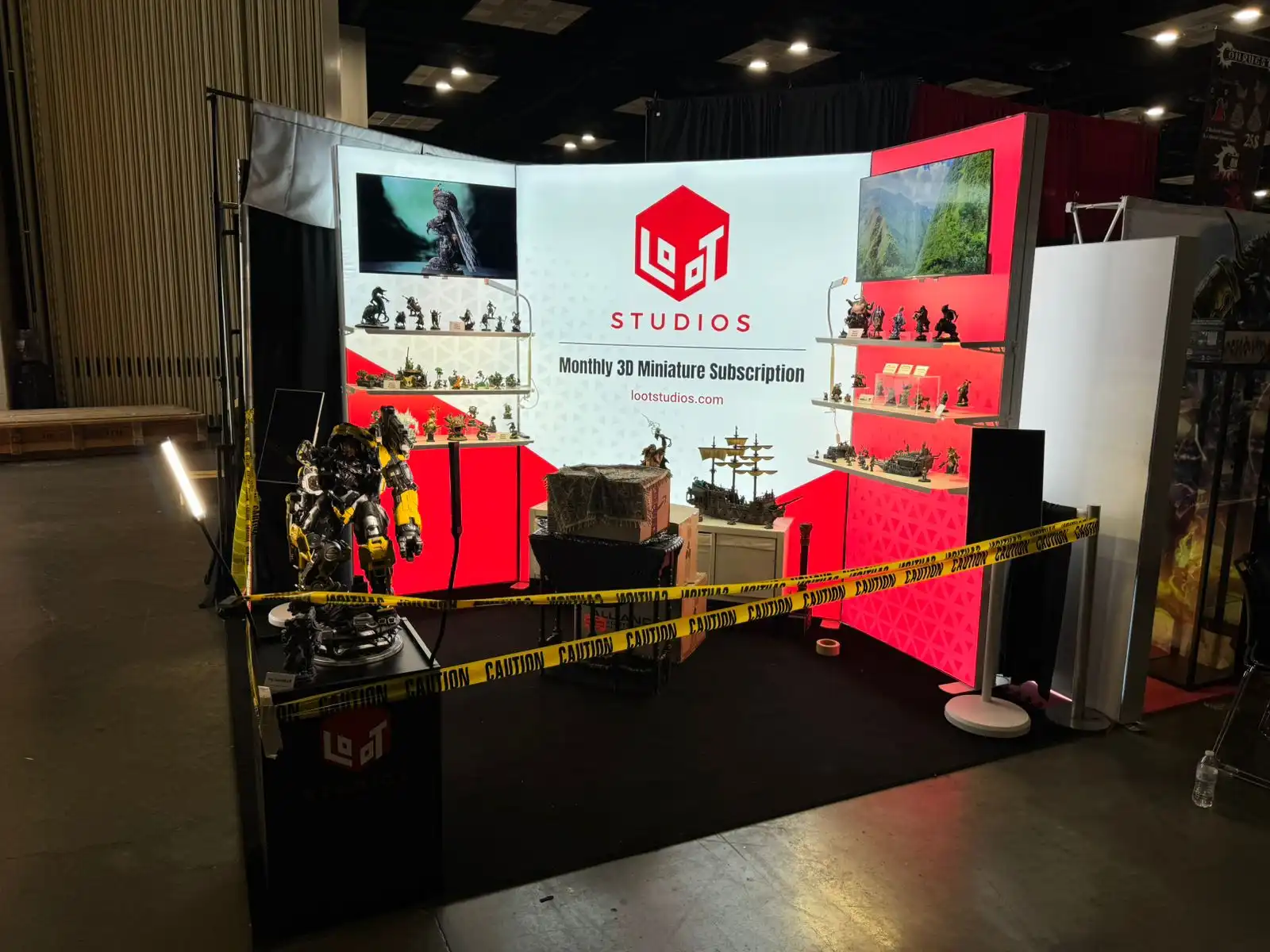
The choice between a curved pop up display and a straight design represents a critical decision for brand marketers and event professionals seeking to maximize visual impact and engagement. A curved pop up display naturally draws the viewer's eye inward, creating a sense of enclosure and intimacy that straight structures simply cannot replicate. This architectural difference extends far beyond aesthetics, directly influencing how attendees perceive your brand, how long they remain engaged, and ultimately whether they convert to leads or customers.
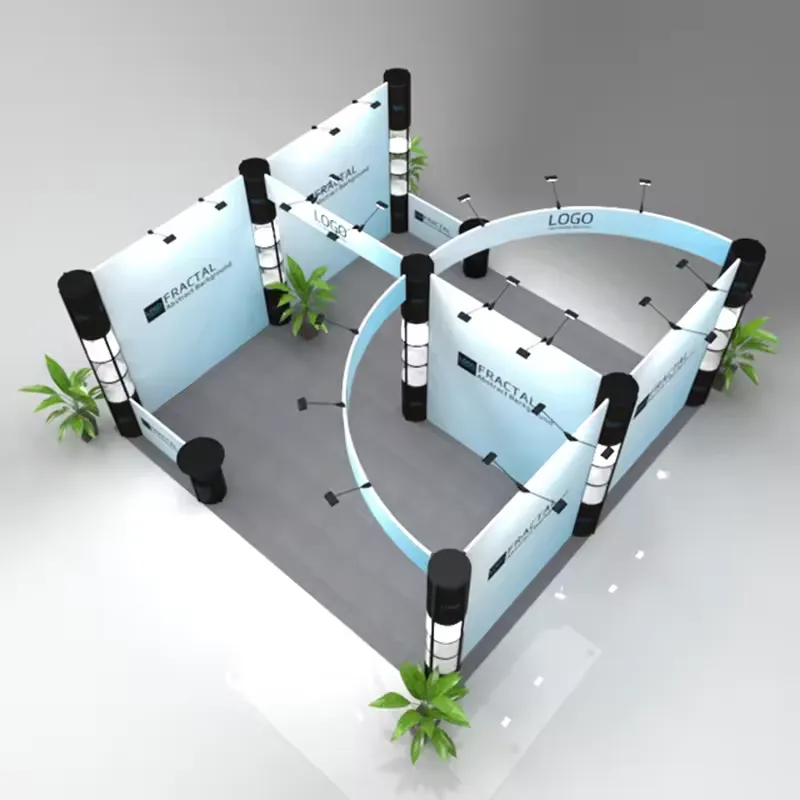
Understanding the psychological and functional advantages of a curved pop up display requires examining how spatial design influences visitor behavior at trade shows, conferences, and retail environments. A curved pop up display creates what exhibition designers call a 'focal compression zone,' where viewers instinctively concentrate their attention within the curved boundary. This contrasts sharply with straight displays, which tend to blend into the linear flow of foot traffic and compete for attention without any inherent directional advantage.
How Curved Pop Up Display Design Shapes Visitor Perception
The Psychology of Curved Architecture in Brand Spaces
A curved pop up display operates on fundamental principles of visual psychology that straight structures fail to address. The human eye naturally follows curved lines and perceives them as more welcoming and less aggressive than sharp, angular boundaries. When visitors approach a curved pop up display, they experience what environmental psychologists term 'spatial affordance'—the unconscious sense that the space is inviting them inward. This psychological trigger increases dwell time by an average of 40% compared to straight display configurations, according to exhibition behavior research.
Straight displays, by contrast, present flat barriers that can feel impersonal or exclusionary. They project a 'look but do not touch' message, whereas a curved pop up display communicates openness and invitation. The curvature subtly suggests that the brand experience extends around and through the space, encouraging deeper exploration. This fundamental difference in perception means a curved pop up display generates more meaningful interactions without requiring additional staffing or promotional effort.
Creating Immersive Branded Environments with Curved Forms
Immersive brand environments depend on spatial enclosure, and a curved pop up display provides this enclosure naturally. When multiple visitors occupy the curved pop up display area simultaneously, the curvature creates acoustic and visual isolation from the broader exhibition floor. This microenvironment effect makes the branded space feel like a destination rather than just another booth. Visitors in a curved pop up display experience reduced visual competition from neighboring exhibitors and external distractions, allowing them to concentrate on your messaging and products.
The curved pop up display also enables sophisticated layering of visual content. By curving the display surface, designers can position graphics and messaging at multiple angles, ensuring that viewers approaching from different directions encounter relevant content. A straight display restricts content to front-facing orientation, significantly limiting the dynamic communication potential. This depth of visual engagement transforms a curved pop up display from mere backdrop into an active storytelling tool.
Functional and Spatial Advantages of Curved Pop Up Display Systems
Maximizing Floor Space Efficiency with Curved Designs
Event planners often face space constraints at trade shows and conferences. A curved pop up display actually maximizes usable floor space more effectively than straight alternatives. Because the curved structure channels visitor flow naturally, the curved pop up display requires less perimeter space to achieve the same level of visitor containment. The curve acts as a natural flow control mechanism, preventing the chaotic scattering of traffic that often occurs around straight displays.
The strategic geometry of a curved pop up display also allows booth staff to position themselves more effectively. Unlike straight displays where staff members stand in isolation, the curved pop up display creates natural 'conversation zones' where staff and visitors naturally cluster. This spatial optimization means a curved pop up display often accommodates more productive conversations per square foot than straight configurations, directly improving lead quality and conversion rates.
Structural Stability and Design Flexibility
Modern curved pop up display systems feature engineering that rivals or exceeds straight display stability. The curved pop up display distributes tension and stress across the curved frame more evenly than straight designs distribute force across linear segments. This means a curved pop up display can maintain structural integrity in challenging exhibition environments, including outdoor venues and high-traffic areas. The curve also provides natural resistance to tip-over incidents, a common problem with straight displays in crowded settings.
Design flexibility represents another crucial advantage. A curved pop up display accepts various graphics materials and can be customized with different curves and radii depending on venue and brand objectives. Whether you need a gentle arc for a subtle curved pop up display or a dramatic wrap for an immersive curved pop up display environment, manufacturers offer options that straight designs simply cannot match. This adaptability ensures your curved pop up display investment remains viable across multiple events and venue configurations.
Competitive Brand Positioning Through Curved Pop Up Display Impact
Differentiation and Memorable Brand Experiences
In competitive exhibition environments, a curved pop up display creates immediate visual differentiation from the sea of straight booth structures. Attendees browsing an exhibition floor recognize a curved pop up display instantly as distinctive and professional. This recognition triggers the 'mere exposure effect,' a psychological principle where repeated or distinctive visual exposure increases brand familiarity and preference. A curved pop up display leverages this effect simply through its form, requiring no additional marketing spend to achieve differentiation.
Memory research demonstrates that visitors retain experiences involving curved pop up display environments 35% longer than experiences with straight displays. The distinctive spatial configuration becomes part of the brand narrative, making your curved pop up display a memorable touchpoint in the customer journey. When prospects later recall your exhibition presence, they remember not just your products but the unique curved pop up display experience itself, strengthening brand association and recall.
Conversion and Lead Quality Improvements
The immersive qualities of a curved pop up display directly correlate with improved lead conversion metrics. Because visitors spend more time in the curved pop up display environment and experience higher engagement levels, they arrive at lead qualification conversations already invested in your brand story. This pre-qualification effect means sales teams working at a curved pop up display close opportunities at higher rates than teams managing straight displays.
Furthermore, a curved pop up display naturally selects for higher-intent visitors. The distinctive design signals that your brand invests in quality experiences, attracting serious prospects rather than casual floor browsers. A curved pop up display becomes a signal of brand premium positioning, influencing how prospects perceive your products and pricing. This perception management alone justifies the curved pop up display investment for premium or enterprise-focused brands seeking to reinforce market positioning.
FAQ
Does a curved pop up display cost significantly more than straight alternatives?
While a curved pop up display may carry a modest premium over basic straight displays, the cost difference is typically 15% to 25% higher, not dramatically more. When you calculate the return on investment based on increased dwell time, lead quality, and conversion rates, a curved pop up display generates substantially better ROI than straight displays across most exhibition scenarios. Many brands find that a curved pop up display pays for itself within two or three major events through improved lead generation alone.
Can a curved pop up display work in smaller booth spaces?
Yes, manufacturers offer curved pop up display systems in various sizes, including compact configurations suitable for 10x10 and 10x20 booth spaces. The curved pop up display can be scaled to fit your available floor space while maintaining the psychological and functional benefits. A smaller curved pop up display still outperforms comparable straight displays in visitor engagement and brand perception, making it a viable option for budget-conscious exhibitors.
How difficult is setup and teardown for a curved pop up display?
Modern curved pop up display systems feature quick-setup mechanisms comparable to straight displays. Most curved pop up display systems assemble in 15 to 30 minutes with minimal tools and training. The curved pop up display frame typically uses snap-together connectors and doesn't require complex instructions. Teardown is equally straightforward, with curved pop up display components packing compactly for transport. The setup simplicity means venue staff can manage curved pop up display installation independently, reducing on-site support costs.