 EN
EN
 FR
FR DE
DE PT
PT ES
ES AR
AR RU
RU

2026 Automotive Trade Show Booth Design Guide
2026 Automotive Trade Show Booth Design Guide: Master Exhibition Lightbox Layout & Setup
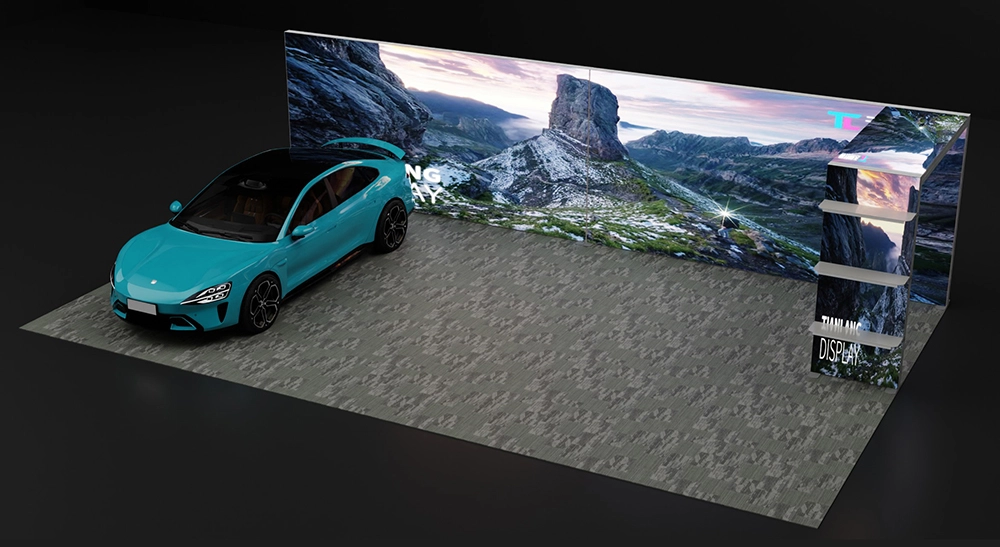
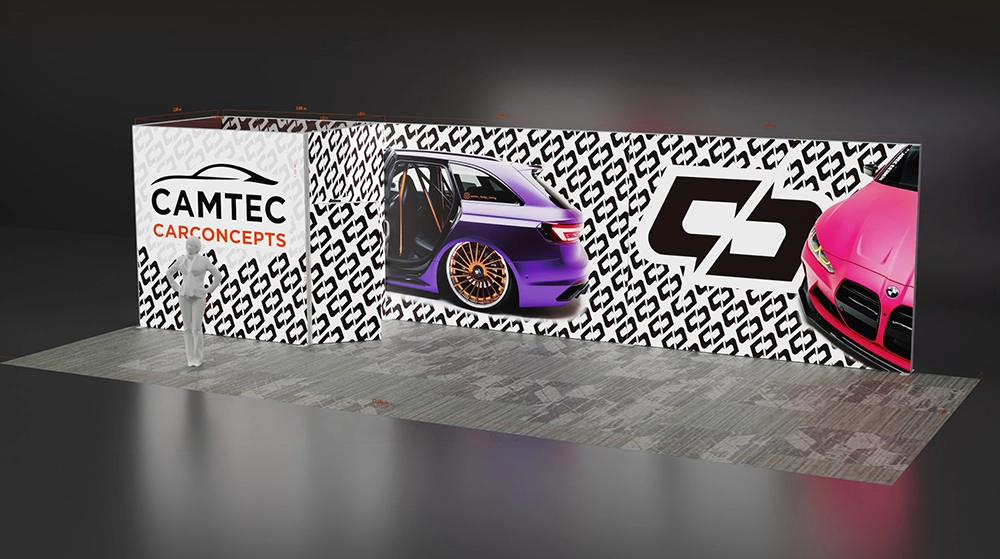
Walking into a massive automotive exhibition hall can feel overwhelming. Row after row of displays, flashing screens, and competing brands all fight for a split second of attendee attention. In 2026, the difference between a forgettable booth and a show-stopping brand destination often comes down to one element: strategic lightbox layout and setup.
For first-time exhibitors or automotive suppliers new to professional lighting, SEG (Silicone Edge Graphic) lightboxes offer a game-changing advantage. They deliver uniform, edge-to-edge backlighting, create premium visual appeal, and are surprisingly simple to install. This guide walks you through everything you need to know – from choosing the right products to safety compliance in US venues – while keeping your brand ready for Detroit, Chicago, Las Vegas, and beyond.
1. Why Lightbox Layout & Setup Defines Your Automotive Booth Success
The shift from static display to immersive environment
Automotive trade shows in 2026 are no longer about parking a few cars on carpet. Attendees expect experiences: guided stories, seamless digital-physical blends, and visual drama. Lightboxes act as the architectural canvas that highlights your vehicles, separates functional zones, and reinforces brand identity. A thoughtful exhibition lightbox layout can double your booth’s perceived professionalism and draw traffic from across the hall.
Key benefits for first-time lightbox users
- Instant brand elevation – Uniform backlight makes any graphic look premium and expensive.
- Fast setup – Tool-free assembly reduces installation stress and labor costs.
- Reusable design – Modular frames can be used show after show, saving thousands.
- Safety certified – Low-voltage LED + fire-retardant fabrics meet strict US fire codes.
👉 Explore complete exhibition booth collection by TianLang →
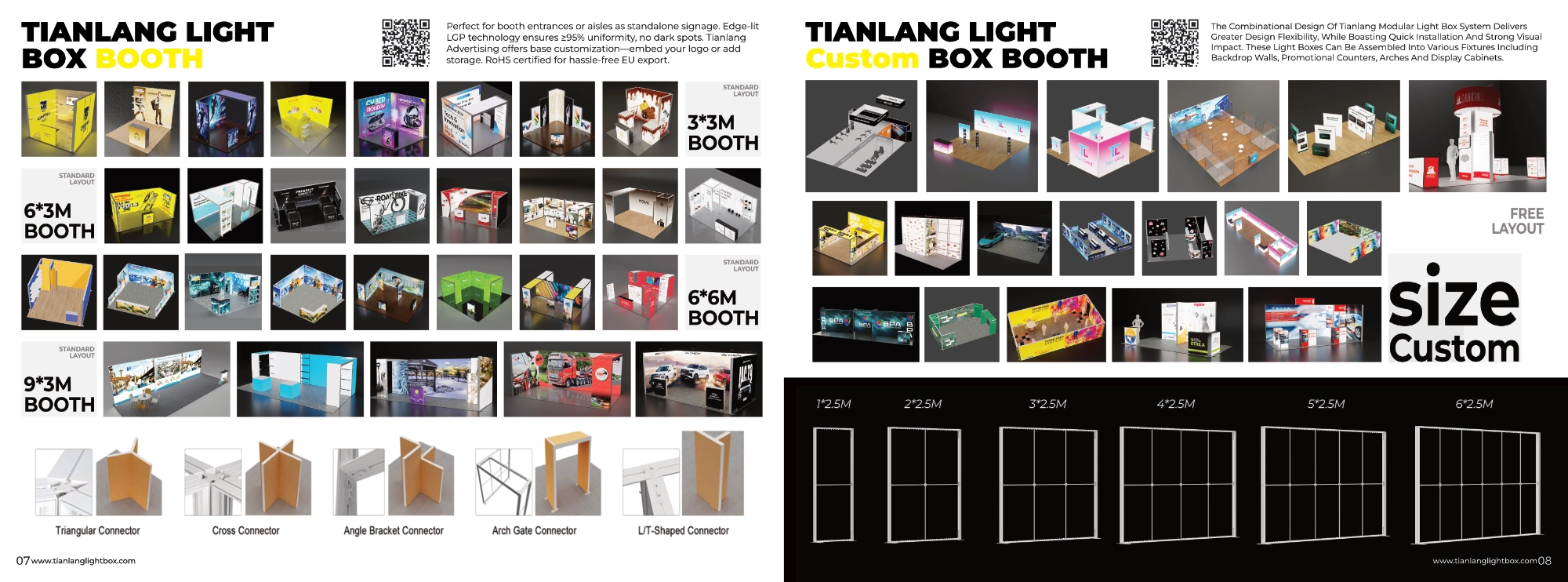
2. Know Your Lightbox Types – A Beginner’s Product Guide
Choosing the right hardware is the first step. Below are the most relevant types for automotive trade shows.
2.1 SEG Lightbox (Silicone Edge Graphic)
The industry gold standard. An aluminum frame houses LED strips, and fabric graphics with a flexible silicone edge snap into the frame’s channel. The result: a completely flat, wrinkle-free luminous surface with no visible hardware. Available in thicknesses like 85mm and 120mm – the 120mm version provides deeper light diffusion for large backwalls. View TianLang SEG lightbox range →
2.2 Modular Lightbox Systems
Perfect for exhibitors who appear at 3+ shows per year. Components (frames, corners, LED drivers) can be reassembled into different shapes – straight, L-shaped, or U-shaped – with new fabric graphics for each event. This approach reduces long-term costs by 40-60% and aligns with sustainability goals.
2.3 Portable & Folding Lightboxes
Ideal for small booths (10’×10’ or 10’×20’) or as add-on towers. Folding SEG lightboxes collapse into wheeled cases, cutting shipping volume by 90%. They also feature tool-free pop-up assembly. Check out the TianLang 120mm easy-carry SEG lightbox →
2.4 Ceiling-Hung Lightboxes
Suspended from exhibit hall ceilings, these act as brand beacons visible from far aisles. They are excellent for directing traffic flow and adding a “floating” element to your booth.
2.5 Custom Lightboxes
For flagship displays, custom curved or multi-layer lightboxes can be fabricated to match any brand architecture – curved walls, circular logos, or irregular shapes.
3. Practical Lightbox Layout & Setup Strategies for Auto Trade Shows
Even the best hardware fails without smart placement. Follow these rules to maximize visibility and traffic flow.
3.1 Target high-traffic zones first
Place your largest, brightest lightbox on the main aisle-facing side. If your booth has a corner or peninsula location, use double-sided lightboxes so that visitors from two directions see your message. For island booths, create a 360° illumination ring using tall modular towers.
3.2 Manage sightlines
Never block a lightbox with tables, product displays, or storage. Keep the area in front clear for at least 4 feet. For backwalls taller than 8 feet, the main branding elements (logo, tagline) should sit between 4 and 6 feet – the natural eye level of standing adults.
3.3 Use lightboxes to define zones
Divide your booth into functional areas: hero vehicle display, product demo zone, VIP lounge, and meeting area. Each zone can have a different color temperature or lightbox size. For example, a warm 3000K lightbox for the lounge signals relaxation, while cool 5500K over a technology wall looks futuristic.
3.4 Leverage vertical space
Double-deck booths are trending because they increase usable space by 70%. Use vertical lightbox strips on staircase risers or second-floor railings – they keep the upper area visually connected to the ground level, reinforcing brand presence.
4. Essential Tips for Lightbox Beginners (Save Time & Money)
- Start with a modular starter kit – Buy one 2m x 2m modular SEG frame set. Learn assembly and graphic change before scaling up.
- Always request a pre-assembly test – Assemble the entire booth in your warehouse or garage before the show. It reveals missing parts or fabric issues weeks in advance.
- Choose NFPA-701 certified fabric – US fire marshals will ask for certification. TianLang’s UV soft film and 3P cloth meet B1 / NFPA-701 standards.
- Understand union labor rules – In cities like Las Vegas or Chicago, electrical connection may require union electricians. Pre-wired lightboxes with external plug-in drivers reduce complexity.
- Design graphics with bleed & resolution – Minimum 150 DPI at actual size, with 50mm bleed on each side for SEG seam allowance. TianLang provides free artwork preflight.
- Carry spare parts – Extra LED strips, corner connectors, and a spare fabric graphic. It costs little but can save a disaster if accidental tear occurs.
5. US Trade Show Safety & Compliance – What You Must Know
US venues (Las Vegas Convention Center, McCormick Place, etc.) enforce strict rules. Non-compliance leads to fines, delayed setup, or booth closure.
5.1 Fire retardant materials
All lightbox fabrics must pass NFPA-701 or California Title 19. Wooden backings are prohibited unless fire-retardant treated (coating thickness ≥1mm). Never use elastic fabric, gauze, or cotton decorative textiles – they are banned.
5.2 Prohibited lighting
Halogen, tungsten, or any non-LED source is forbidden due to heat and explosion risk. Only low-voltage LED (≤24V) systems are allowed. TianLang lightboxes use 24V OSRAM® LED strips with UL-compatible drivers.
5.3 Ventilation and heat dissipation
Every lightbox must have ventilation openings. Do not seal the top completely; if you do, automatic fire extinguishers are required per 9 sq. ft. interval.
5.4 Electrical and structural
All electrical components must be UL-listed or equivalent. Use grounded 14-gauge or heavier cords. For lightboxes taller than 8 ft, secure them to the building structure or use ballasted bases – consult with your general contractor.
📌 Always request the official Exhibitor Manual from your show organizer 60 days before the event. Regulations vary per venue.
6. Sustainable Booth Design – The Smart Way to Reuse Lightboxes
Automotive brands are increasingly judged on environmental commitments. Modular lightboxes align perfectly with circular economy principles.
6.1 Reusable aluminum frames
Aluminum extrusions can be disassembled and reassembled dozens of times without losing strength. Only the fabric graphic needs replacement for each show. This cuts waste and lowers your per-show carbon footprint by up to 70% compared to custom-built wooden booths.
6.2 TianLang’s 120mm easy-carry modular system
The TianLang 120mm SEG lightbox features tool-free assembly, EPE foam case protection, and universal 110-240V power. One frame kit can be reused for 5+ years, making it the most cost-effective choice for recurring auto shows.
6.3 Lifecycle cost comparison
| Approach | Initial cost (20×20 booth) | Cost per show (over 3 shows) | Waste generated |
|---|---|---|---|
| Custom wooden build (single use) | $8,000 – $12,000 | $8,000 – $12,000 per show | High (landfill) |
| Modular lightbox system (reusable) | $10,000 – $15,000 | $3,500 – $5,000 (graphics only) | Very low (frames reused) |
“One of our first-time automotive clients, a German aftermarket parts brand, was terrified of building their own booth for the Las Vegas SEMA Show. We recommended the foldable 120mm SEG lightbox kit. They watched a 15-minute assembly video, and two people set up a full 3m x 6m backwall in under 90 minutes. No tools, no stress. The biggest relief? They packed everything back into two wheeled hard cases and shipped it to the next show. That’s the power of smart lightbox layout: less anxiety, more professionalism.”
Ready to build your 2026 automotive trade show booth?
TianLang Lightbox has served thousands of global exhibitors with premium SEG systems, custom printing, and free design support. Whether you need a 10'×10' portable display or a massive 60'×20' island, we deliver compliant, sustainable, and stunningly bright solutions.
Explore Booth Products Shop SEG Lightboxes Contact TianLang → Get a Quote✅ Fast worldwide shipping ✅ 2-year warranty ✅ In-house UV/dye-sublimation printing
8. Frequently Asked Questions (First-Time Exhibitors)
For a standard 10’×10’ inline booth, a 2m (width) × 2m (height) SEG backwall is ideal. For 10’×20’, consider 3m or 4m wide modular system. TianLang offers sizes 1500×2000mm, 2000×2000mm, and custom up to 6000mm wide.
Two people can assemble a 3m×2.5m backwall in 1–2 hours after minimal practice. Large island booths (6m×6m) typically require 4–6 hours. Tool-free snap frame design makes it much faster than traditional booths.
Absolutely. The aluminum frames and LEDs are permanent assets. You simply order new SEG fabric graphics with updated messaging. This reduces per-show cost by up to 60%.
Standard production: 7–12 days. Ocean freight to US ports: 20–30 days. Air freight: 5–7 days. We recommend ordering 10–12 weeks before your show to allow design approval and shipping buffers.
No. TianLang lightboxes come with plug-and-play 24V drivers. You just connect the driver to a standard US 110V outlet. However, some venues require union electricians to plug anything into house power – check your exhibitor manual.
9. Conclusion: Your 2026 Automotive Booth Starts with Smart Lightbox Layout
The automotive exhibition space has evolved. Attendees expect more than vehicles – they want immersive, beautifully lit environments that tell a story. By mastering exhibition lightbox layout and setup, even first-time exhibitors can achieve a professional, safe, and memorable booth without the headaches of traditional construction.
Remember the three pillars: choose the right product (SEG modular or portable), plan strategic placement (high-traffic zones, sightlines, zoning), and follow US compliance rules (fire ratings, LED only, ventilation). With reusable modular systems from TianLang, you also get sustainability and long-term savings.
Ready to light up your next auto show? Contact the TianLang team for a free layout consultation and quote. Make your booth the one every attendee remembers.
📘 For official US fire codes, refer to NFPA guidelines. Always verify with your specific venue’s requirements.