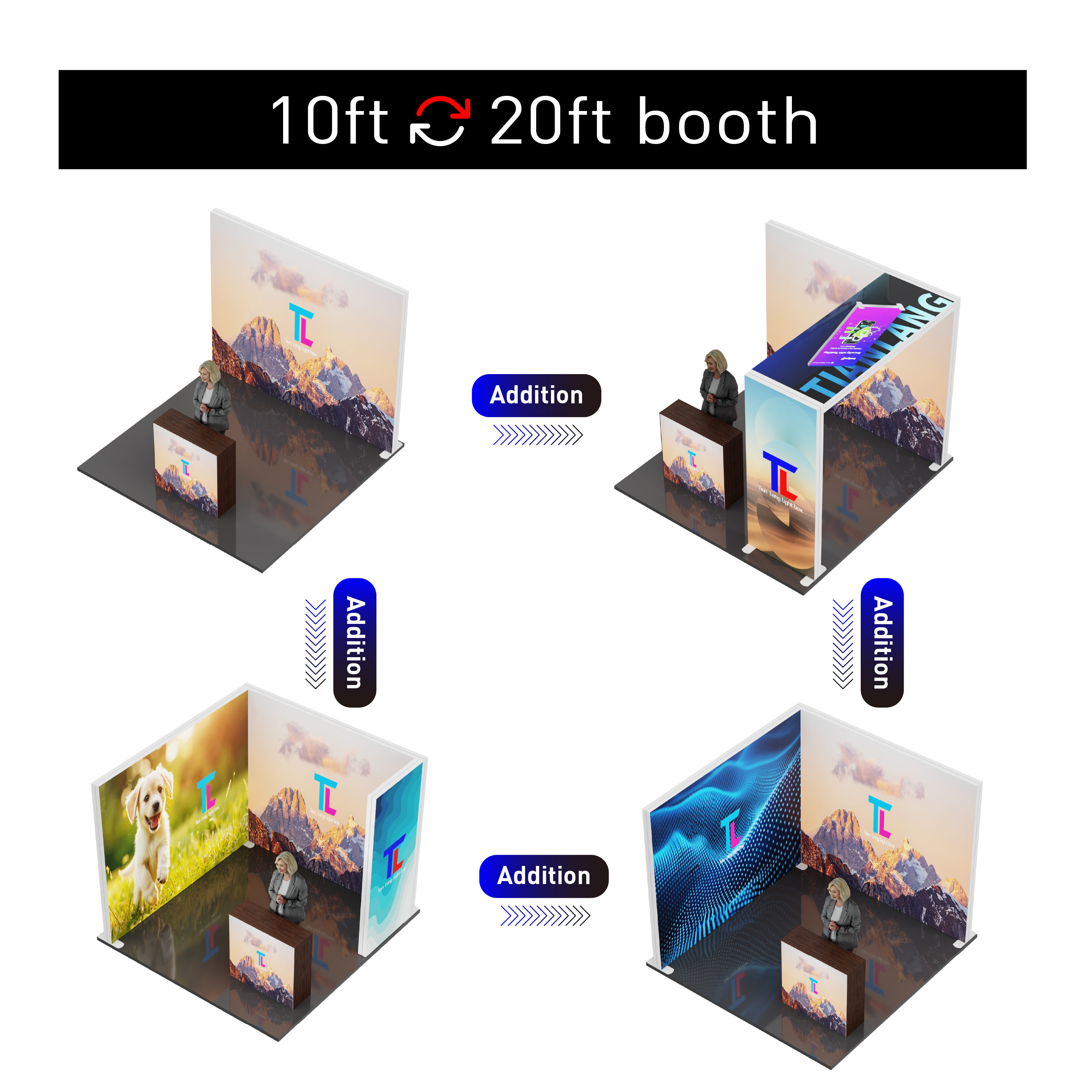
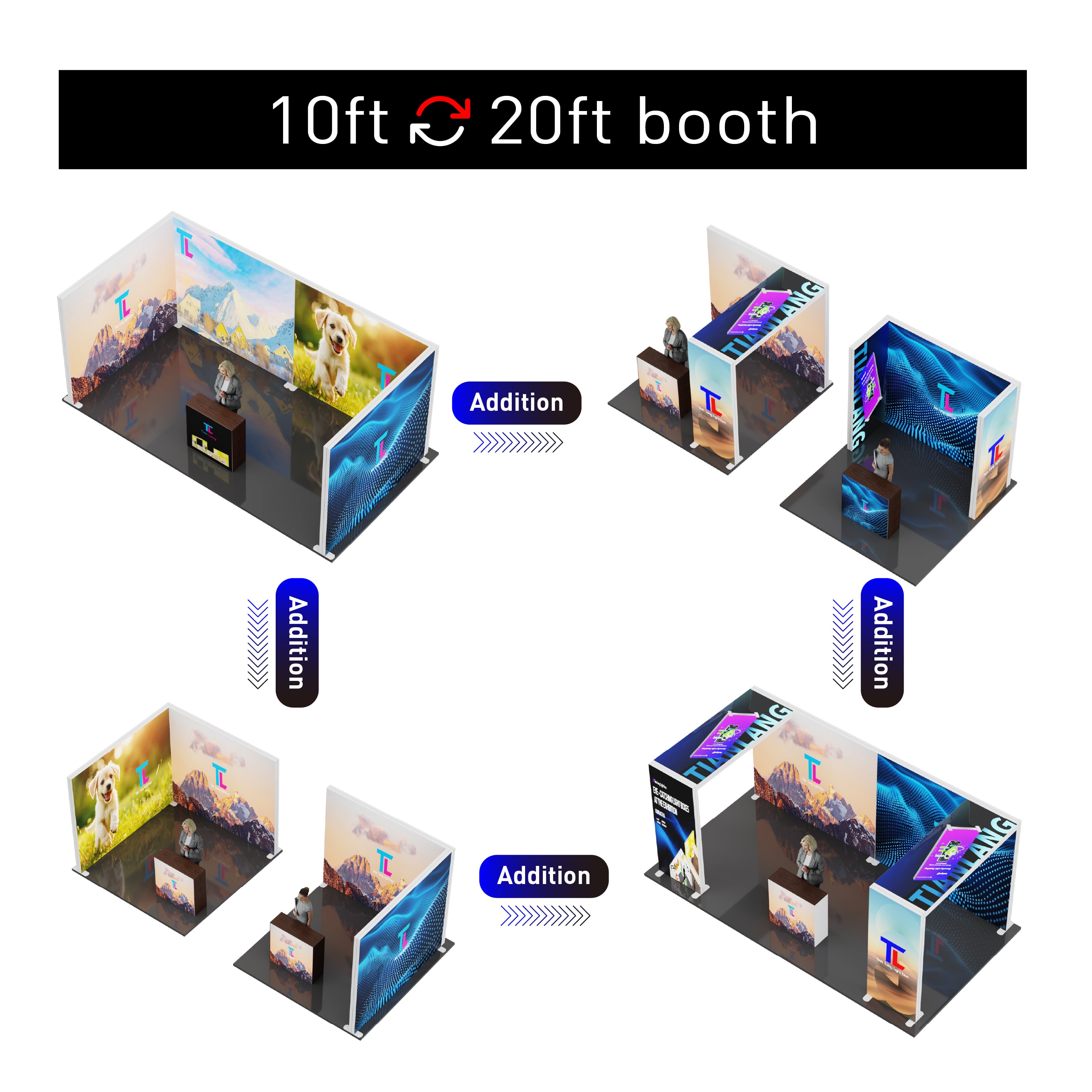
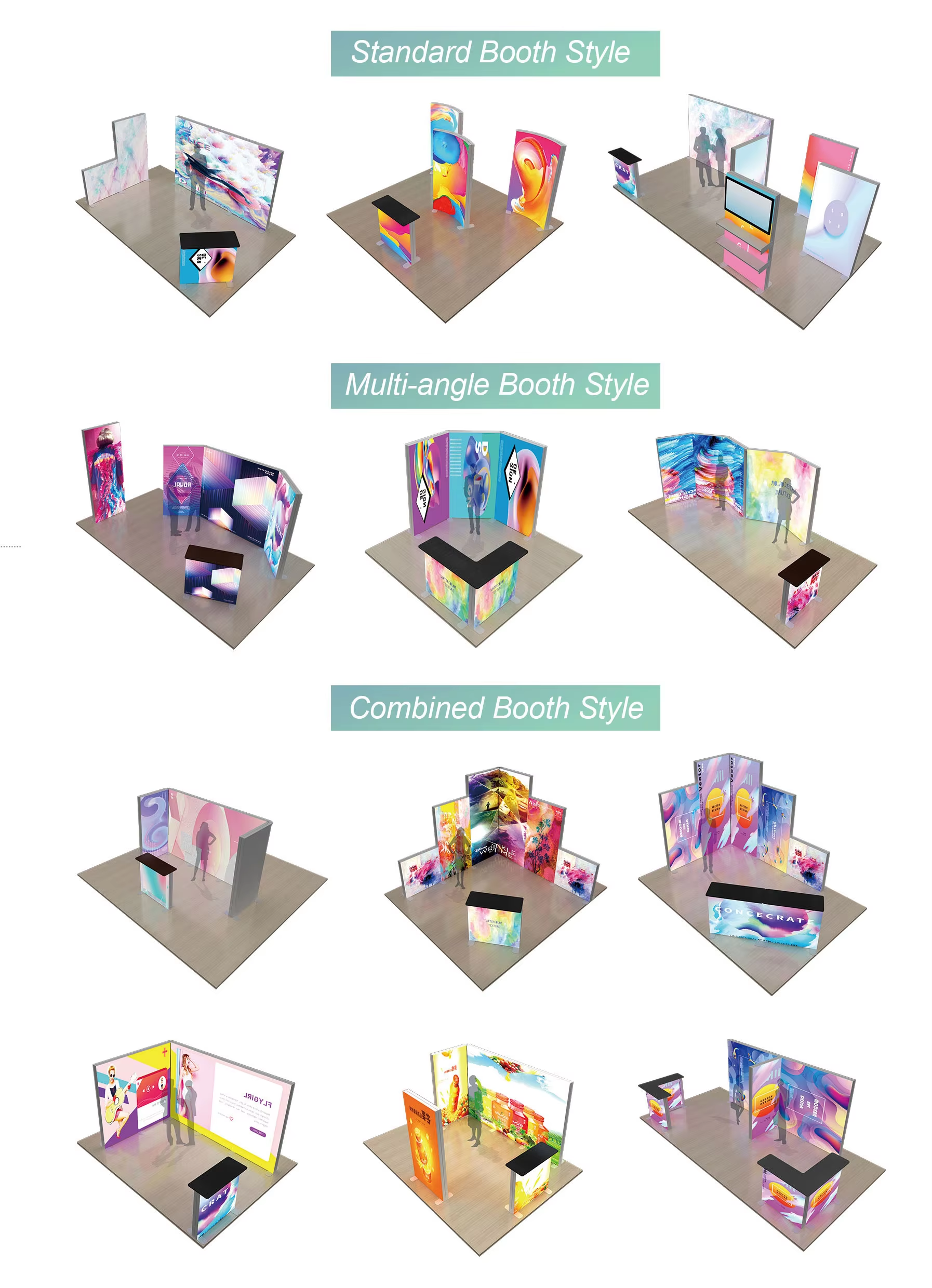
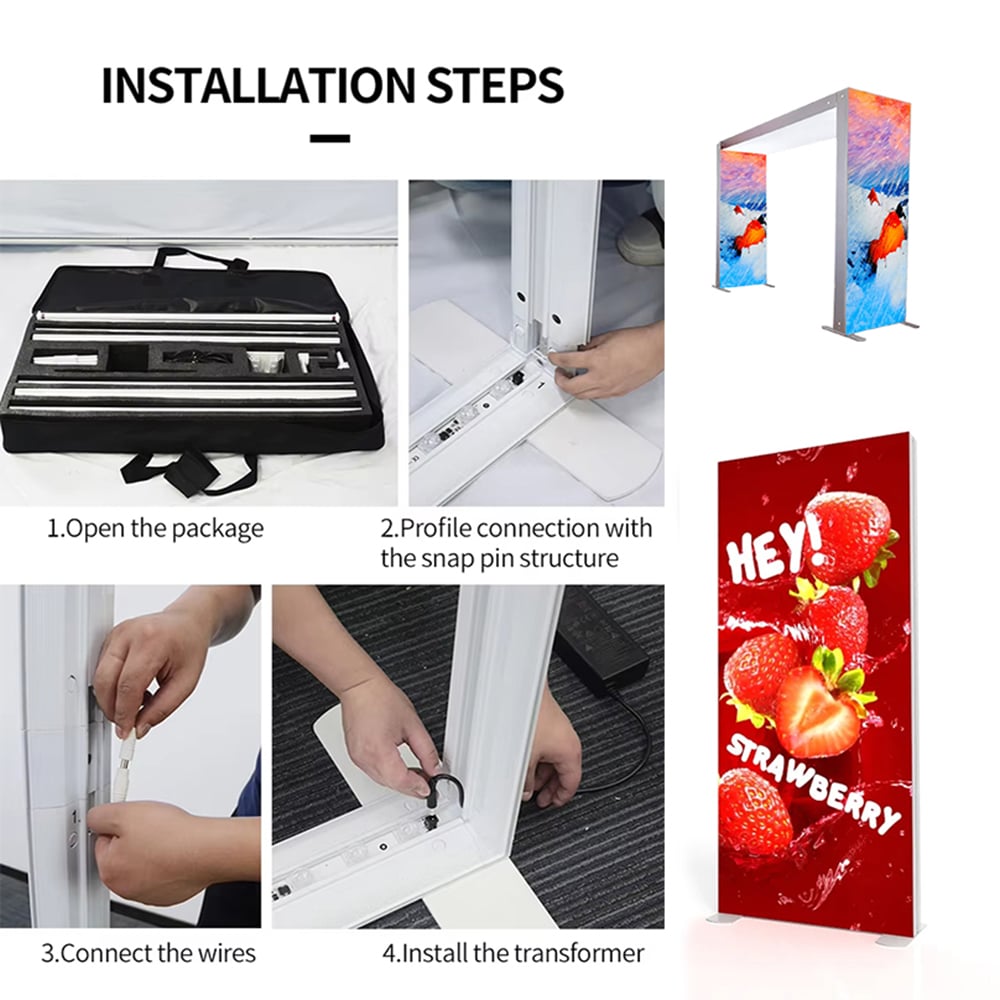
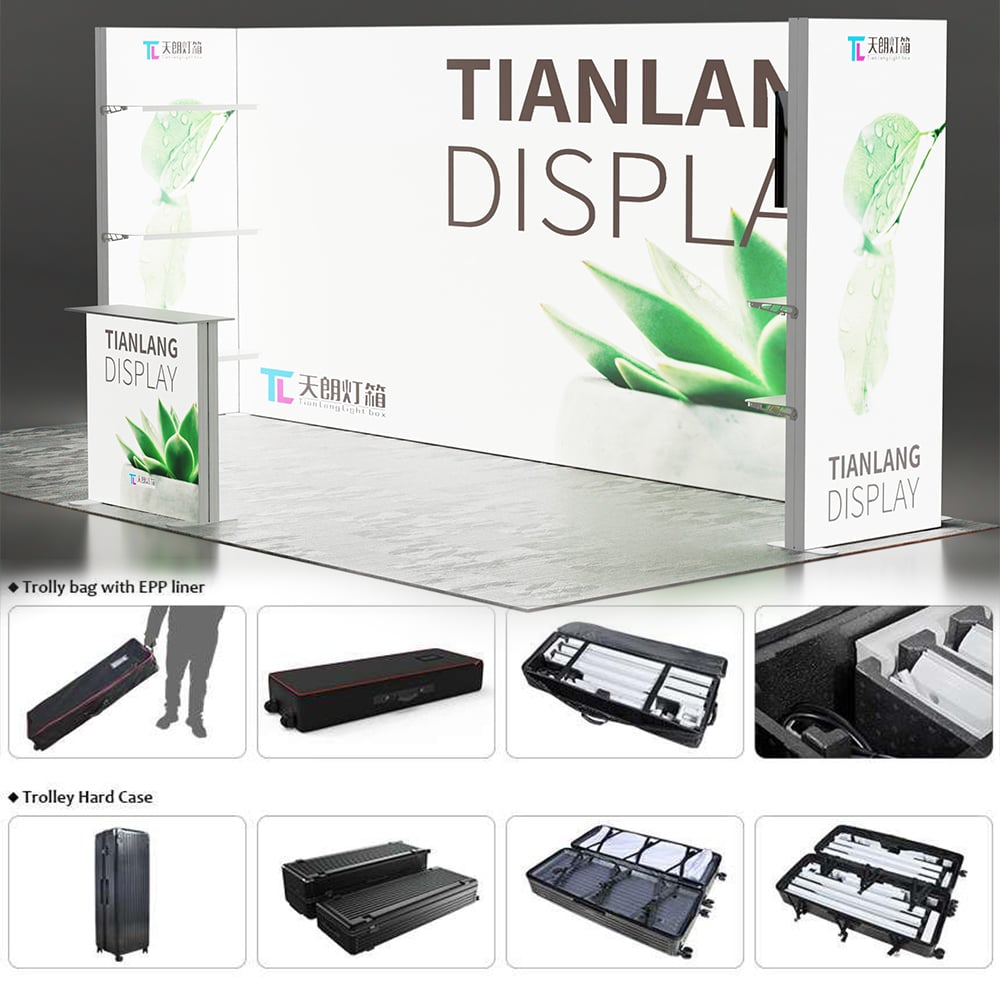
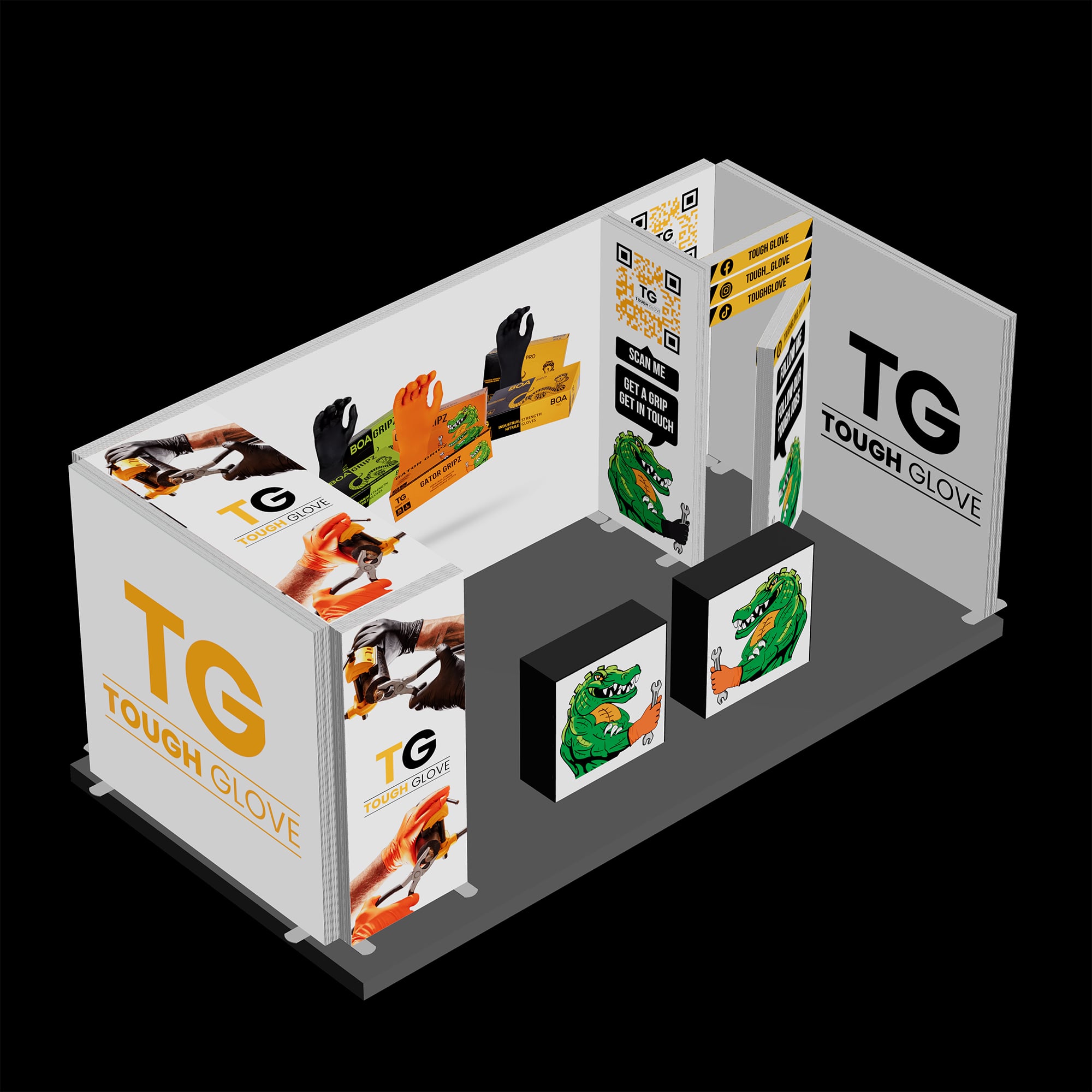
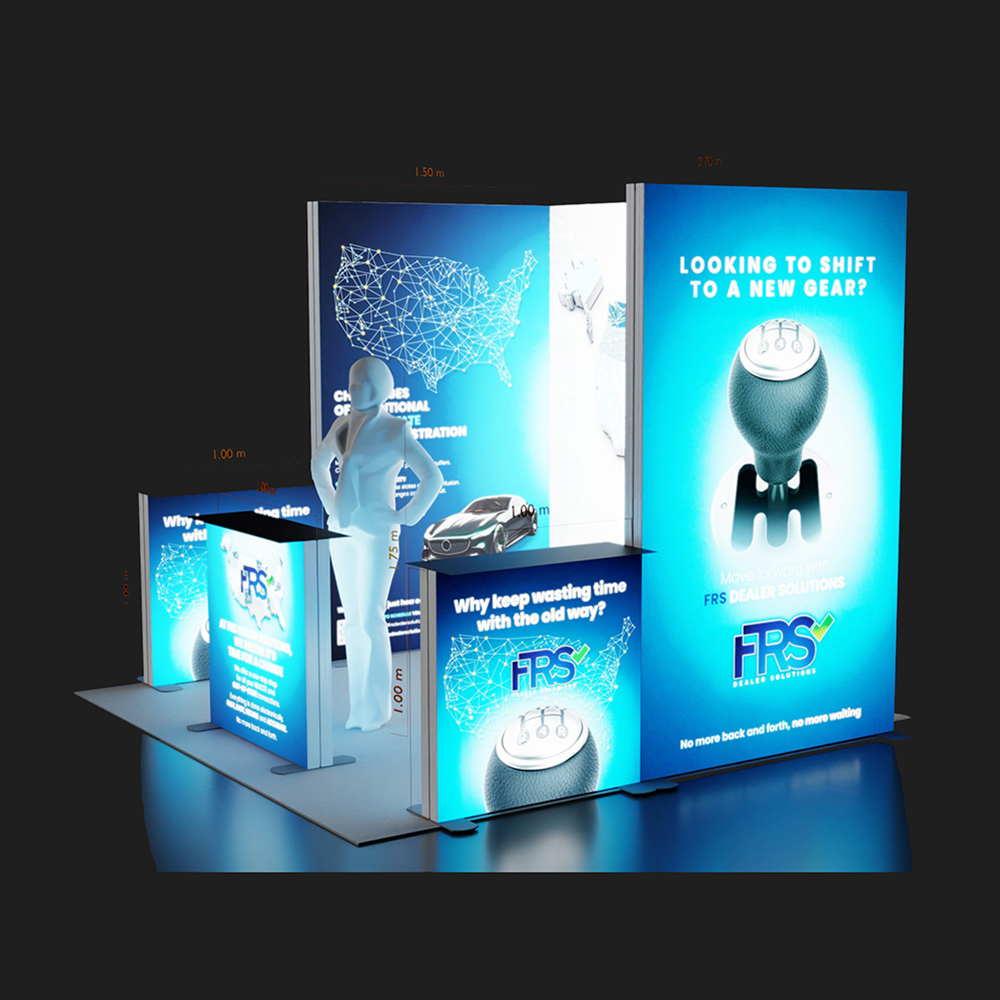
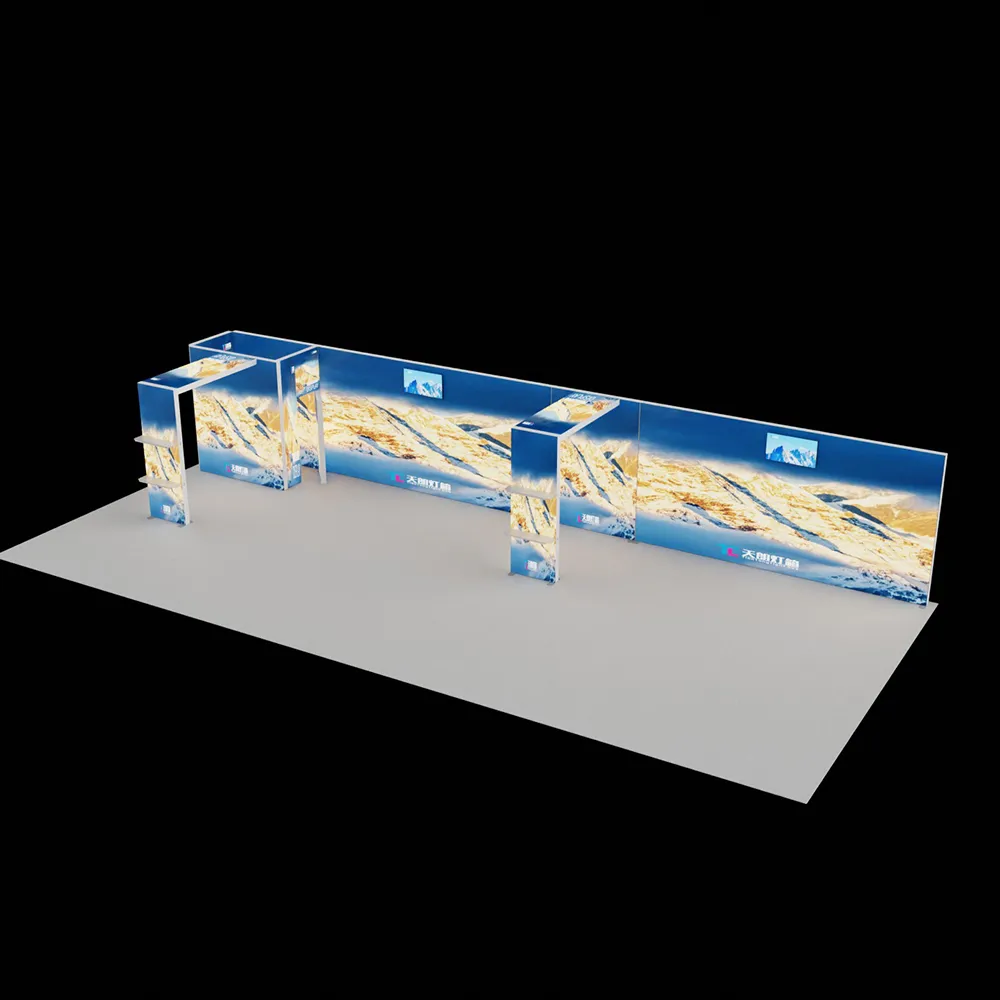
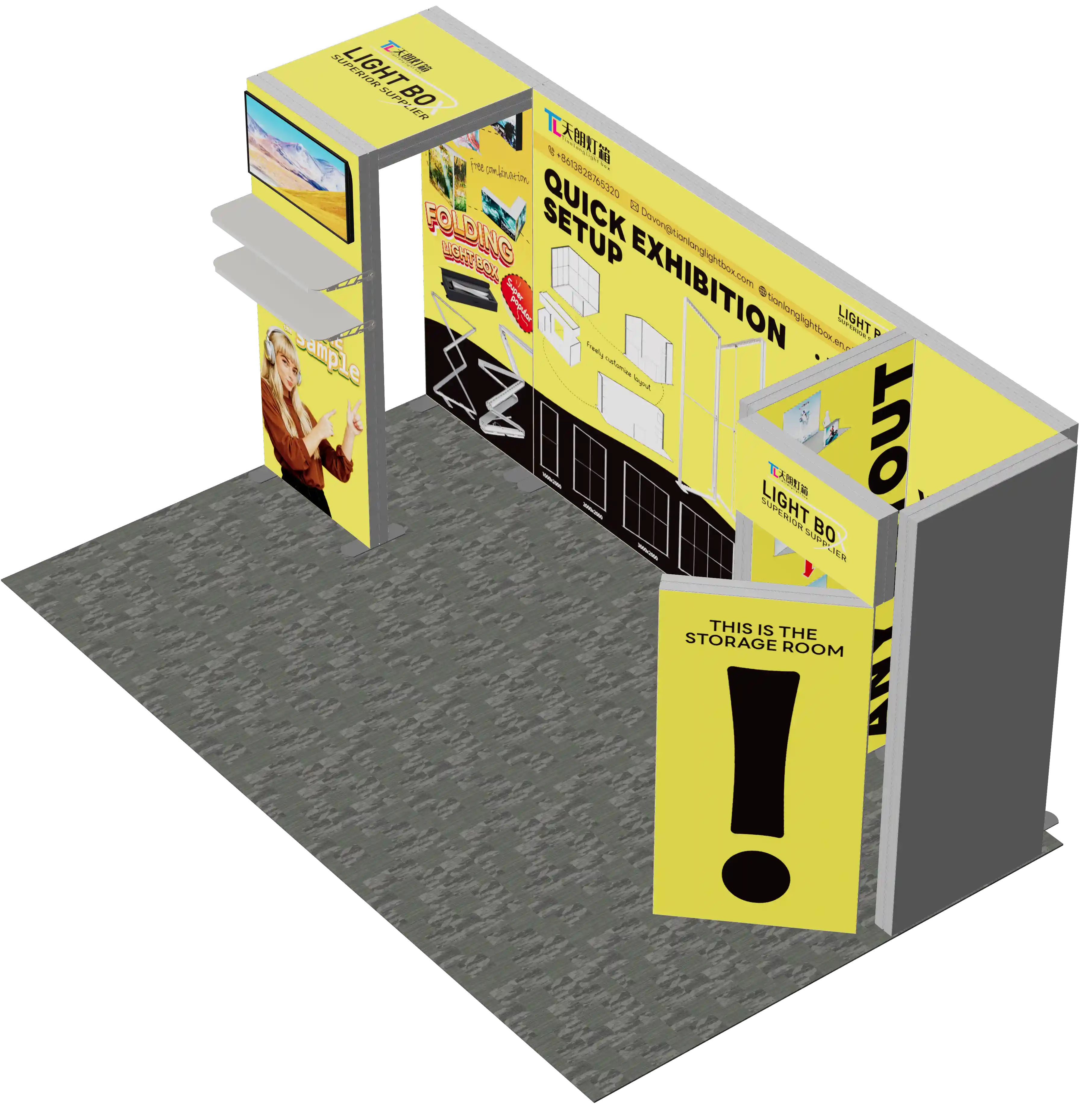
Product Description
The first time a brand team hires us for a 6m×3m backwall, the word they use most often is seamless. The second time they hire us — after they have already been through one show with a cheaper booth — the word they use is honest. Because "seamless" is one of the most-abused words in the SEG lightbox industry, and almost no one selling these kits actually explains what it means mechanically. We have been making a TIANLANG seamless fabric backwall long enough to know that the answer has at least five engineering layers, and the right page should walk you through each one rather than wave at a render. This page is for the buyer who has already had the "easy" sales conversation with someone else and wants to know what we actually do when nobody is looking.
What "Seamless" Actually Means on a TIANLANG Seamless Fabric Backwall
There are four places a join can show on a backlit fabric wall. We count them, because we measure rejects against this list every batch.
1. The printed image itself. A standard industrial UV roll-to-roll machine prints a maximum visible width of 3.2 m before the seam between two print heads becomes faintly visible under LED light. A 6m×3m seamless fabric backwall needs to be wider than the printer. The honest answer is that the graphic is printed in two halves and seamed — by us, in our own finishing line, before the backwall ships. The visual "seamless" promise is really "seamed-and-removed-from-perception" promise.
2. The seam between the two printed halves. This is the join everyone talks about. On a cheaper flush-light TIANLANG seamless fabric backwall it is a 2–4 mm visible line that bleaches brighter than the surrounding print because the LED shines straight through the thinner overprinted area. On a TIANLANG seamless fabric backwall the seam sits at a fabric-only overlap, finished with a thermal cut and a low-profile weld that we cannot see under the LED face at standing distance. We will show you the seam under a loupe if you ask. At one metre you cannot see it.
3. The SEG channel transition at the frame corners. The fabric pillowcase terminates in a silicone-edge keder that slides into an extruded aluminium channel. If the channel is mitred at the corner instead of butt-cut, you get a small fabric wrinkle where the two keder edges meet. We use single-channel corner returns on the TIANLANG seamless fabric backwall, so the same extrusion carries both edges of the corner and the pillowcase passes the join without gathering.
4. The back-of-frame tension line. On double-sided fabric prints, the rear pillowcase is the mirror image of the front. If it is tensioned as a separate panel, the rear seam shows at a slightly different position from the front, and you see a faint diagonal shadow at glancing angles. The TIANLANG seamless fabric backwall is built single-piece-per-face — the rear fabric is the same continuous piece, tensioned against the back of the SEG channel on the same TIANLANG seamless fabric backwall, so there is no offset seam to register.
That is the engineering. None of it is a marketing promise — it is what we do on every TIANLANG seamless fabric backwall, on a regular basis.
The SEG Channel Is the Frame, and the Frame Is the Backwall
The reason a SEG fabric backwall feels "seamless" to the eye has more to do with the aluminium channel than with the fabric. The fabric is the skin; the channel is the skeleton.
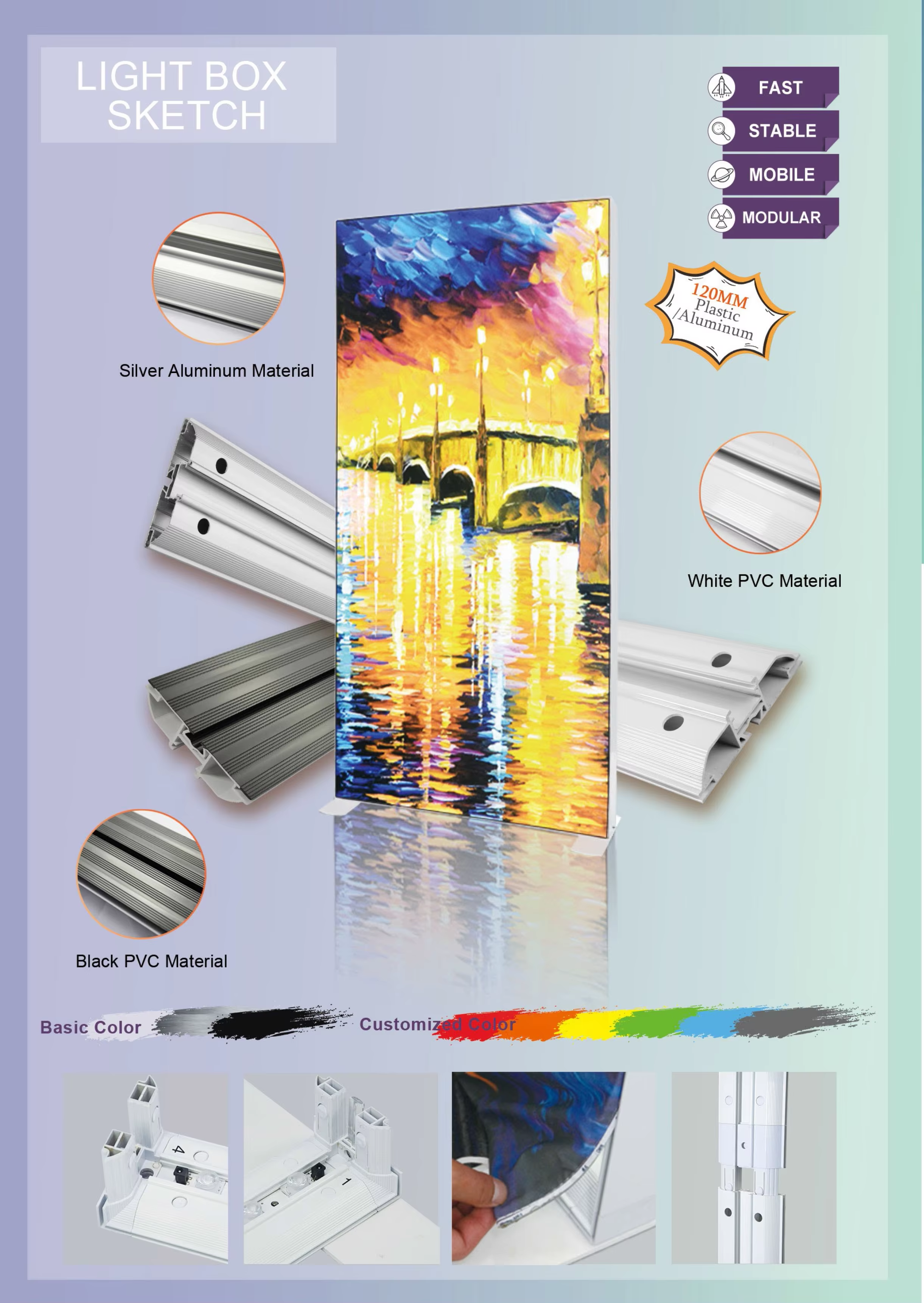
A SEG channel is an extruded aluminium profile with an internal slot that accepts a silicone-edge keder bead sewn into the perimeter of the fabric pillowcase. The fabric stretches into the slot, locks in place, and the tension distributes evenly around the frame. Two widths of keder are common in this industry — 12 mm and 14 mm — and the channel has to match exactly. We run 14 mm keder on every TIANLANG seamless fabric backwall because the wider bead gives the fabric a longer load-bearing edge inside the slot, which means lower pull force per centimetre, which means the pillowcase stays flat under the LED light for longer.
Cheaper booths often use 12 mm keder because the channel is cheaper to extrude. The fabric still fits — and it usually does — but the pillowcase sits slightly under-tensioned from day one, and after four or five setup cycles the corners start to drift. You see this on a TIANLANG seamless fabric backwall return that comes back from a customer after a year of tour use. The fabric on the TIANLANG seamless fabric backwall is still flat. The corners are still square. The keder is still in the channel. That is the difference the wider bead makes, over the life of the TIANLANG seamless fabric backwall.
What the Pillowcase Fit Looks Like Under LED Light
The thing nobody mentions about a fabric backwall until they have installed one: there is no z-frame behind the print, no hidden panel, no structural crossbar in the middle of the image. The fabric pillowcase stretches across the inside of the frame, and the LED panel sits behind it. Whatever wrinkles or dimples exist in the fabric — and there will always be some, because polyester is not glass — show up directly under the LED light.
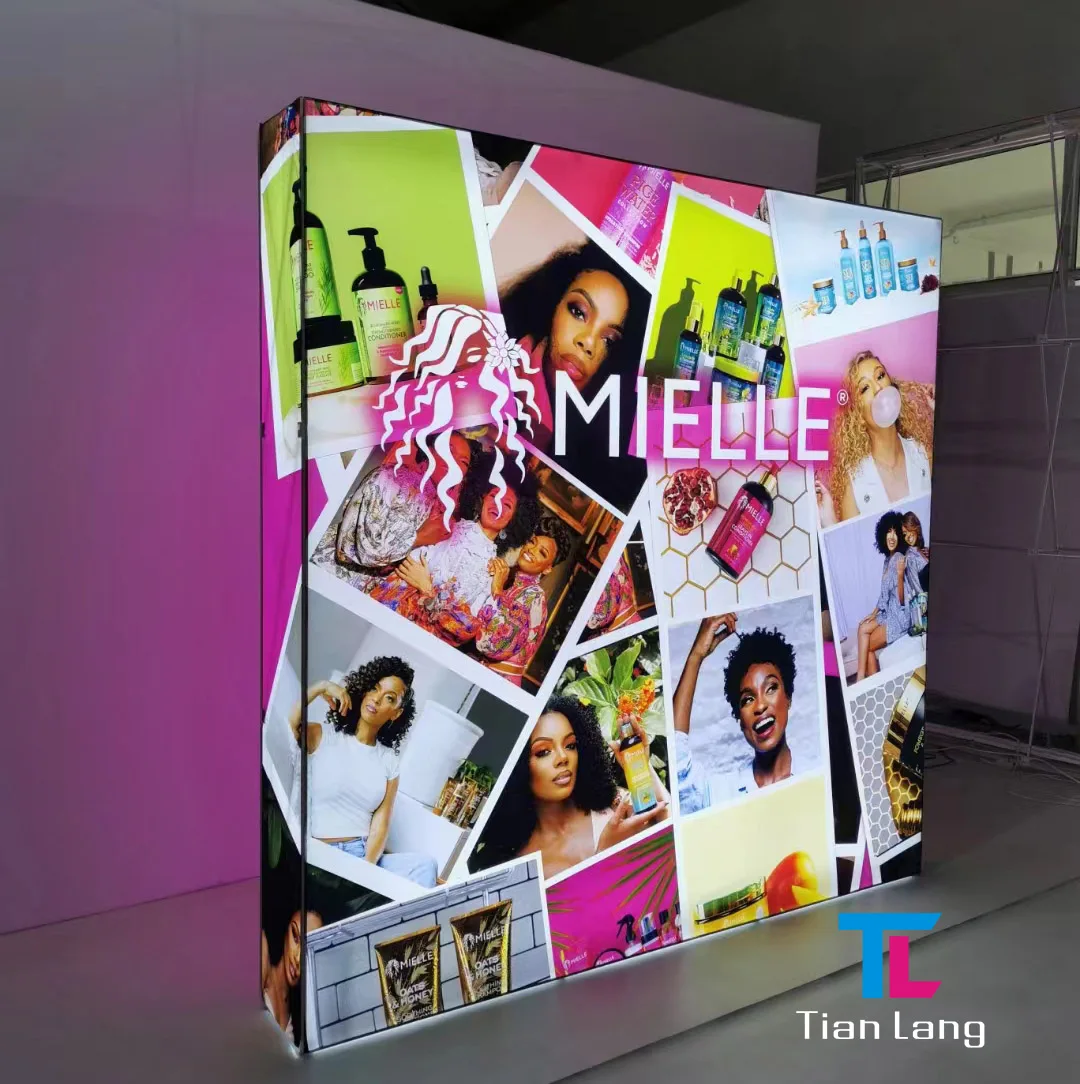
A TIANLANG seamless fabric backwall is built with a single fabric piece per face, not three or four strips butted together. The corners on the TIANLANG seamless fabric backwall are sewn with mitred joins on our industrial sewing line, not glued or stapled. The fabric is tensioned against a calibrated centre-of-channel position before the LED panel is fitted, so the LED-to-fabric distance is consistent across the whole face of the TIANLANG seamless fabric backwall. The result is a flat, uniform lit field with no visible pillow or gather at the corners, no diagonal stretch line, no LED hot spot. From one metre away, at the angle your photographer will shoot, the surface is flat.
We say this on the phone before we print, because we have re-measured it on returned graphics more times than we would like to admit.
Double-Sided vs Single-Sided — and Why the Answer Is Not Always "Double"
A lot of buyers assume they want a double-sided TIANLANG seamless fabric backwall because they have seen one at a competitor's booth. Then they hit a venue rule that limits double-sided freestanding booths, or they cannot fit the additional freight, or they realise the aisle traffic at their show does not actually walk around the back of the TIANLANG seamless fabric backwall.
We default to single-sided when the TIANLANG seamless fabric backwall is on a perimeter wall, against a hire stand, or in a hall with one-way aisle traffic. We default to double-sided when the TIANLANG seamless fabric backwall is an island, when the show is a 360°-view consumer launch, or when the brand specifically wants the same graphic from every angle. The choice is not technical, it is venue-driven. A TIANLANG seamless fabric backwall built single-sided still uses the same SEG channel and the same fabric specification; it just has a finished aluminium back panel instead of a second fabric face. The seam quality on the lit side is identical to the double-sided TIANLANG seamless fabric backwall.
We say this on the phone, too.
 EN
EN
 FR
FR DE
DE PT
PT ES
ES AR
AR RU
RU