EN
EN
 FR
FR DE
DE PT
PT ES
ES AR
AR RU
RU

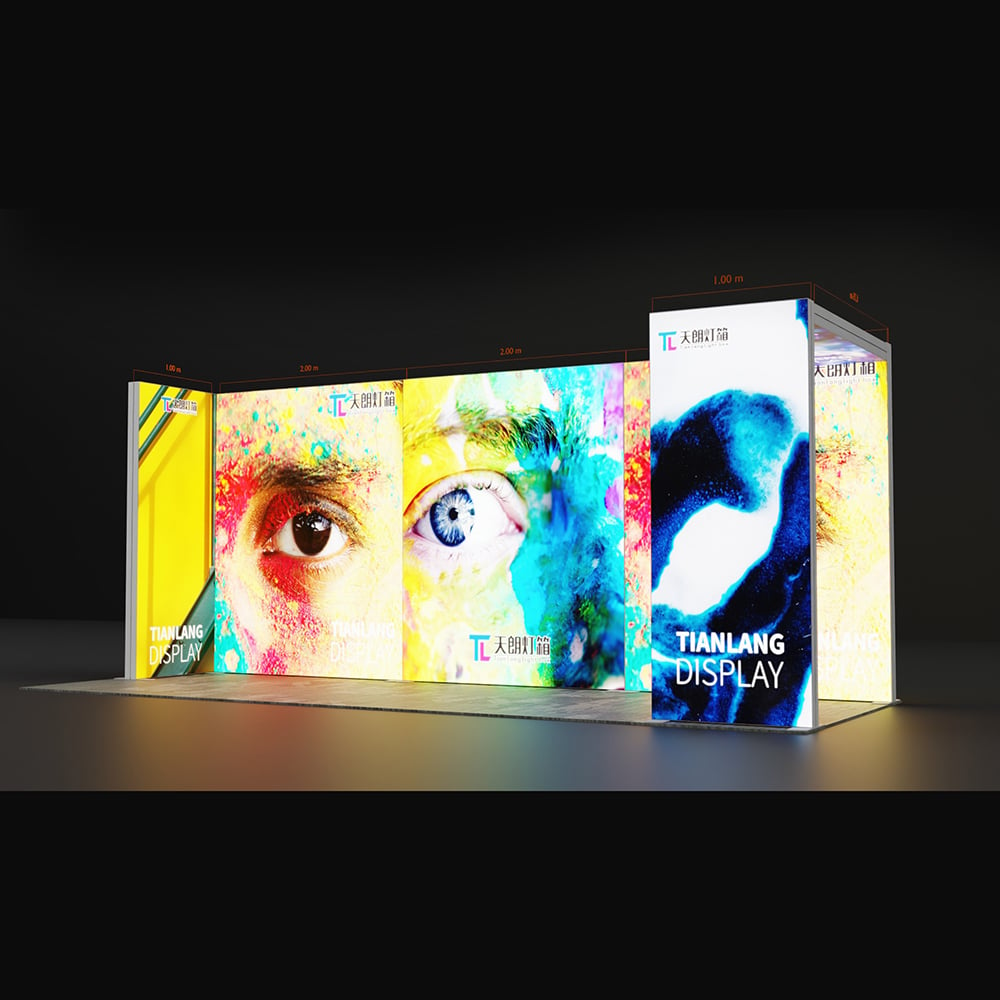
TIANLANG 6m×3m Custom Exhibition: Complete Expo Solution
Advertising Booth Light Box 6*3M
- Overview
- Product Description
- Company Profile
- Modular and Portability
- Packing & Delivery
- FAQ
- Recommended Products
Product Description
TIANLANG 6m x 3m Exhibition Booth — Where the Fabric Is the Light Source
Most backlit booths look stunning from the aisle and disappointing up close. The lit face reads from fifteen metres, and that is the whole job — until a photographer walks in, takes a portrait, and shows your client the seam shadow where two SEG panels butt, the colour shift between LED colour-batched batches, and the subtle yellow cast creeping off a UV-cured white that nobody noticed under direct overhead lighting. The TIANLANG 6m x 3m booth exists because the photos we send back from shows are the proof of how this kit actually performs, and we have spent fifteen years tuning it so the close-up photo holds up the same way the aisle impression does. The 6m x 3m booth is the size the photos get judged on.
The Print Is Doing More Work Than the LEDs
There is a polite industry shorthand that says "an LED lightbox is the LED plus the frame plus the graphic." Real shops treat it as a print substrate decision first and an illumination decision second, because that is where the look either lands or falls apart.
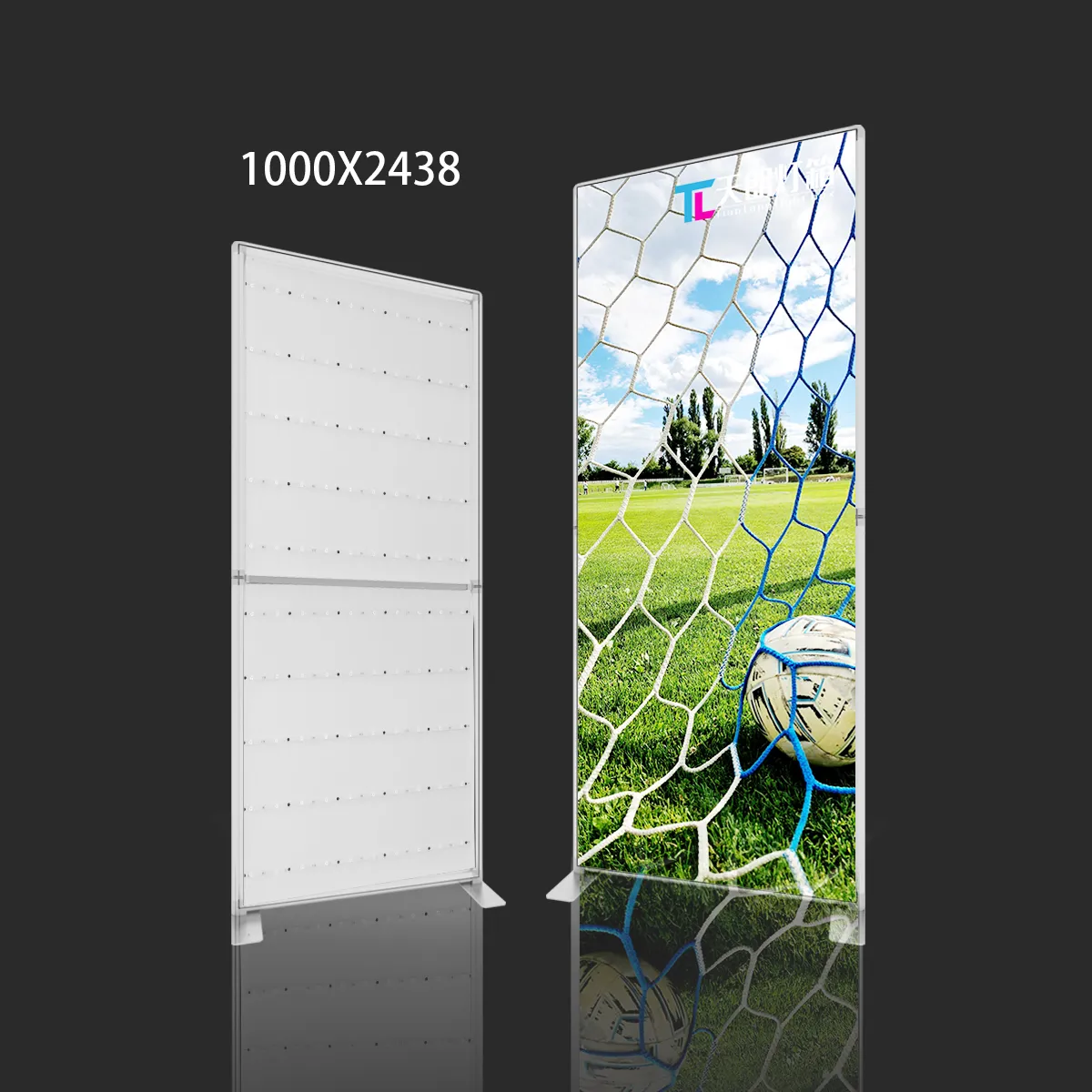
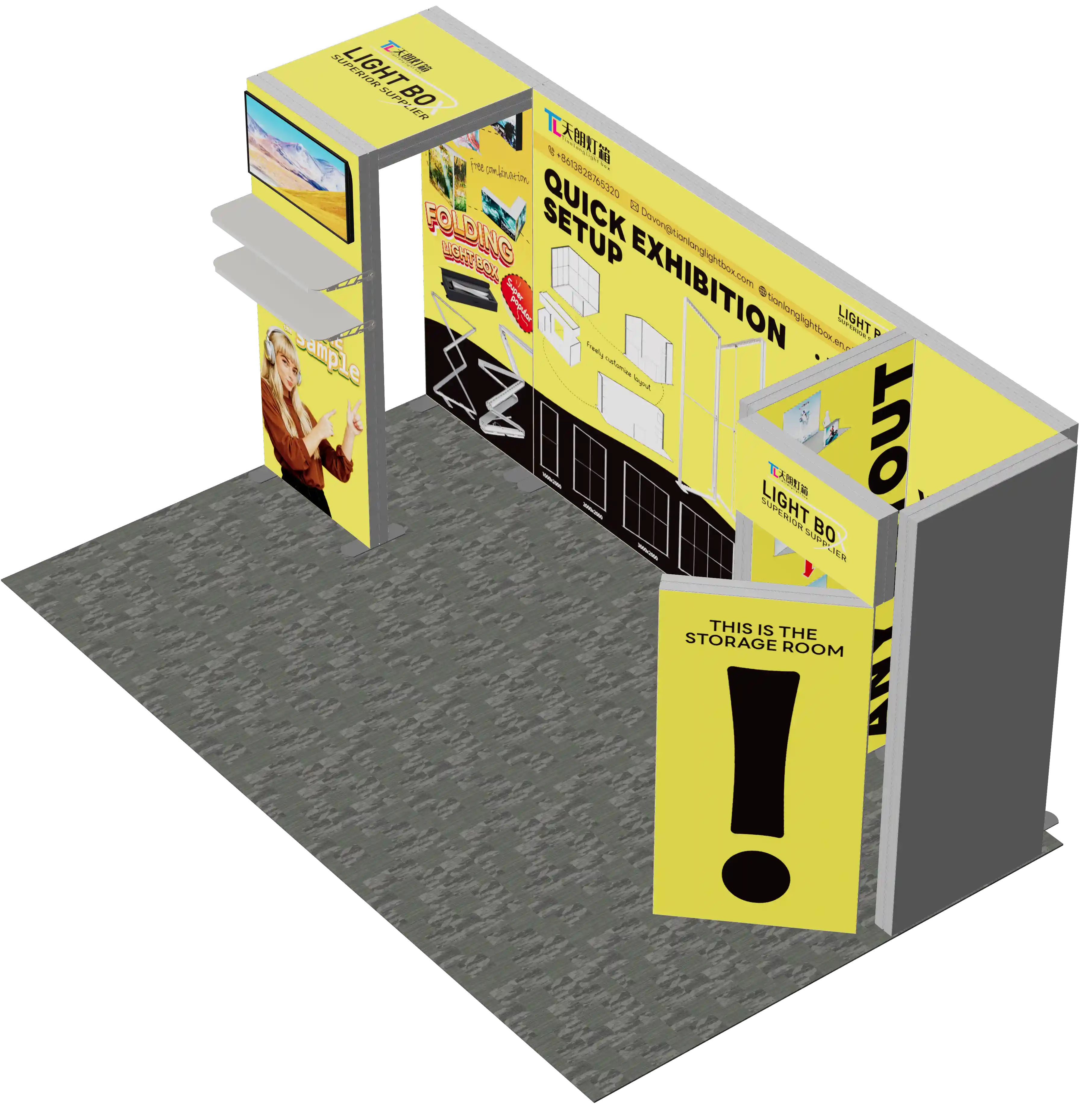
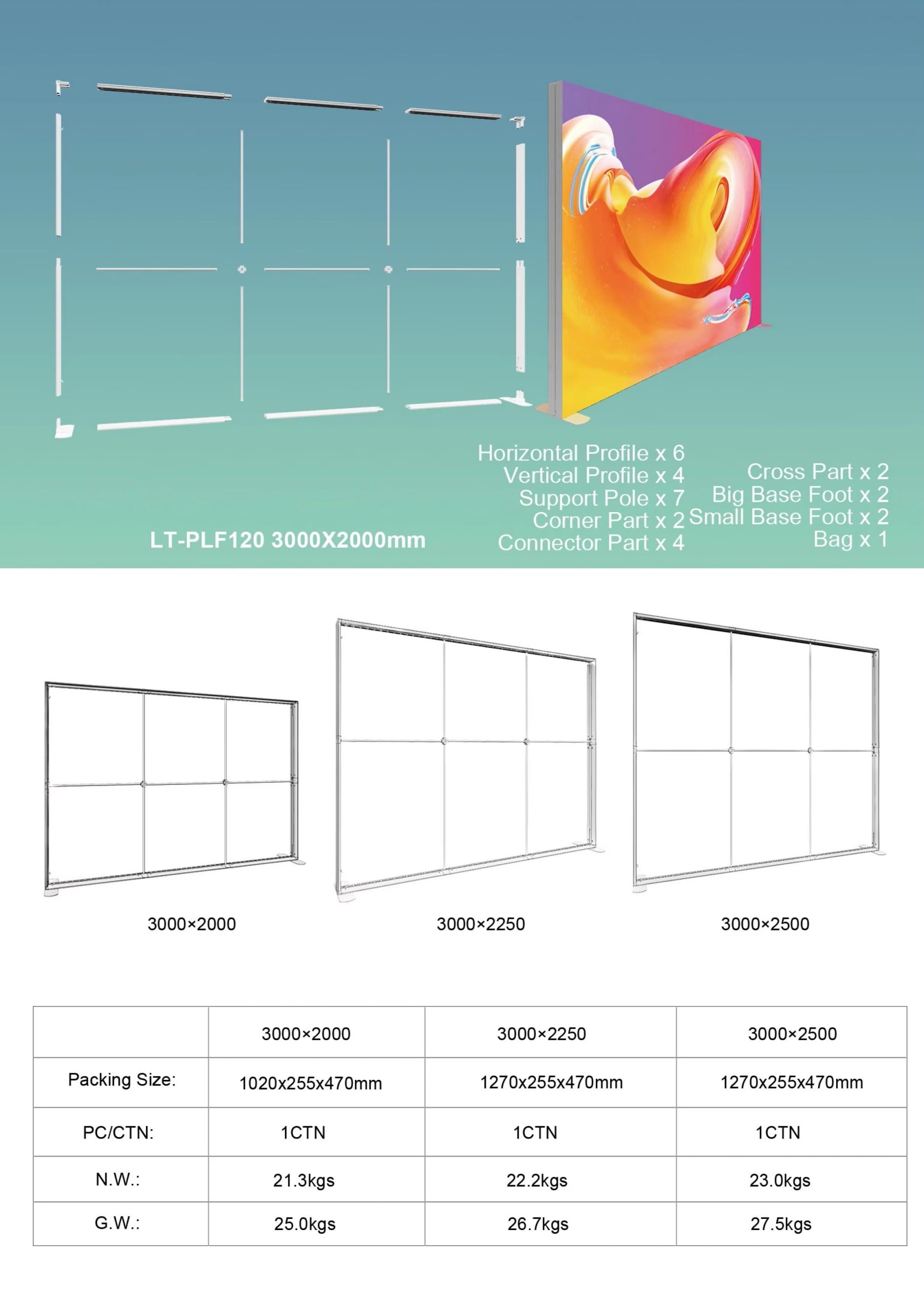
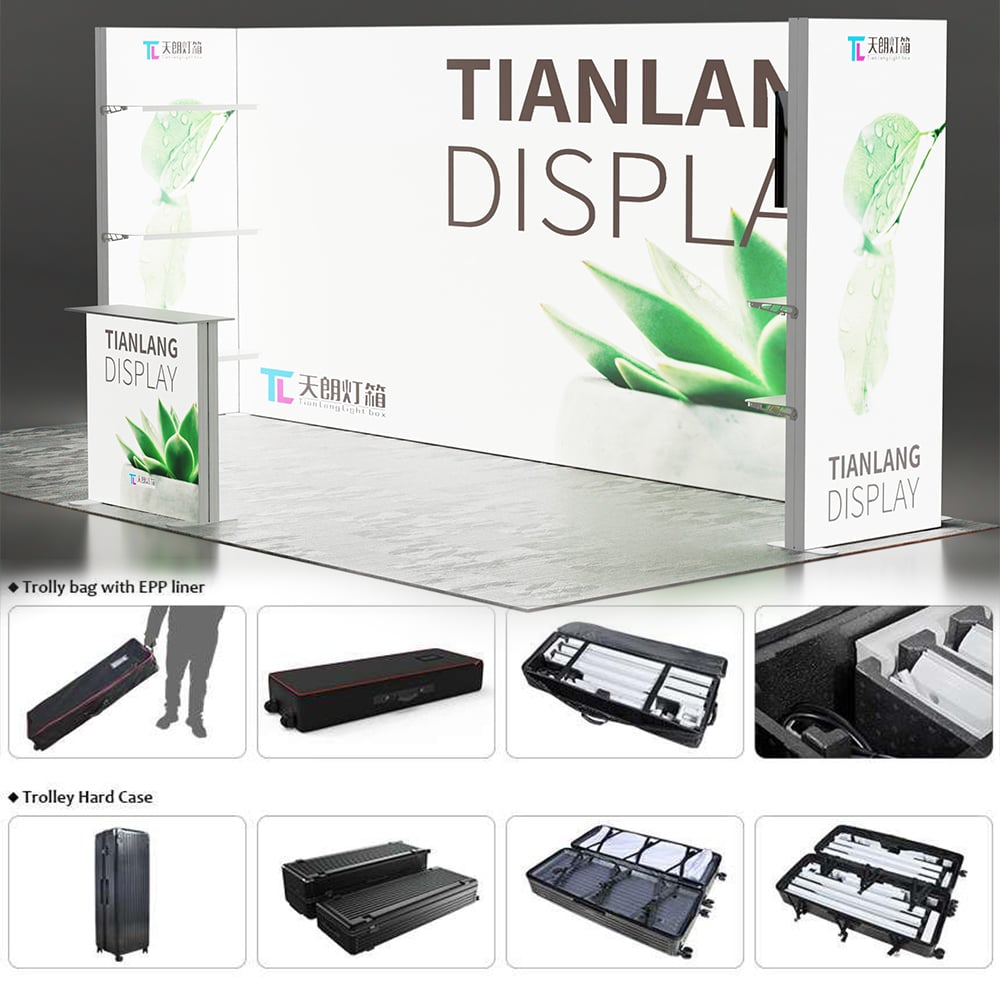
On the 6m x 3m booth we build most often, we are running two 3m-wide lightbox panels back-to-back with a corner return, plus an optional header, plus SEG fabric side returns and a custom counter front. Every one of those panels on the 6m x 3m booth is lit by an LED array that is colour-matched at the bin level before the frame goes into the keder channel. The fabric on top of that LED — and the ink chemistry set used to print on it — is what decides whether the 6m x 3m booth reads as a single luminous wall or as six panels that happen to be near each other.
This is the trade-off that cheaper backlit booths miss. If the fabric is a generic 220 gsm polyester with a thin dispersion ink layer, the LED shines through the white unevenly, the printed colour desaturates from 8 a.m. onwards, and the seams between panels go visible from two metres away. The fabric we run on the 6m x 3m booth is a heavier 260 gsm warp-knit with a UV-print receptive coating, and the colour-side finish is calibrated so that the lit face carries pigment density in the deep tones without the midtones blooming when the LED is at half-brightness. That is the actual engineering. The LEDs are the easy half.
Why UV-Printed SEG Beats the Alternatives on the 6m x 3m Booth
There are three ways to print a backlit fabric for a backlit booth, and they are not equivalent — and the difference becomes much more obvious on a large-format kit like the 6m x 3m booth than on a 1m counter panel.
Dye-sublimation on polyester gives the softest hand and the best colour gamut, but it needs a heat press and a stretchy base fabric, which means your SEG channel tolerances tighten. Direct UV printing on a coated polyester accepts a stiffer, more dimensionally stable fabric — which is what a 6m x 3m booth wants when the panels get re-mounted ten times on tour — but it requires careful dot-gain control or the LED bleed turns mid-grey areas into glowing patches on the 6m x 3m booth. Latex on a coated textile sits between the two and works well on the side panels, but it never quite matches the UV density on a lit face.
We default to UV for the 6m x 3m booth for one reason: tourability. UV ink is cured, not absorbed, so the print survives folding and re-tensioning in the SEG channel without the colour drift that dye-sub shows after a few cycles. The panel on the 6m x 3m booth still reads correctly at show number twelve, not just show number one. We have remeasured this on returned graphics and the dye-sub samples shift around 8% ΔE after ten setups; the UV prints on the 6m x 3m booth stay under 1.5% ΔE across the same period.
If your event is a one-shot in a single venue, the dye-sub build is genuinely better on the photo. If you are taking the 6m x 3m booth across four cities and twelve setups, UV is the right answer. We will say this on the phone before we print.
What "Push-Fit Assembly" Actually Means on a Lightbox Frame
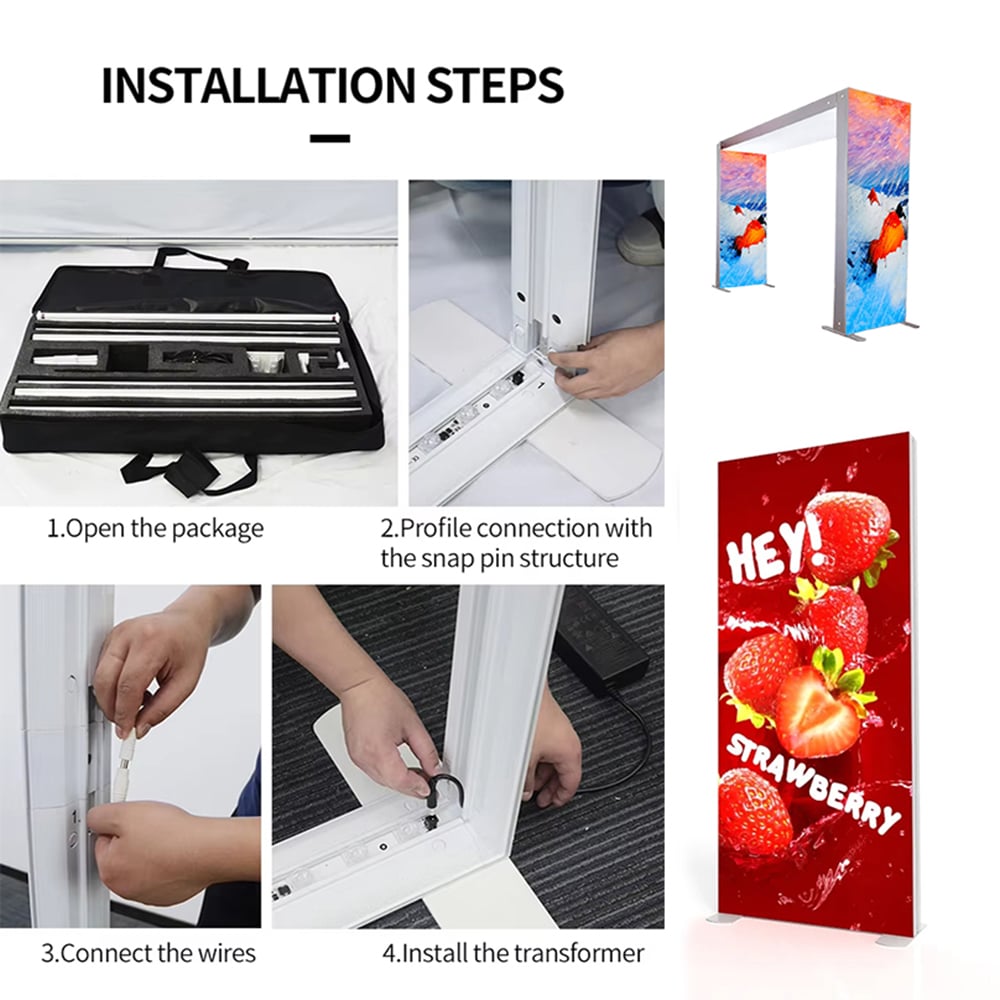
The 6m x 3m booth uses the same push-fit frame logic as our SEG lightbox line, because the booth is built from lightboxes. Each frame section is numbered, slots together without tools, and locks with a quarter-turn cam. Two people can stand the two 3m walls of the 6m x 3m booth in under twelve minutes once they have run the kit twice. The internal LED harness plugs together with keyed connectors, so polarity and colour-bin matching cannot be crossed — a fault that we have seen knock out a third of the LEDs in a competitor's booth at the opening of a show.
We pre-test every harness on the bench before it ships, because a backlit booth that fails halfway through a press call is the kind of failure that puts a brand off lightboxes for years. The numbers are not huge — maybe three to five connectors per panel — but the consequence of any one being wrong is total panel outage. You will not see that level of bench test on a cheaper lightbox. It is part of what the 6m x 3m booth includes that you do not see on the price list.
Calibrating Two Panels to Read as One Wall
The technical detail that most backlit booth catalogues never mention is that two LED panels, even from the same batch, will photograph slightly differently if their colour temperatures drift independently. We bin our LEDs at the reel level and assign matched pairs to every 6m x 3m booth we ship so that each wall of the 6m x 3m booth sits within a 50K colour-temperature window of the other. That is the difference between a single luminous surface and a visible seam from three metres back.
The other thing we calibrate per 6m x 3m booth is the front-of-frame distance between the LED face and the SEG fabric. Two to four centimetres seems trivial on paper, but at half a metre away, four centimetres read as a different brightness curve between the centre and the edges of a panel. The 6m x 3m booth ships with the fabric depth preset to the centre of that window, so when your printer substitutes their own SEG fabric on a reprint the depth still lands close to the original. If you re-spec the front-of-frame distance after the kit arrives, the colour-matching work we did on the bench stops being accurate — that is one of the rules we hand over with every 6m x 3m booth.
What the 6m x 3m Booth Enables
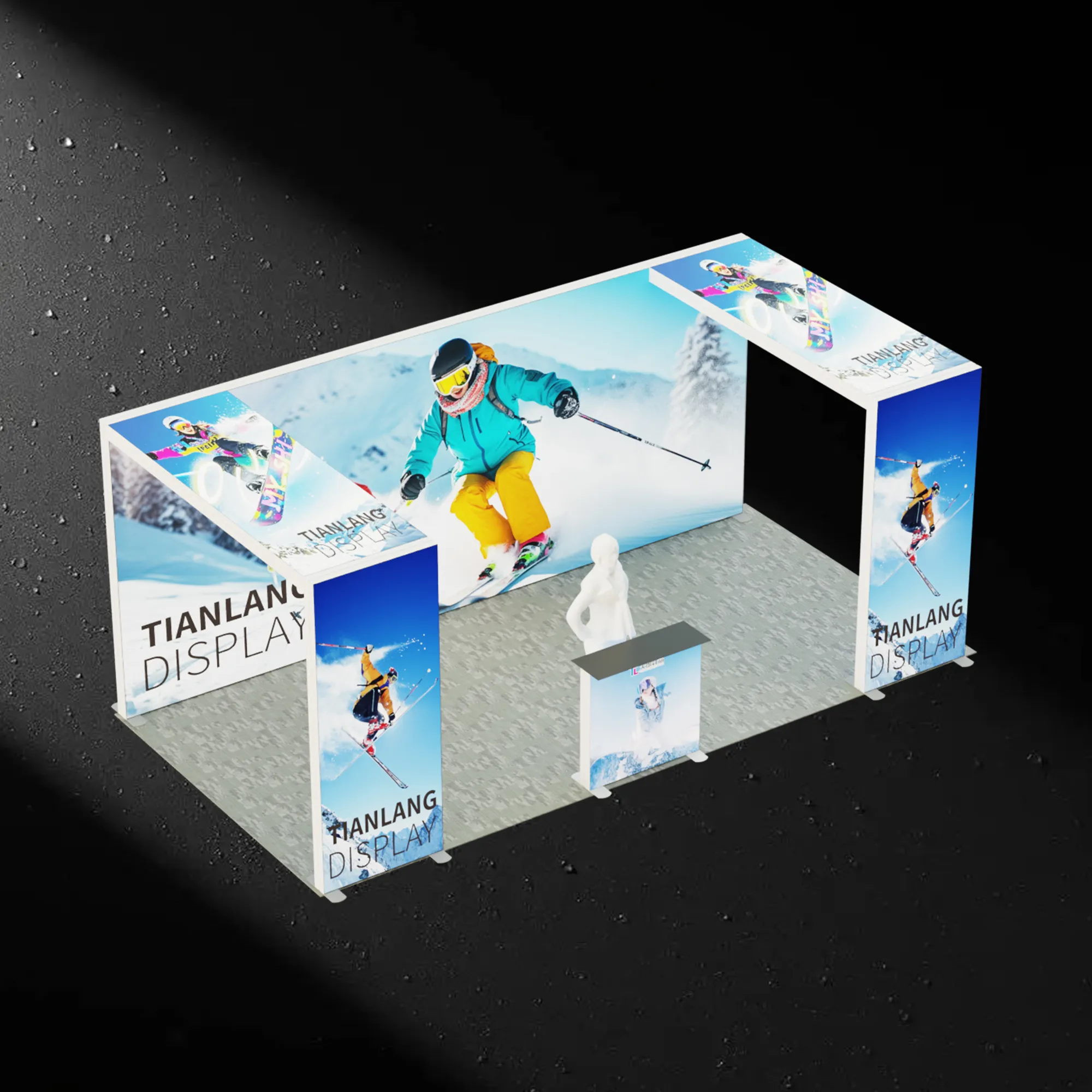
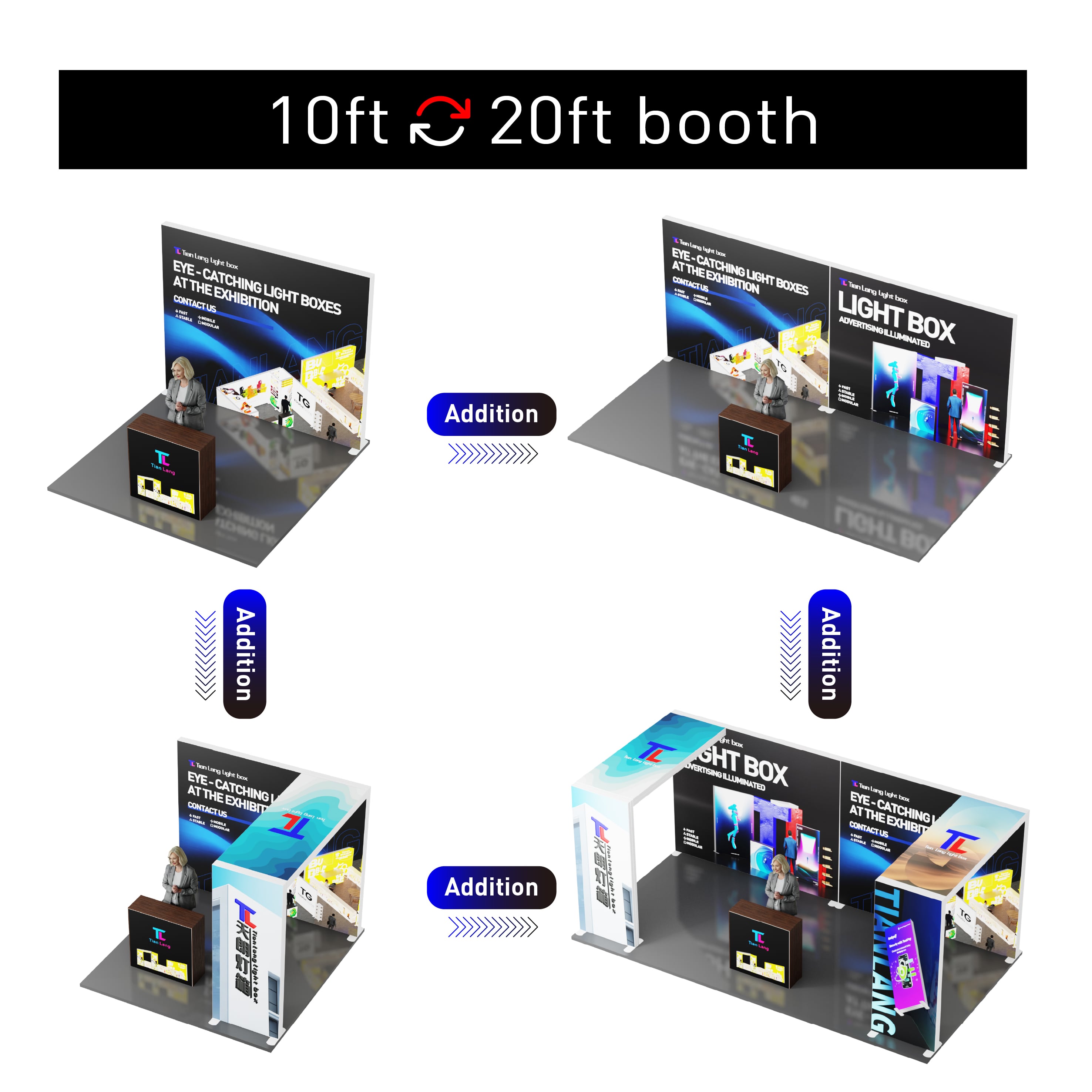
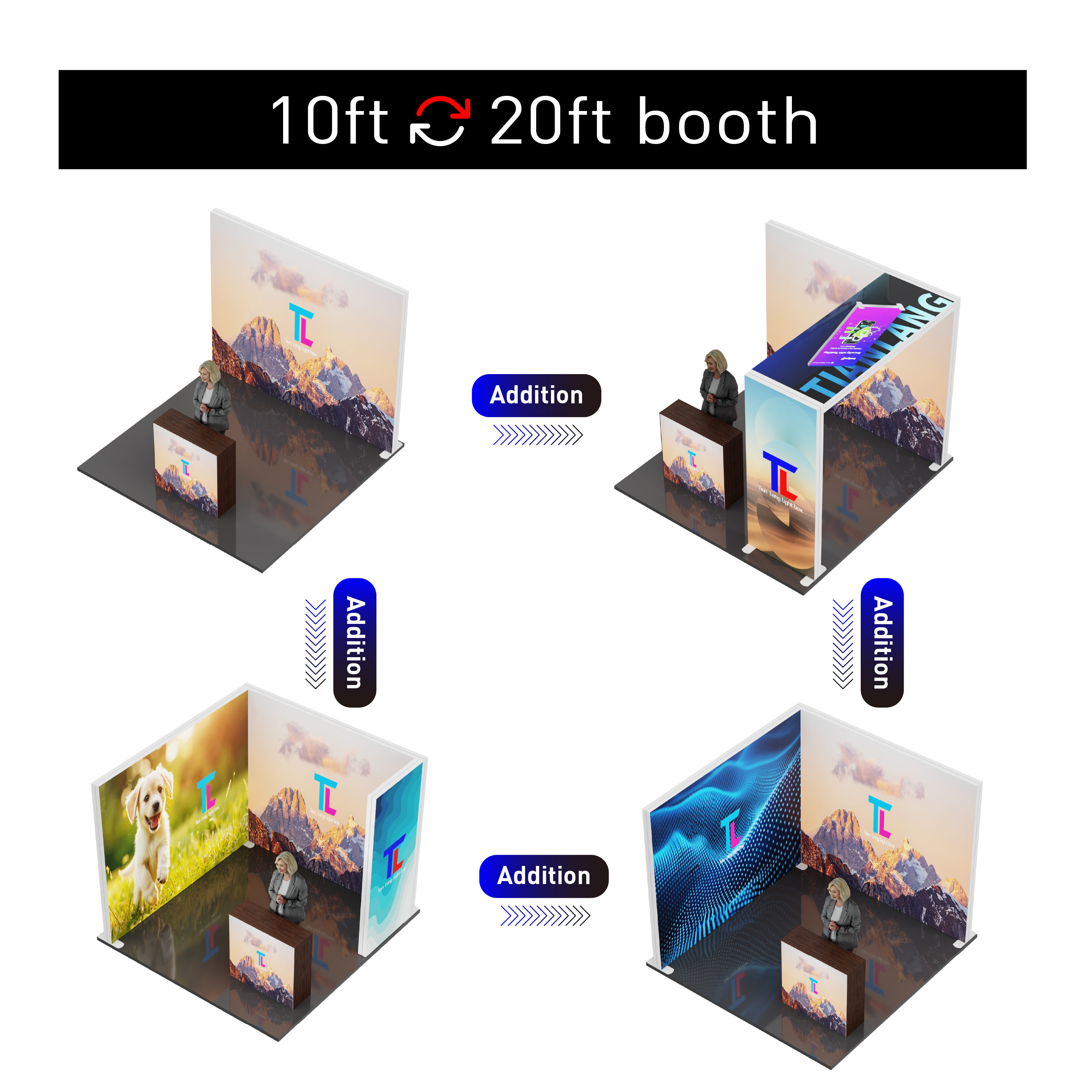
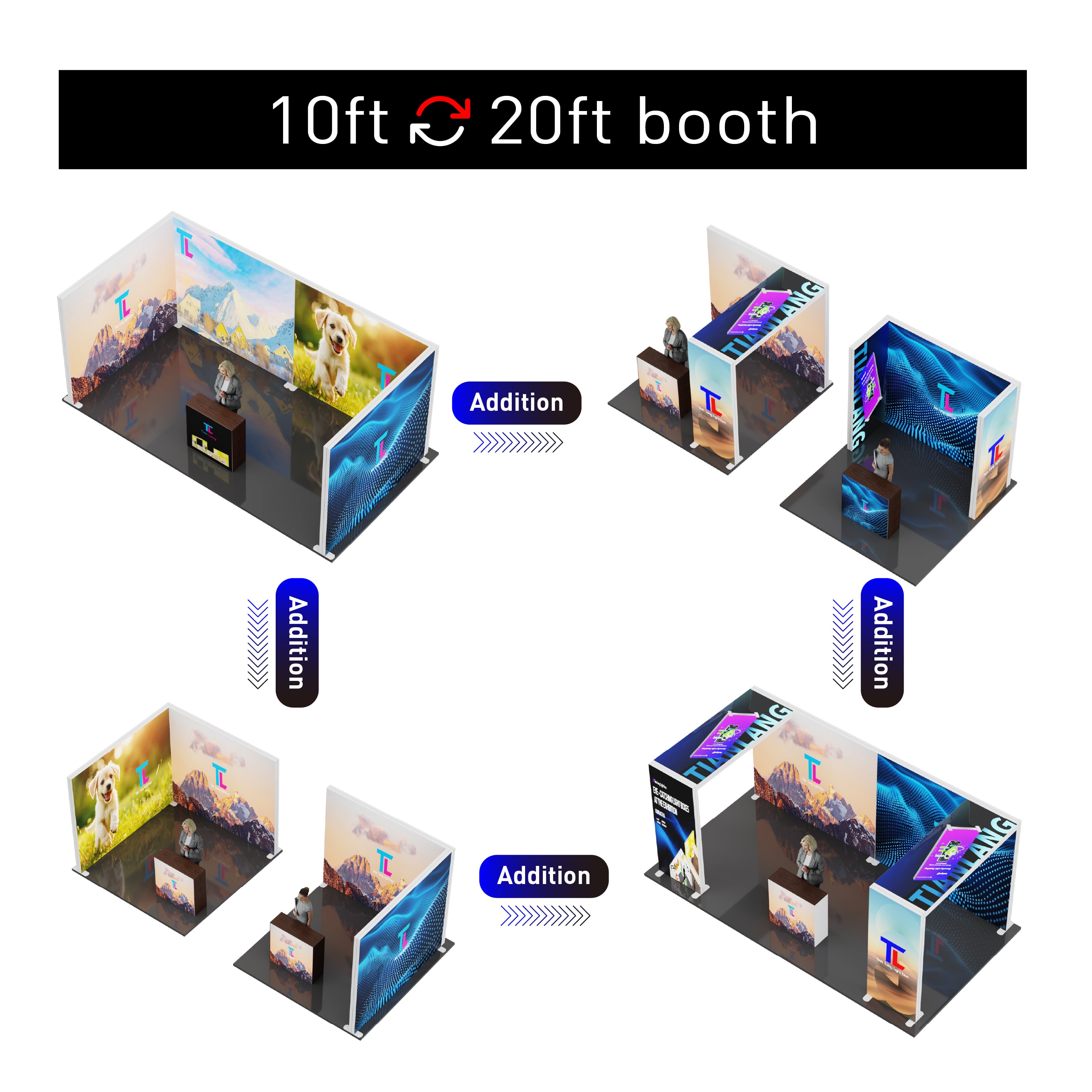
Two 3m backlit walls is the smallest configuration that reads as a true 6m x 3m booth across the aisle. From there, the kit scales — the 6m x 3m booth is the floor-plan anchor; the configurations below are what you stack on top of it.
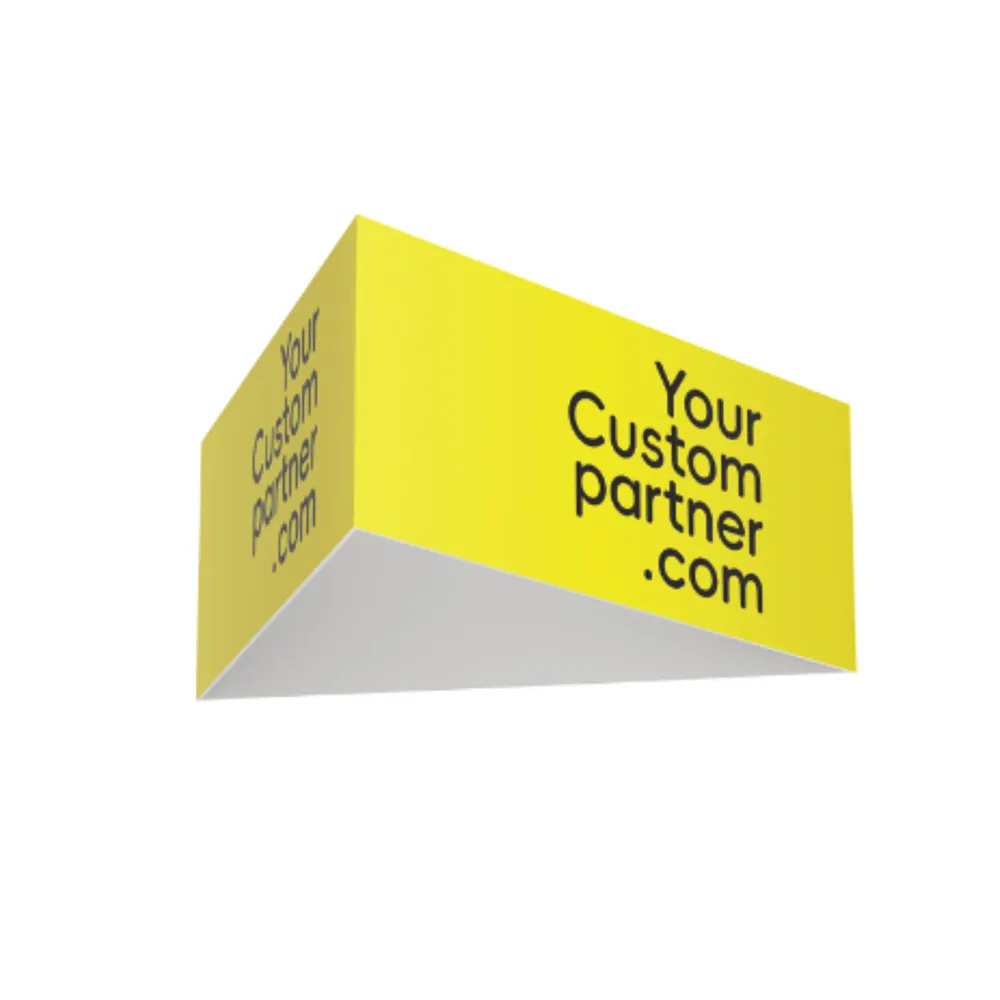
- Add a backlit header bar at 3m wide and 250-400mm tall, with a fabric return routed through the same SEG channel, for end-on visibility down a busy show hall.
- Add a corner return to convert the 6m x 3m booth from a backwall into a U-shape, sealing a private meeting zone.
- Add SEG side returns in non-lit fabric to extend the 6m x 3m booth into a 20-foot island footprint without pulling more LED drivers.
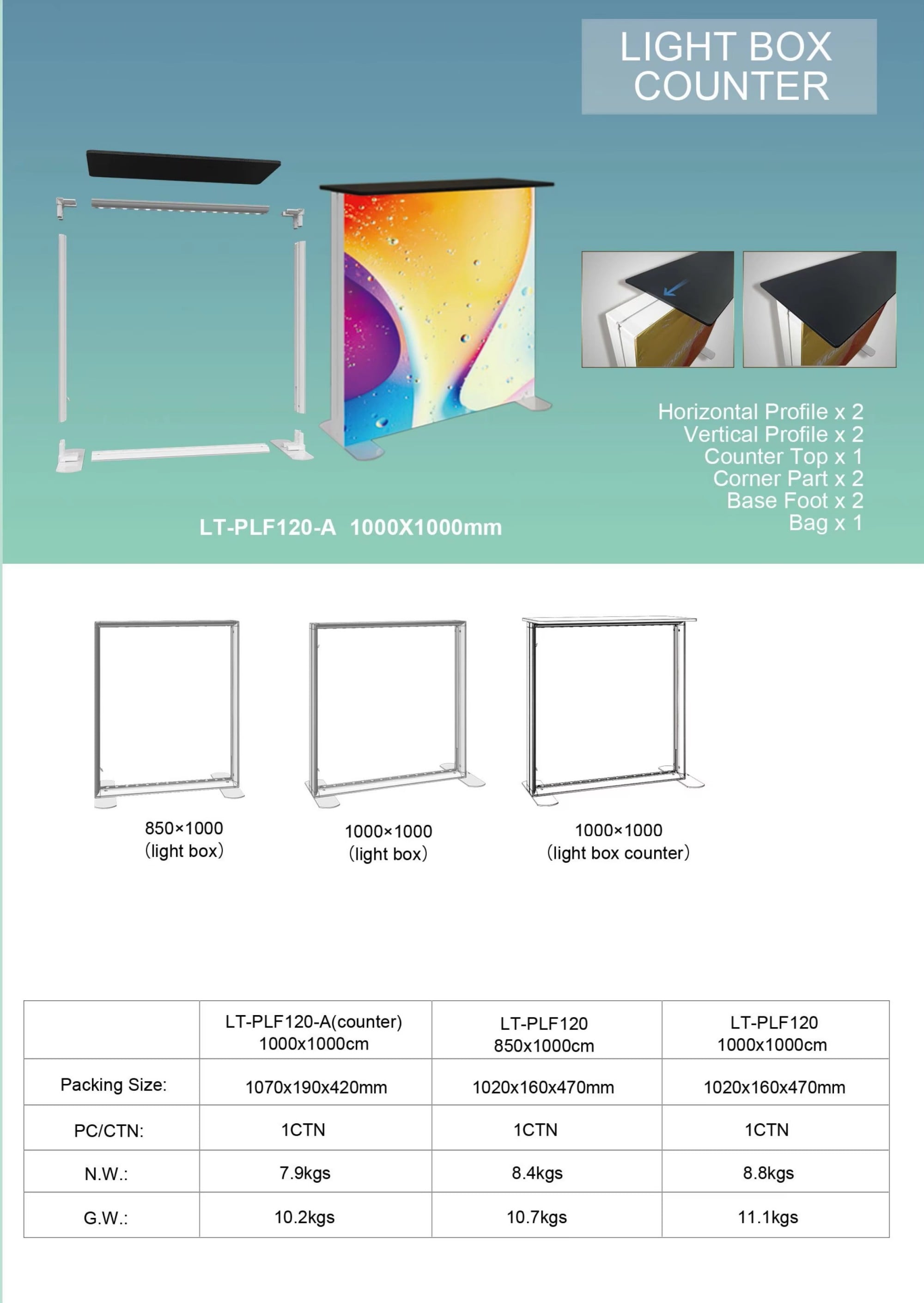
- Add a backlit counter front at the standard 1m x 1m counter height — that single piece alone often does more work than the second lightbox in terms of visitor photography.
- Add a stretch fabric ceiling between the two LED walls for a fully enclosed lit room. This is the build that trade-show lighting designers love and that we recommend for product launches where photography matters.
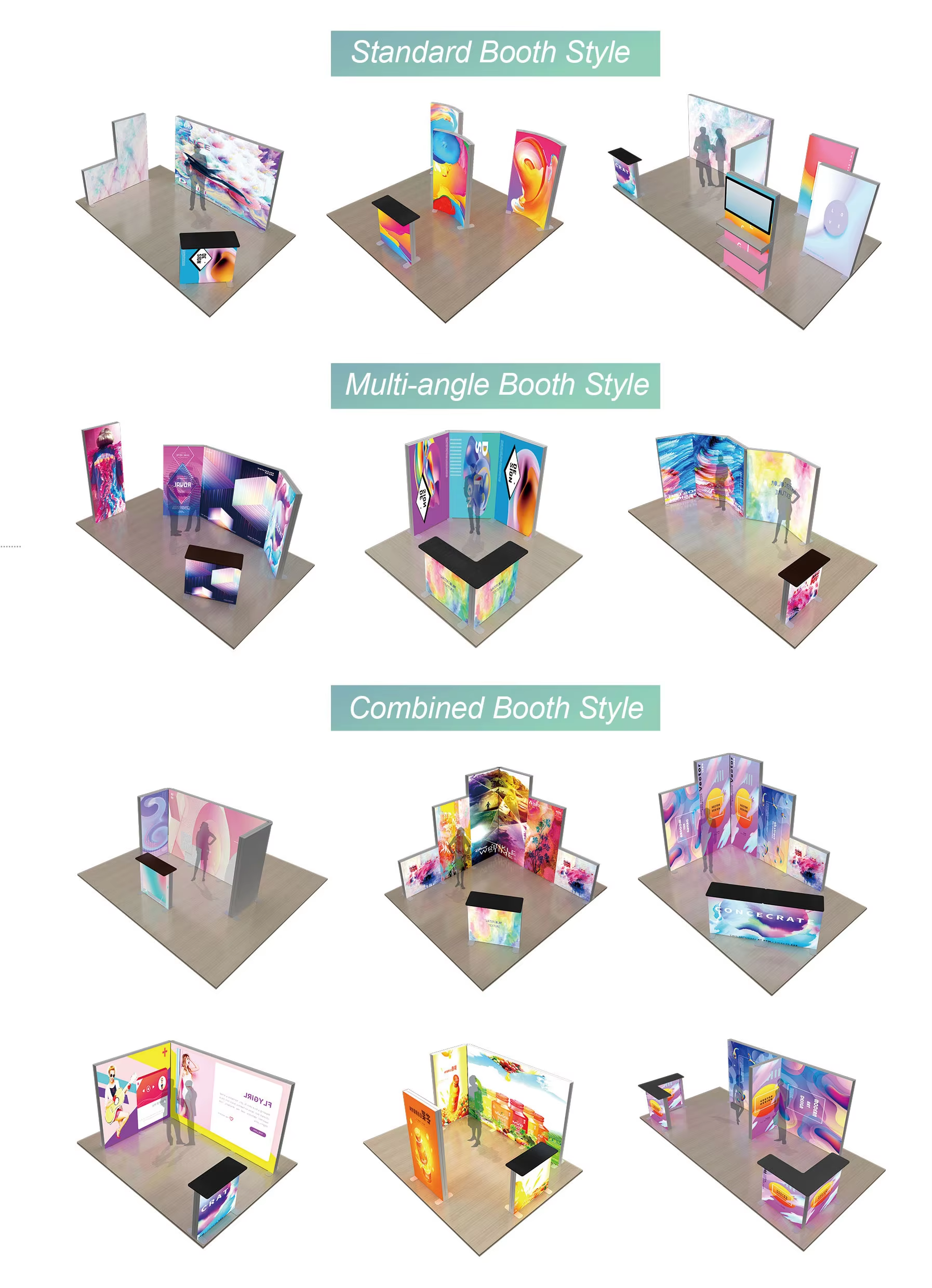
Each of those additions uses the same frame profile and the same SEG channel geometry as the 6m x 3m booth. You can reconfigure the 6m x 3m booth across shows without buying new hardware.
Buyers We See Using the 6m x 3m Booth
Brand launches and press events at venue level. Two LED walls plus a lit counter front is the configuration most often selected for press days at consumer-electronics and beauty launches. The 6m x 3m booth reads strongly under TV lighting, and the SEG fabric on the 6m x 3m booth is the same material our photography clients shoot against for product stills.
Travel retail and shopping-mall activations in regions where the venue has lower ambient light. Backlit booths outperform frontlit booths by an order of magnitude in a dim concourse. We sell a lot of 6m x 3m booth kits into Middle East and APAC mall activations for this reason — and the 6m x 3m booth is the size most retail-tenant fit guides actually allow without submitting engineering drawings to mall management.
Distributor and OEM resellers in EU, US, JP, KR who stock the SEG lightbox line and add the 6m x 3m booth kit as a higher-ASP bundle. They private-label the trolley cases and print files against their stock SKUs — for them, the 6m x 3m booth is the entry point for an account that usually upgrades to a 20-foot island within two reorder cycles.
Trade-show contractors who warehouse a small fleet of lightboxes between events. The trolley case with EPP liner — supplied as standard with the 6m x 3m booth — is sized for airline hold and for ground-freight stacking on a single EU pallet, which is what makes the 6m x 3m booth realistic as a stocked SKU rather than a one-off custom build.
The press day is the highest-stakes environment the 6m x 3m booth runs in. We have seen what happens when the LED harness has not been bench-tested: one panel of the 6m x 3m booth goes dark an hour before the press call, the press still gets held, and the brand calls the agency the next morning. The bench test on every harness before the 6m x 3m booth ships is a five-minute step that prevents an eight-figure brand impression.
Company Profile
Tianlang Light Box is one of the professional billboard solution service providers, committed to providing customers with "one-stop, all-round, and personalized" image display solutions, such as light boxes, neon art signs, UV inkjet, and other display products. As the carrier, we will show the brand's charm to customers with precision quality and artistic form. For 10 years, Tianlang has been insisting on the main business of lightboxvisual display, focusing on customer needs, continuously increasing investment in product research and development, equipment investment, continuous improvement of production technology and management level, and is committed to providing customers with ideal, safe, and reliable products.
The company mainly produces advertising light boxes, neon art signs, aluminum profiles, ultra-thin light boxes, UV inkjet, LED light strips, light guide plates, in line with the business philosophy of "survive by quality and development by innovation," and more with product quality and customer service.
Now 8 factories in Shenzhen, Guangzhou, Huizhou, Dongguan, Heyuan, Yunfu, Meizhou, and Shantou, Guangdong, China, simultaneously serve customers.
Modular and Portability
、
FAQ
1. Can the size be customized?
LED light length: 50-85-100cm splicing assembly
Height: 50-100-125cm splicing assembly
Modular light boxes need to increase or reduce the border according to the specifications. We can assemble different sizes together
2. What is the material?
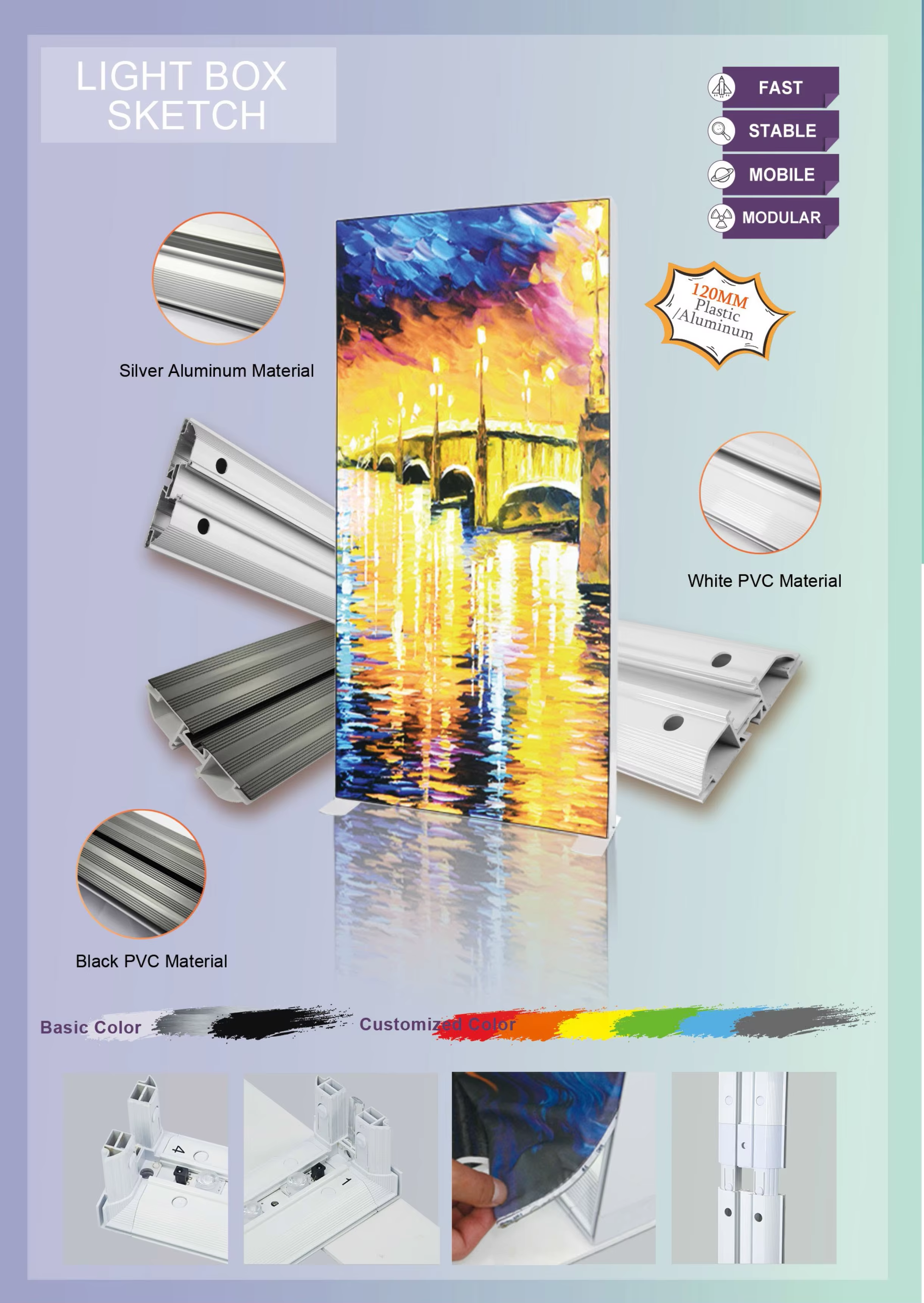
We have PVC frames and aluminum frames with the same structure, with different prices and the same structure.
3. How to assemble?
Tool-free assembly design, no tools are required for assembly, very simple. We will provide assembly videos and installation manuals.
4. Can printed fabrics be made?
Yes, we can make sublimation printing and UV printing. After you provide the printing drawings, we will make the printing for you.
5. How long is the production cycle?
Usually about 7-15 days, the specific time can be negotiated according to the order quantity and sales staff.