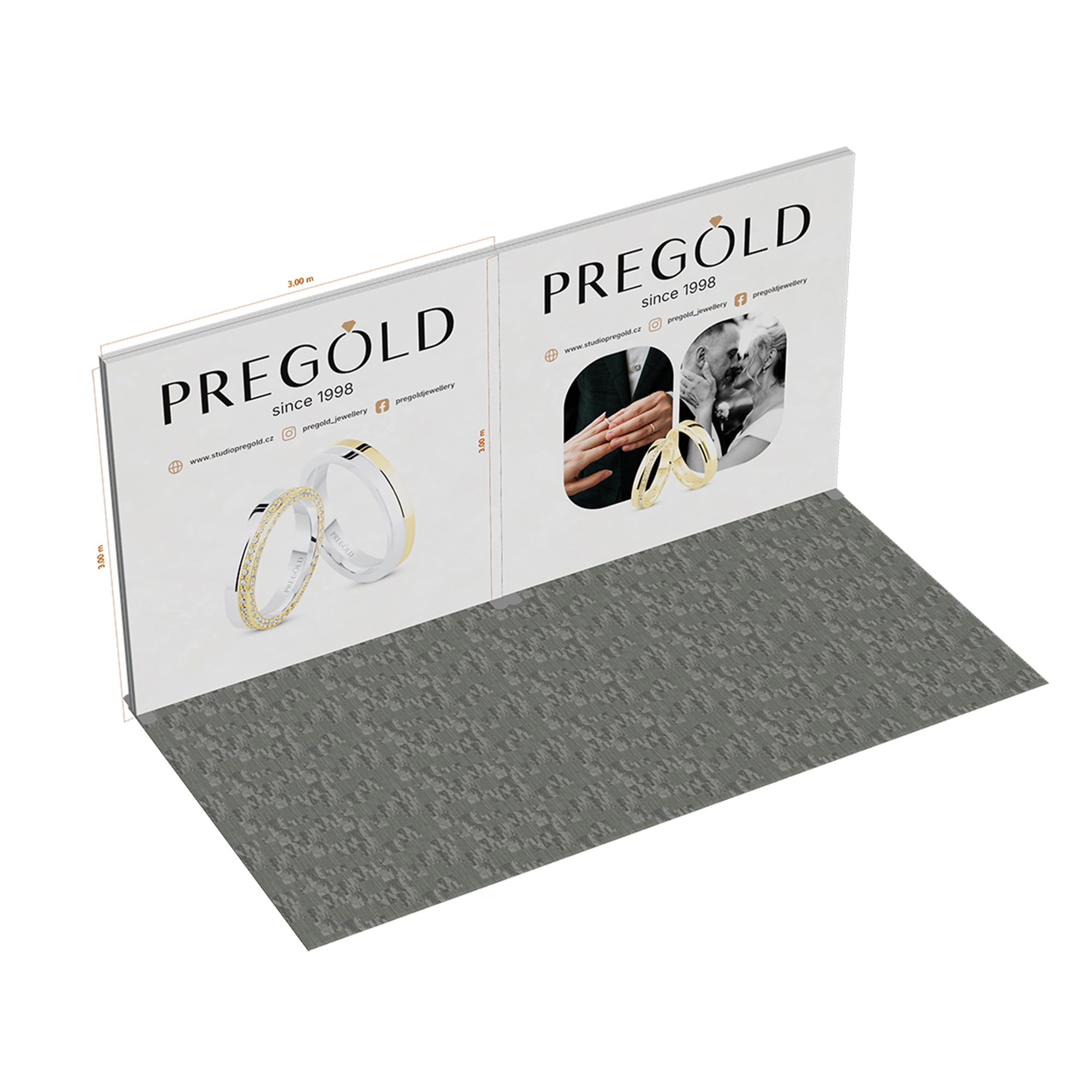
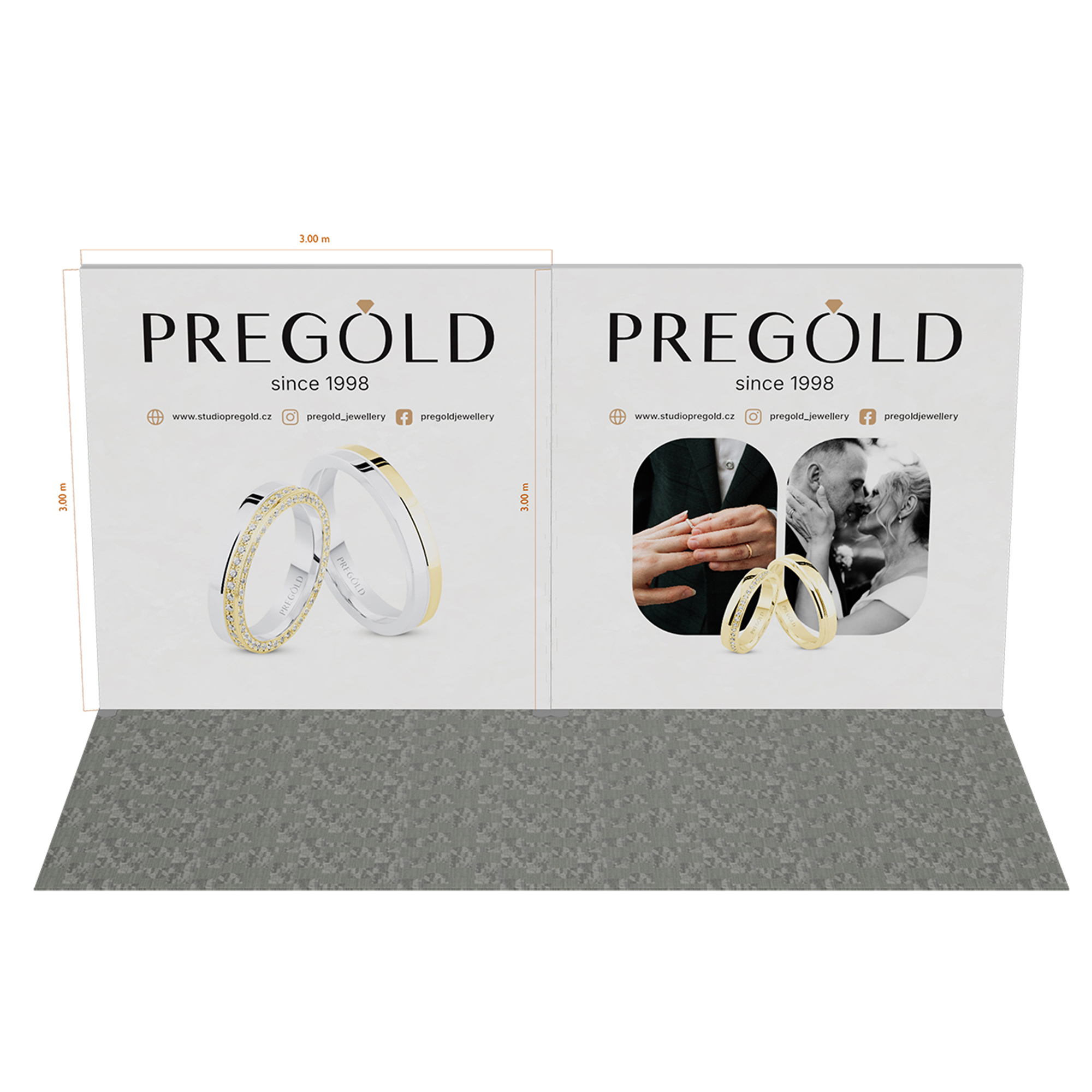
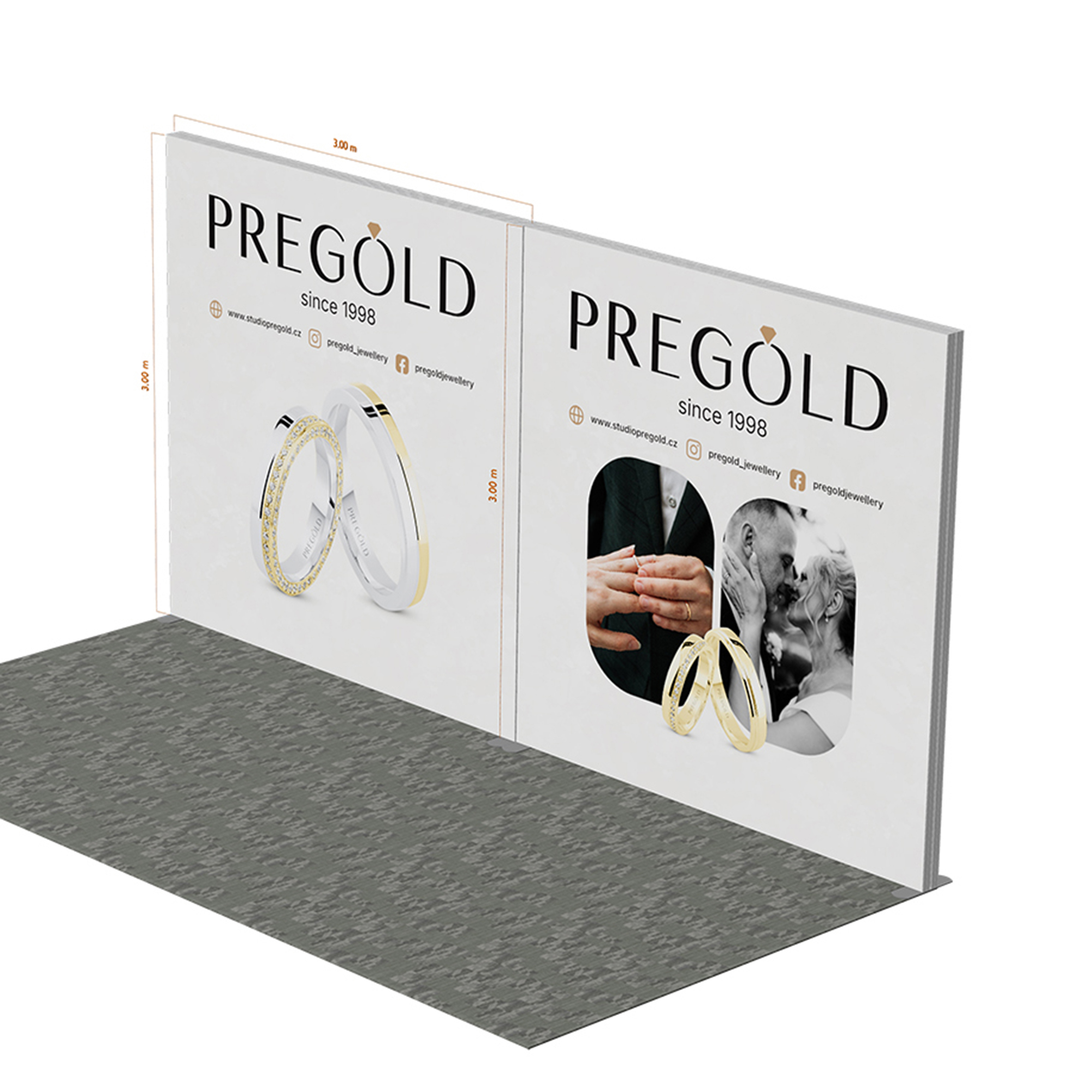
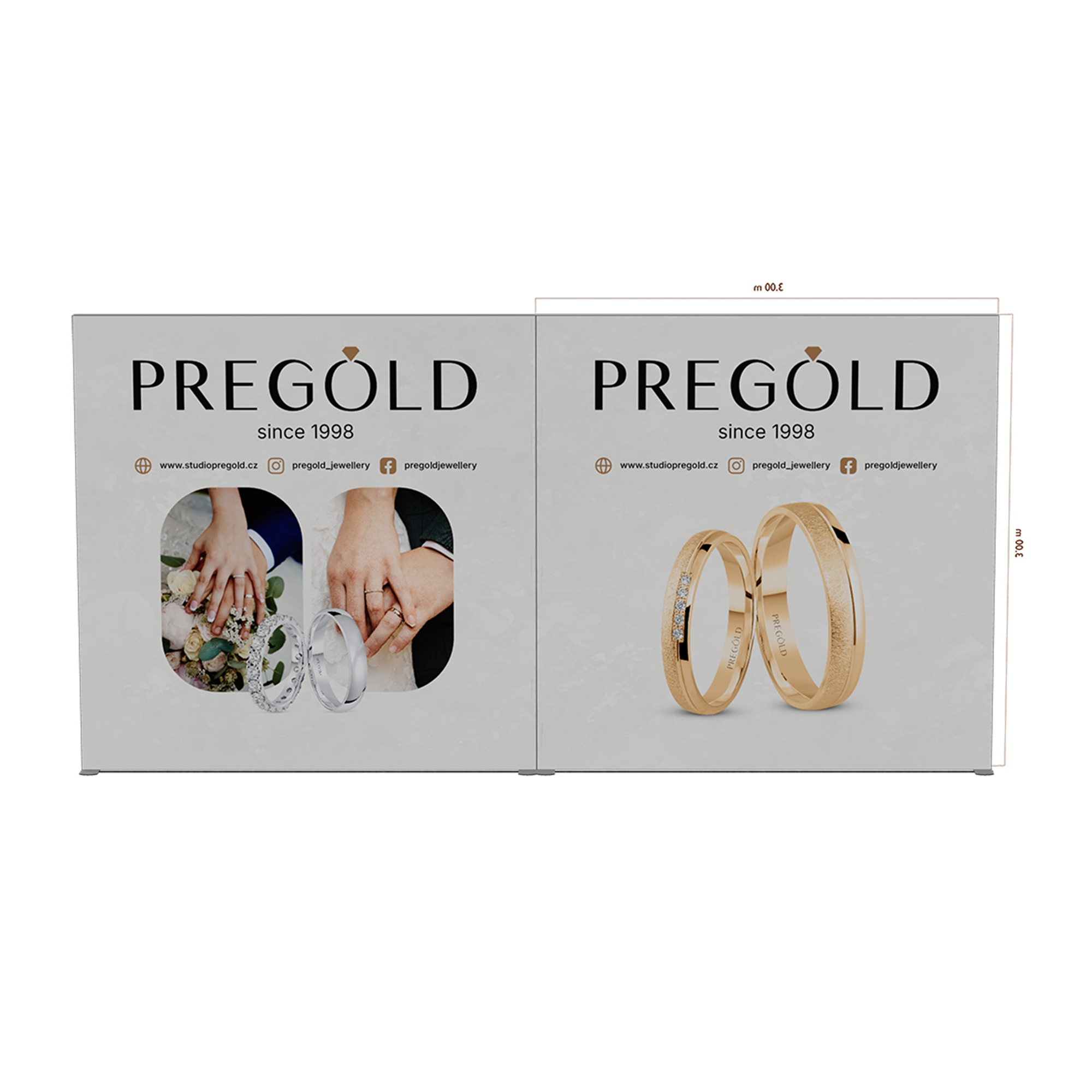
Product Description
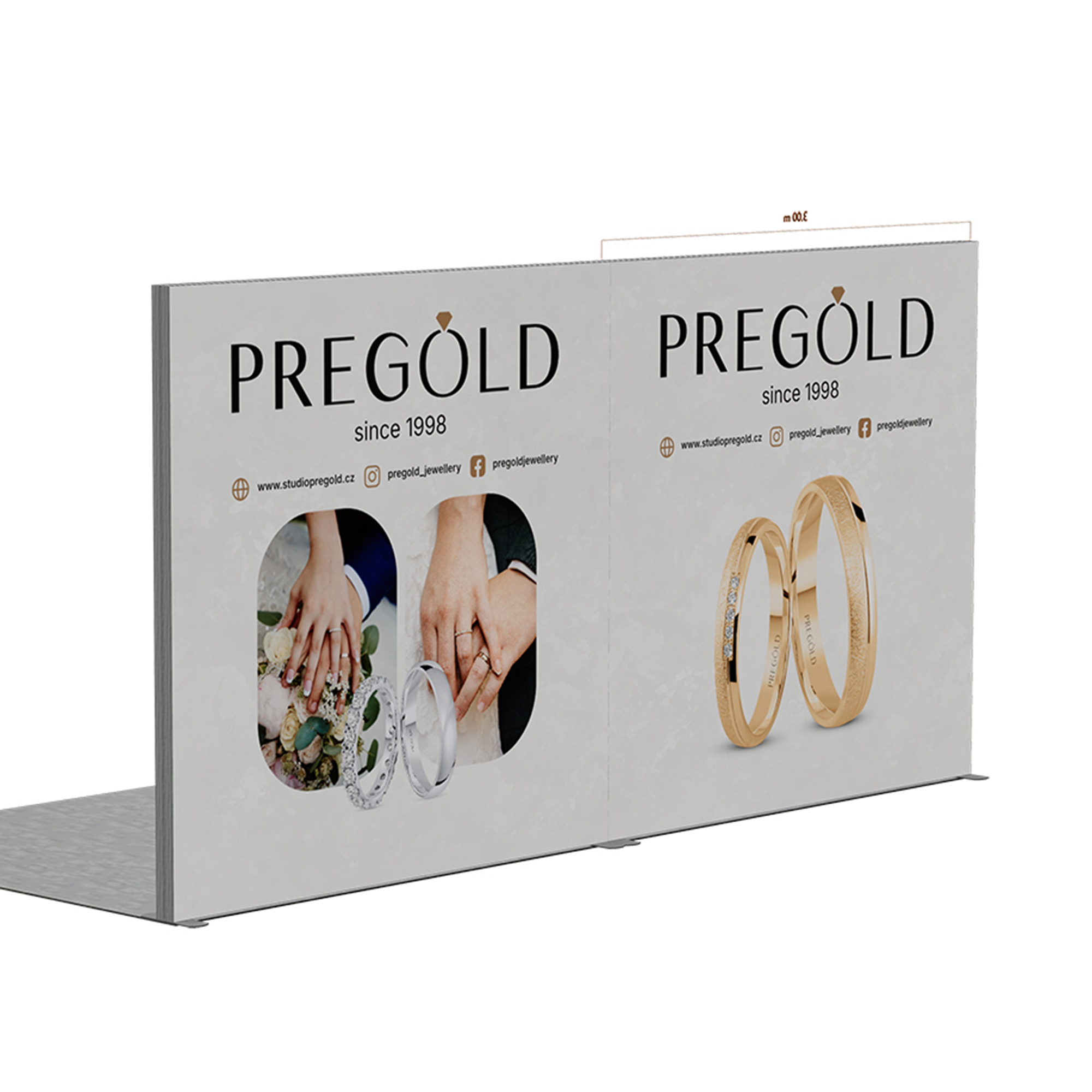
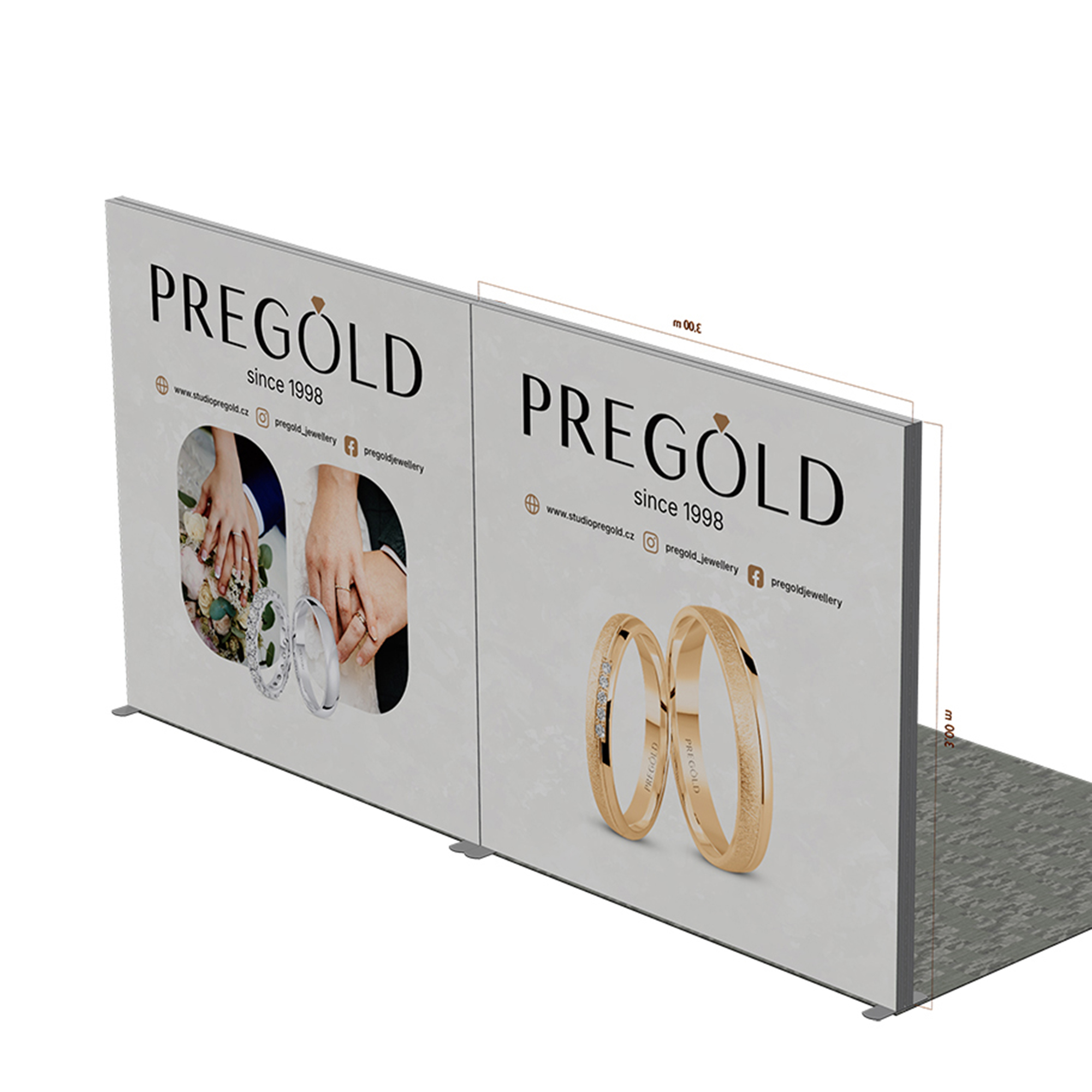
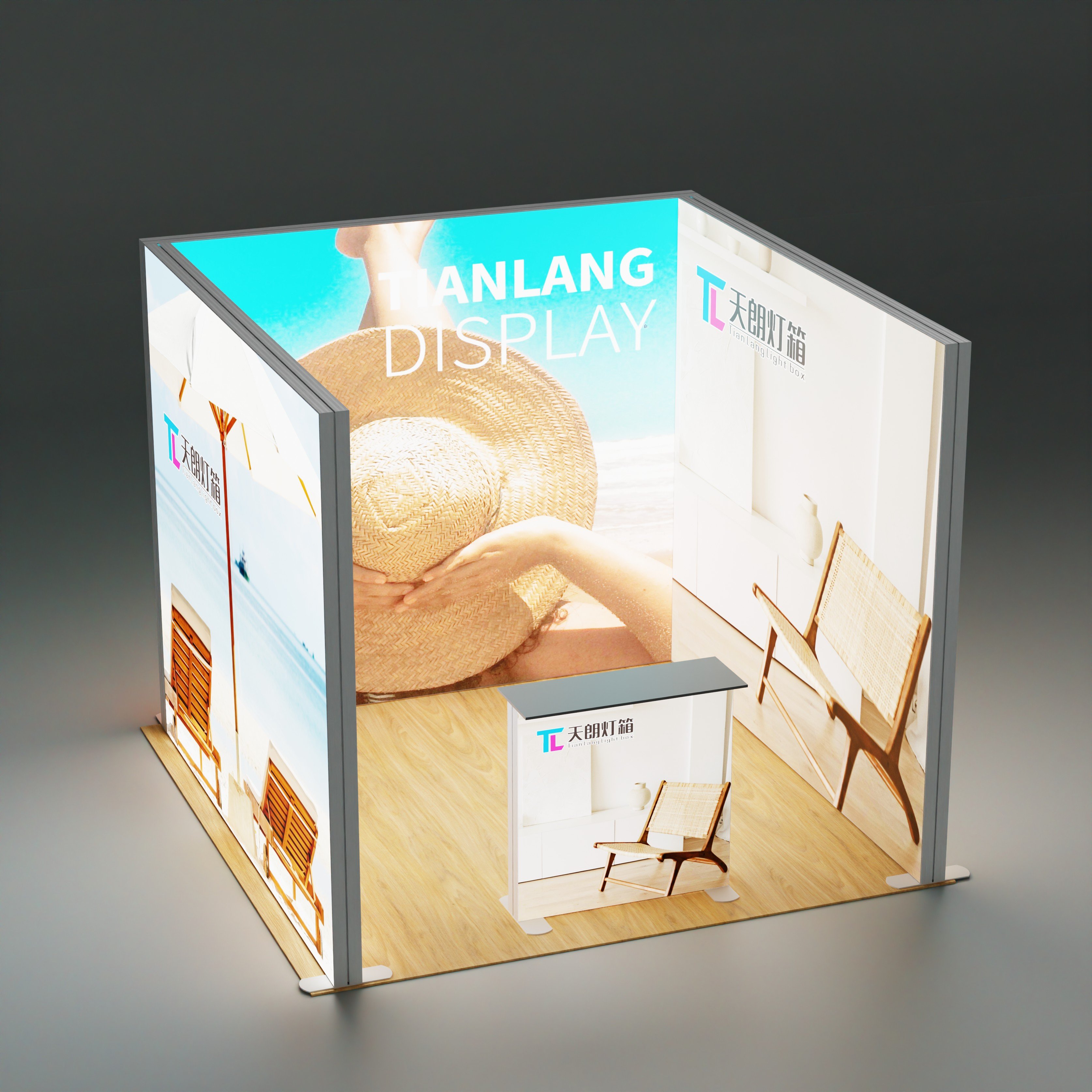
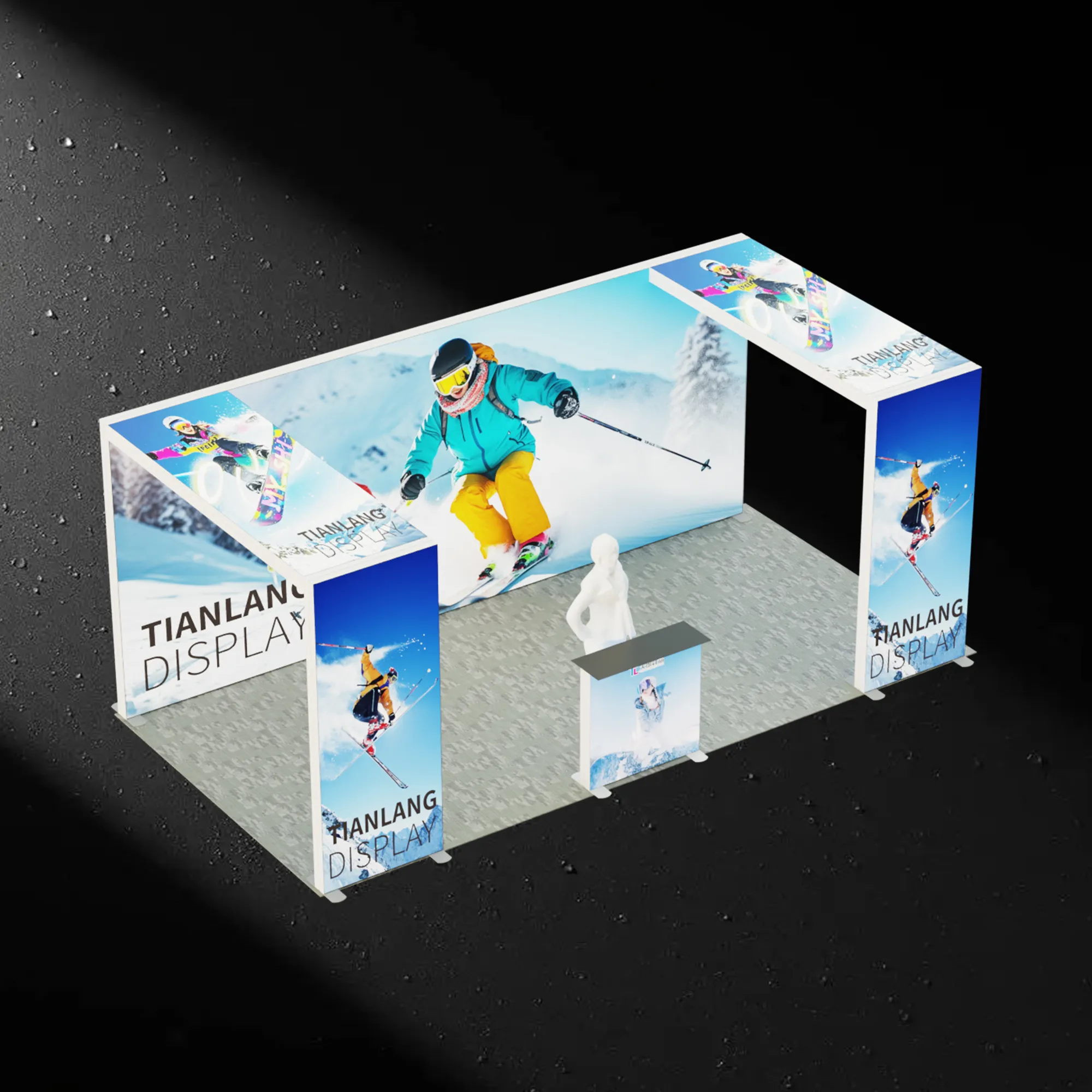
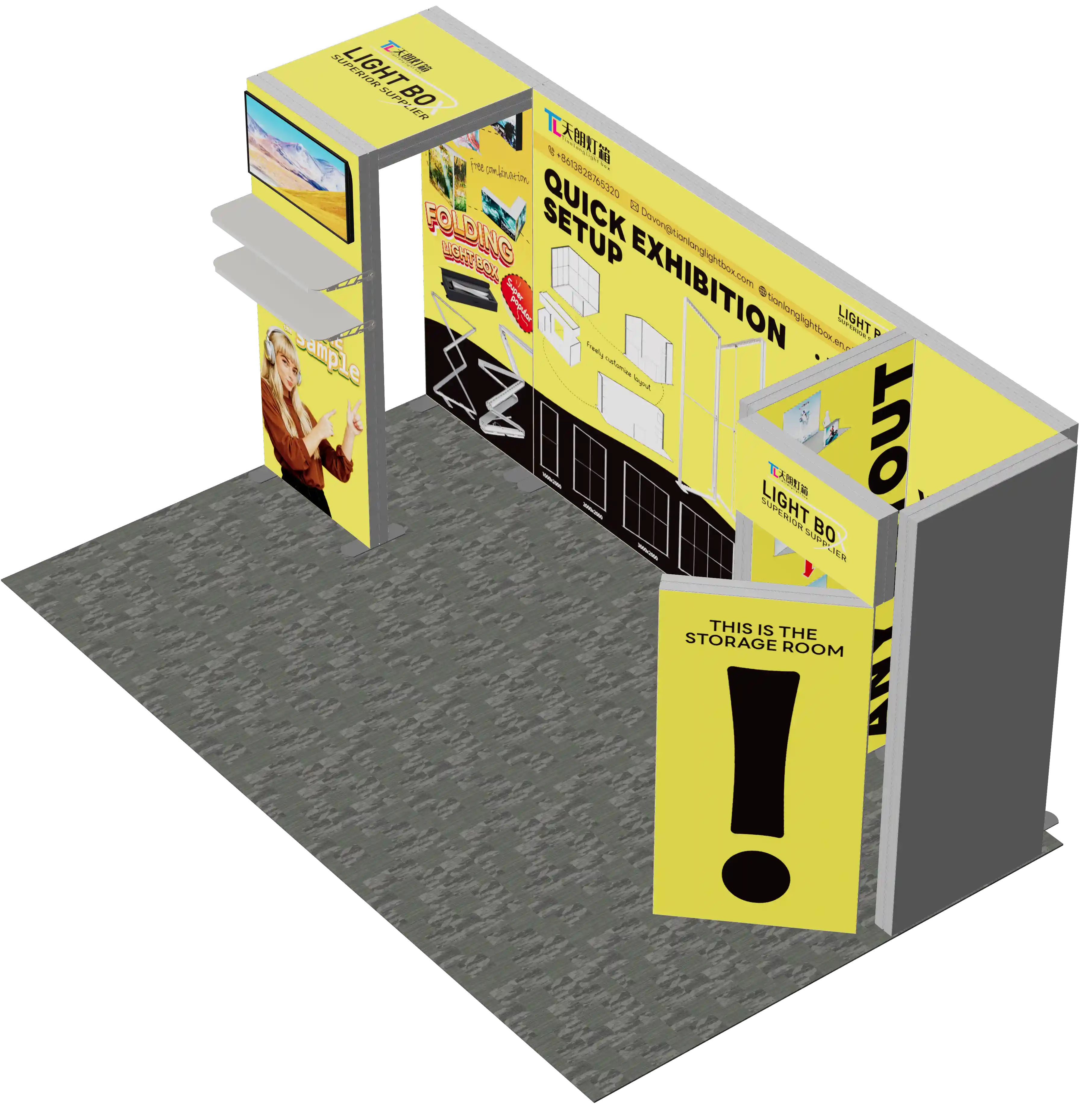
If you have ever put together an inline 20x10 booth at a North American trade show, you already know what a 20x10 exhibition stand actually means. It is not a clever marketing number. It is the dominant inline footprint on most show floors in the US and Canada, set by the venue's pipe-and-drape grid before you ever pick a fabric colour. The TIANLANG 20x10 exhibition stand that wins the room at a 20x10 inline space is rarely the most elaborate; it is the one that respects the geometry of the inline grid — 20 ft wide, 10 ft deep, 8 ft (2.44 m) backwall max — and leaves you the budget and the freight envelope to actually use the rest of the 20x10 exhibition stand footprint. We built the TIANLANG 20x10 exhibition stand against that exact constraint set, and it is the kit we send when the question is "what do you actually recommend for a 20x10 inline."
This page is for the buyer who already knows they are going to occupy a 20x10 exhibition stand footprint in Las Vegas in four months and wants to know what they are buying, not what they are being sold.
20x10 Is Not Just a Size. It Is an Inline Standard.
The 20x10 inline booth has been the workhorse of the US trade-show floor for as long as IAEE has been writing the rulebook. The geometry comes from the venue, not from the brand: pipe-and-drape is set on a 10 ft × 10 ft modular grid, three sections deep × two sections across makes a 20x10. Eight feet of usable backwall height in most convention centres — sometimes 10 ft in newer halls, sometimes 12 ft in airline-specific halls, but 8 ft is the legal default for the inline category.
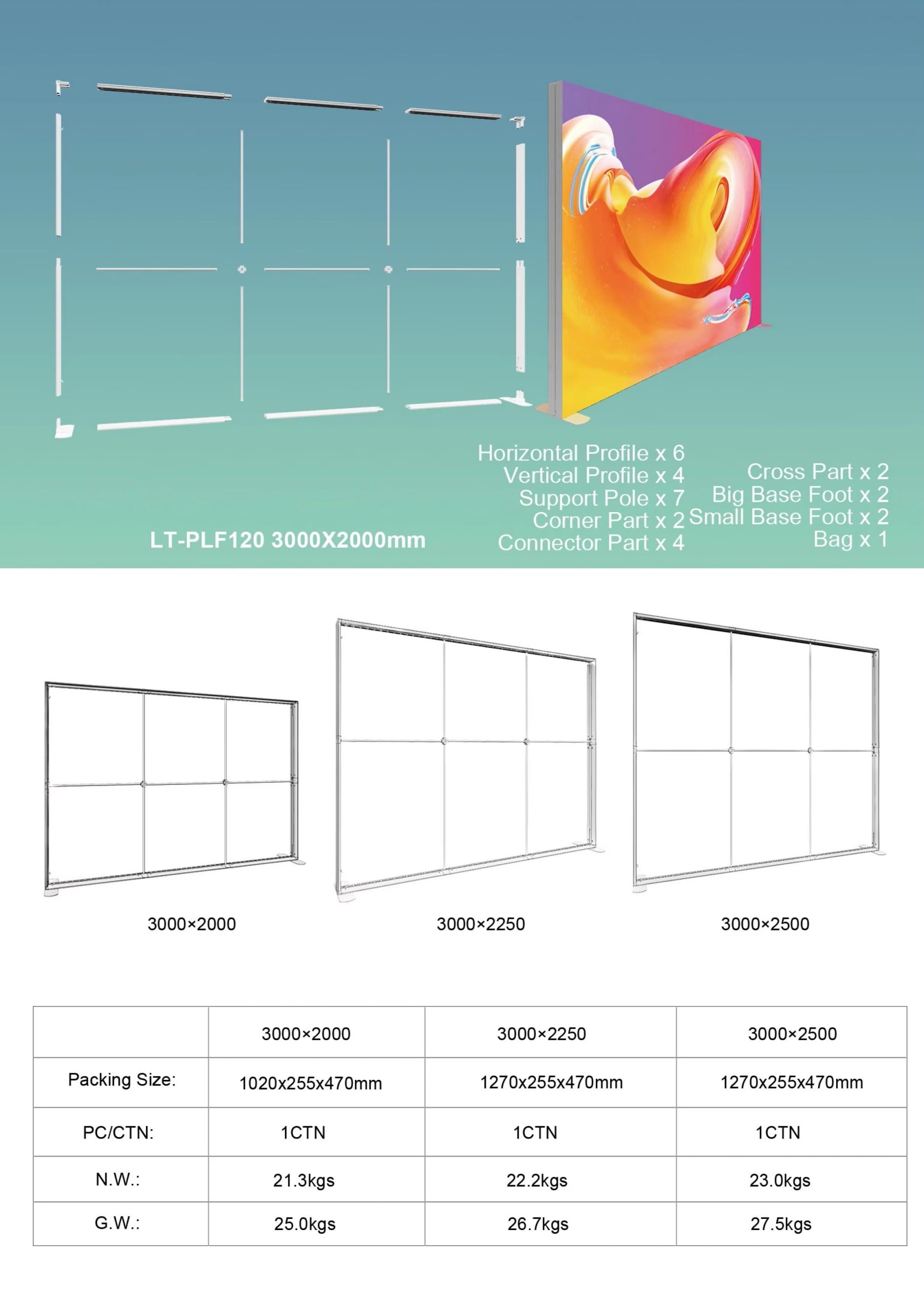
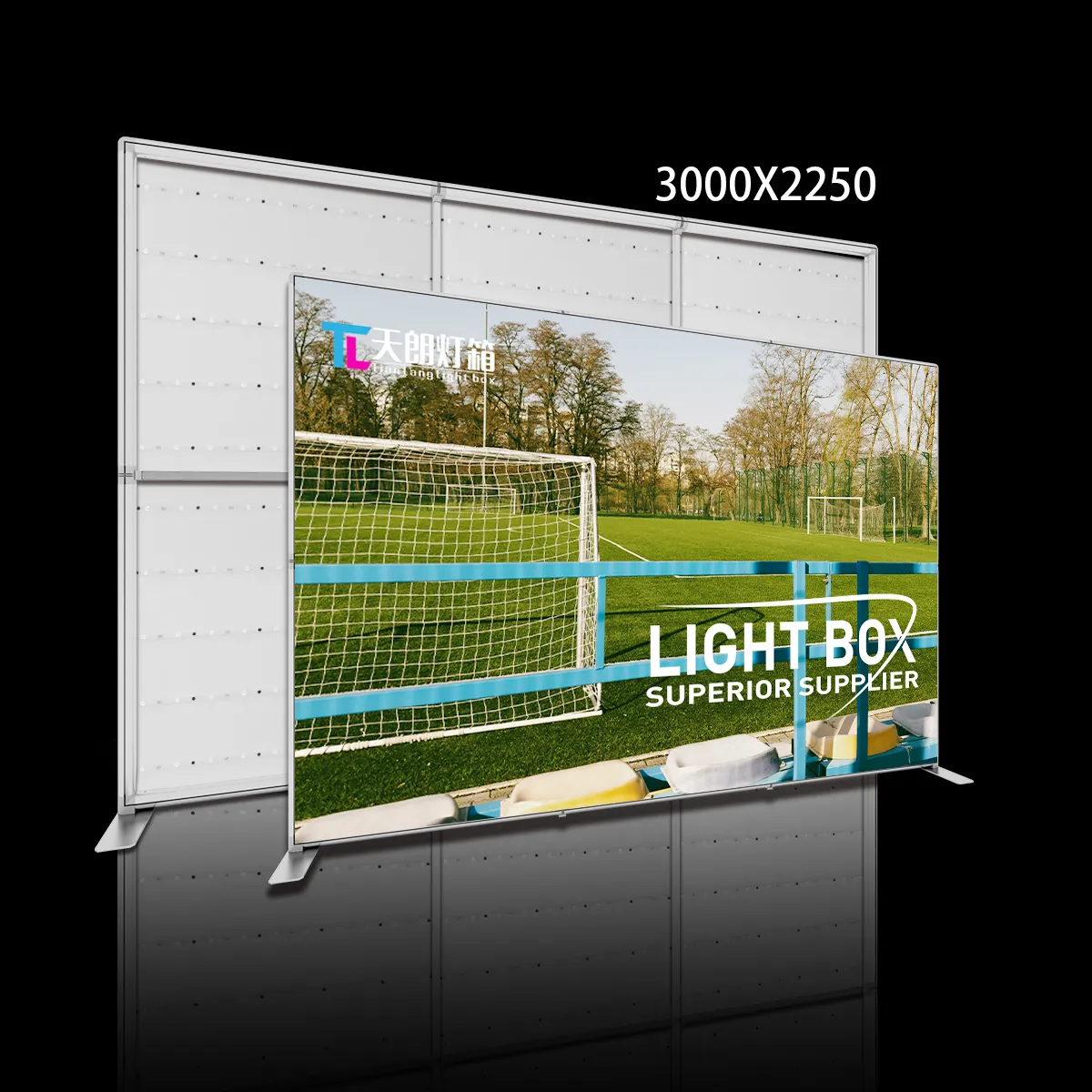
What the geometry forces is that the lit wall you want to put on your 20x10 inline booth cannot legally exceed 8 ft high without a show-organizer variance, and even with a variance you cannot obstruct line of sight for the neighbouring inline booth. The TIANLANG 20x10 exhibition stand is built around 2.44 m (8 ft) of usable backwall, with the modular frame extending in 200 mm increments if the venue allows higher construction. We have shipped the same kit to venues ranging from 7 ft ceilings to 14 ft ceilings without re-engineering the frame — the SEG channel is the same, the LED panels are the same, only the panel count changes. That is what modular means on a 20x10 exhibition stand: you are not buying a fixed kit, you are buying a frame system that the show dictates.
The Frame Is the Super-Set
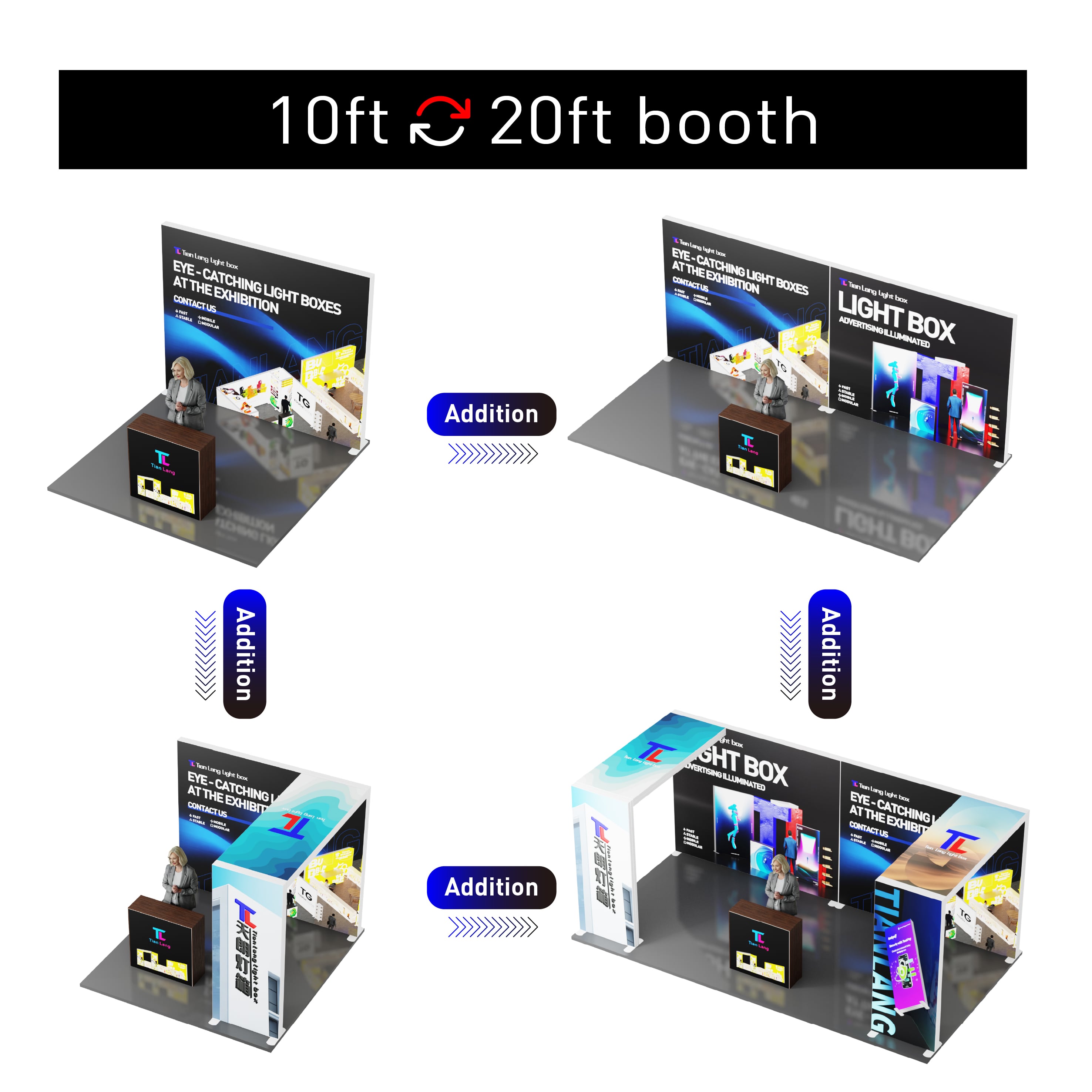
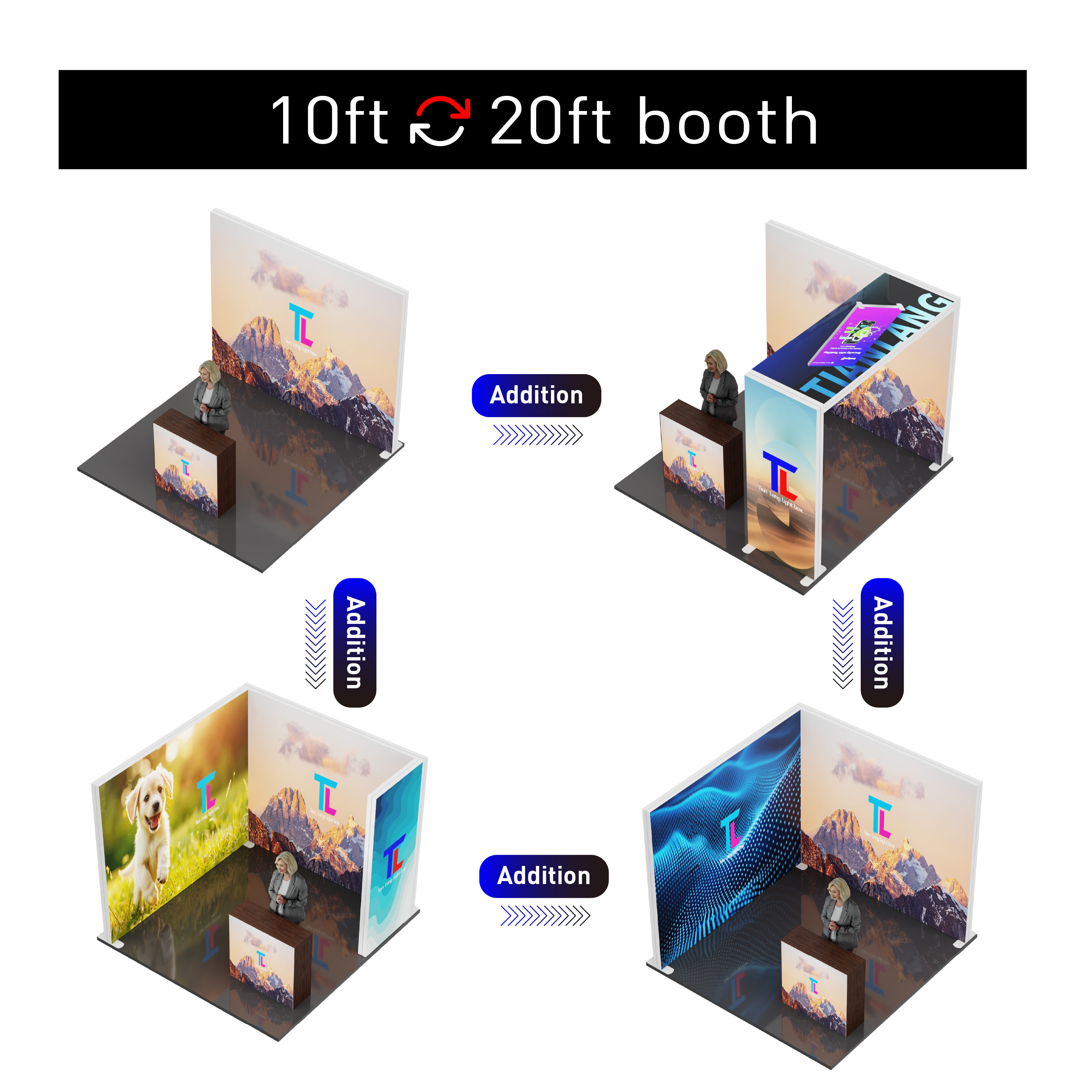
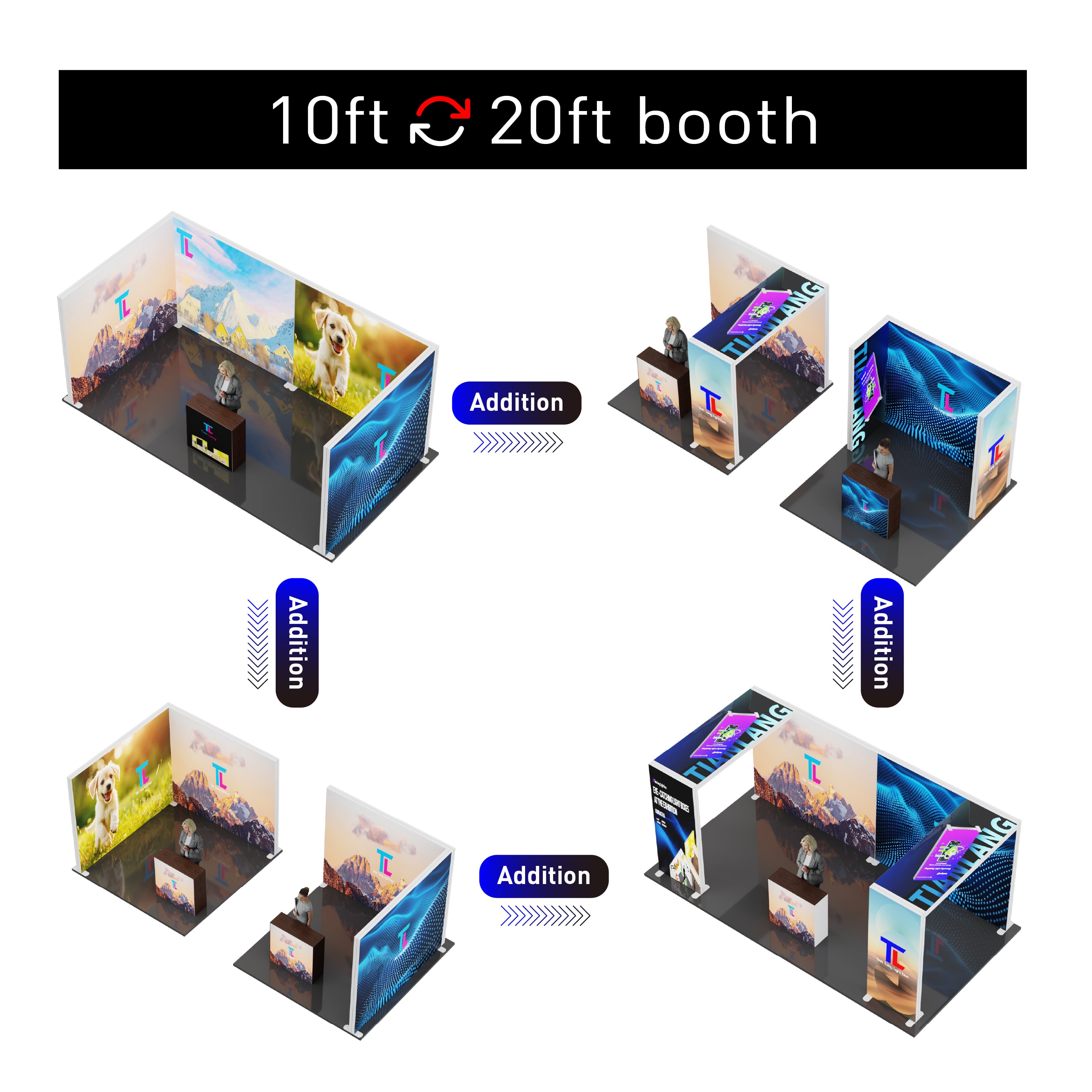
The reason we still recommend the same TIANLANG 20x10 exhibition stand frame for buyers who think they want a 10x10 — and the same frame for buyers who actually need a 10x10 corner booth or a 10x20 island — is that the modular SEG frame is dimensionally a super-set of all of them.
A 10x10 inline is half a 20x10. The 20x10 exhibition stand frame disassembles into two 10x10 frames by removing one straight connector and one horizontal bar; both halves reuse the same corner extrusions, the same LED drivers, the same SEG channel, the same keder. If a buyer is going to do both a 10x10 and a 20x10 across two shows in the same year, the TIANLANG 20x10 exhibition stand frame is the only inventory they need to hold.
A 10x10 corner booth is the same frame turned 90° with a corner return. The TIANLANG 20x10 exhibition stand frame bolts back-to-back with itself and the corner return snaps in the same connector family. The buyer who needs both an inline 20x10 and a corner 10x10 across two shows — and we see this constantly from pharma, beauty, and electronics brands — holds one frame kit. We have seen buyers use the same TIANLANG 20x10 exhibition stand frame on three different layouts in a single quarter.
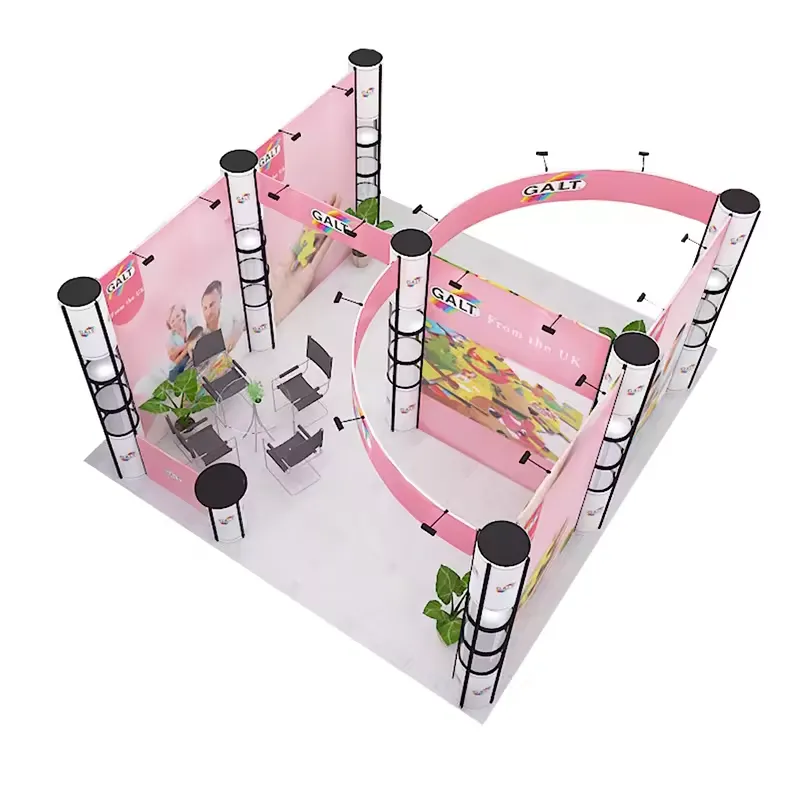
A 10x20 island is two 10x10 corner booths back-to-back with an open centre. The TIANLANG 20x10 exhibition stand covers that footprint without buying additional frame. The LED driver count goes up because more panels are lit, but the frame inventory is the same.
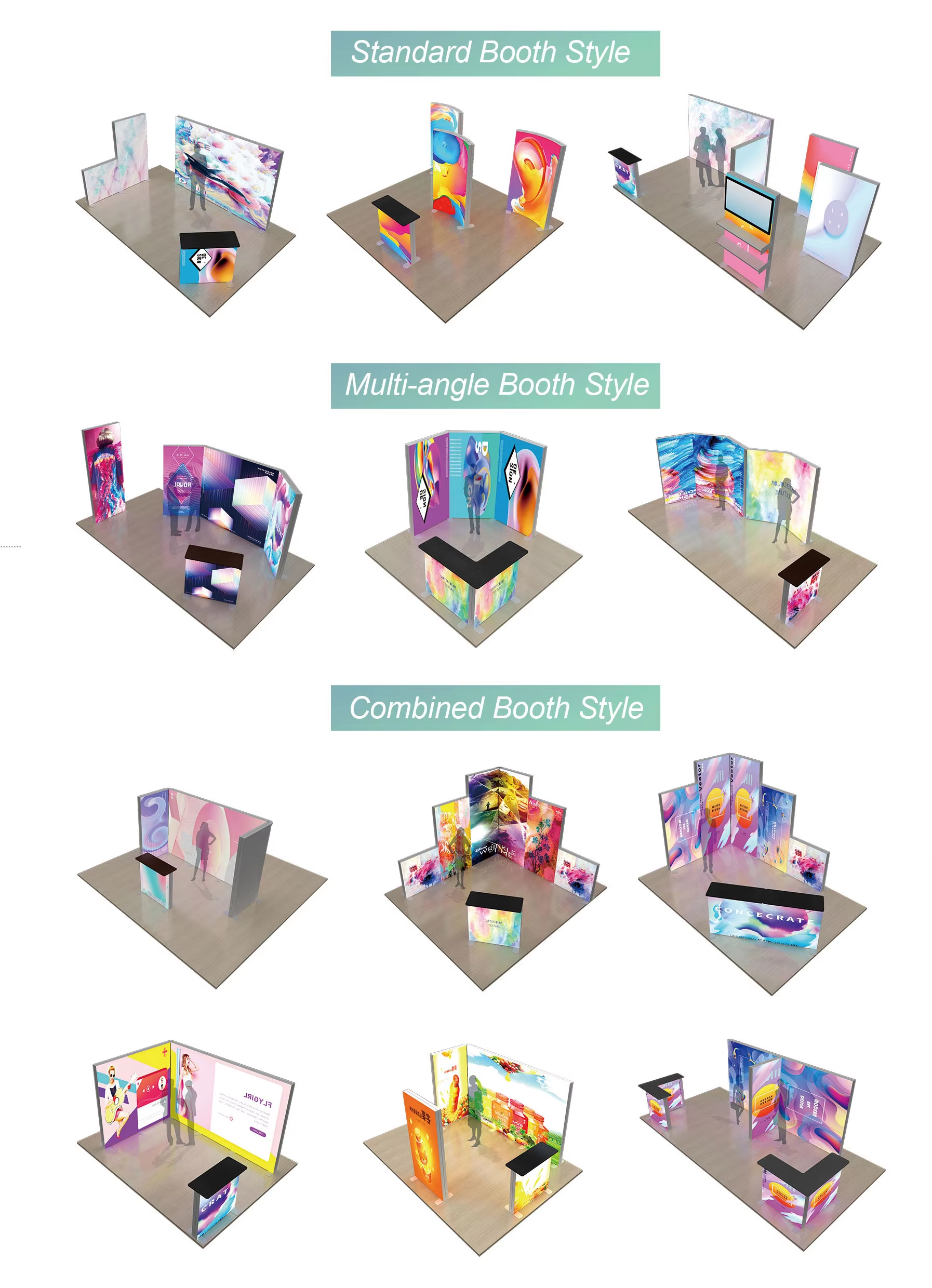
We have documented at least seven different show configurations built from the same TIANLANG 20x10 exhibition stand frame kit. If the buyer's buying behaviour is "I will buy different kits for different shows", we will explain this on the call. If the buyer's behaviour is "I will hold one kit and reconfigure", the TIANLANG 20x10 exhibition stand is the right kit.
The Line-of-Sight Rule Is Not a Decoration Hint
IAEE's standard display rules limit the height of any inline booth element to 8 ft (2.44 m) above the floor on the back half of the booth, and to 4 ft (1.22 m) on the front half. The reason is not aesthetics — it is neighbour rights. If you are a 20x10 inline booth on a show floor, your neighbour to the left has the same rule applied to them, and you can both see over the front section of each other's booth.
The TIANLANG 20x10 exhibition stand handles this by default because the LED panels are 2.4 m tall — exactly the line-of-sight ceiling for a US inline booth. The frame's modular post extensions are for venues that allow a 10 ft or 12 ft backwall on variance, not for getting around the IAEE rule. Buyers who come to us asking for "the biggest backwall possible" on a 20x10 inline usually leave with the right answer — which is the legal 8 ft — not the biggest answer.
We have had show marshalls come back to buyers after the build and ask them to lower a backwall element that the buyer thought was being bold. It is a $250 fix on the show floor and a brand-tarnishing moment. We tell customers this on the phone before we ship, because we have seen it happen.
Inline vs Island: Why the Lightbox Setup Looks Different
A 20x10 inline 20x10 exhibition stand has one visible face (the front), and the other three sides are hidden against pipe-and-drape. A 10x20 island 20x10 exhibition stand has four visible sides and the same back is exposed to a neighbouring aisle. The TIANLANG 20x10 exhibition stand is built to ship as an inline kit by default — single-sided fabric on the front, finished aluminium back panel on the rear, SEG channel the same on both faces. When the same buyer comes back and wants the same frame configured as an island, we ship double-sided fabric on both sides, the SEG channel is unchanged, the LED driver count increases.
Most of our clients order the TIANLANG 20x10 exhibition stand configured as inline first, then upgrade to double-sided island for the second show. We have built 20x10 exhibition stand kits that live in both configurations across a year — the frame is identical, the LED count is the only line that changes on the bill of materials.
Fire Rating and North American Venue Compliance
US convention centres typically require NFPA 701 fire certification on any booth fabric element over a certain square footage. The fabric itself is not the certification — the certification is the fabric + the print ink + the LED array combination tested together. The TIANLANG 20x10 exhibition stand is supplied with NFPA 701-certified polyester fabric as a standard option; the certification file ships with the kit so the show marshall can inspect it during move-in.
The LED drivers on the TIANLANG 20x10 exhibition stand are UL-listed for North American venues. We have shipped to venues in Las Vegas, Orlando, Chicago, New York, and Toronto without a single UL-related rejection in the last four years. The CE/RoHS documentation that comes standard with the kit covers EU shipments; UL documentation covers North American shipments; PSE covers Japan; KC covers Korea. Same kit, different paperwork trail.
For shows in California (the strictest state), we supply California Title 19 fabric on request. The fabric weight and the print surface are unchanged; only the flame-retardant chemistry is different. There is no upcharge for Title 19 on the TIANLANG 20x10 exhibition stand, but the lead time adds three to five days because the fabric runs through our finishing line as a separate batch.
Freight and the Two-Trolley Rule
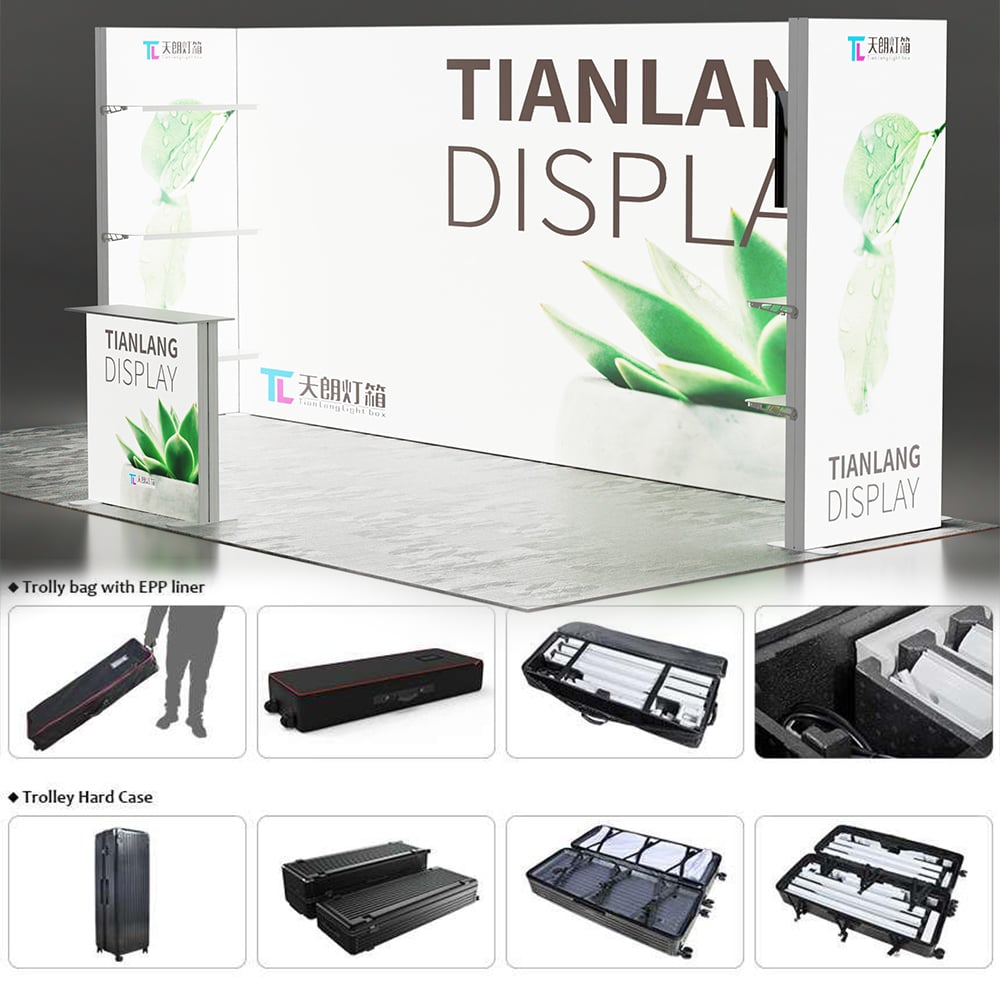
A 20x10 inline booth kit is heavier than a 10x10 kit, and the freight envelope is the real constraint. The TIANLANG 20x10 exhibition stand ships in two trolley cases with EPP liners, total packed weight around 60-65 kg, sized to fit a single EU pallet for ground freight or two checked-airline cases for air freight. We have tested the kit through DHL, FedEx, and most regional US ground carriers, and we know which routing works for which show city.
Most of our OEM clients in the US order the TIANLANG 20x10 exhibition stand with the carry case included as standard, because the alternative is a custom-built road case that adds 9 kg and does not improve transit safety on the airline network. If a buyer is shipping by their own ground fleet, we will spec a different case. If a buyer is shipping by air, the standard trolley case is the right answer.
 EN
EN
 FR
FR DE
DE PT
PT ES
ES AR
AR RU
RU