 EN
EN
 FR
FR DE
DE PT
PT ES
ES AR
AR RU
RU

What Technical Factors Matter When Ordering a Custom Exhibition Booth?
When planning to order a custom exhibition booth for your next trade show or industry event, understanding the critical technical factors can mean the difference between a successful display that attracts visitors and a costly mistake that fails to deliver results. The technical specifications of a custom exhibition booth go far beyond aesthetic considerations, encompassing structural engineering, modular systems, installation requirements, and compliance standards that directly impact both functionality and return on investment.
Professional exhibitors recognize that technical factors form the foundation of any successful custom exhibition booth project. These factors determine not only the structural integrity and safety compliance of your display but also influence setup efficiency, transportation logistics, storage requirements, and long-term durability. Making informed decisions about technical specifications during the ordering process ensures your custom exhibition booth meets both immediate show requirements and provides lasting value across multiple events and venue configurations.
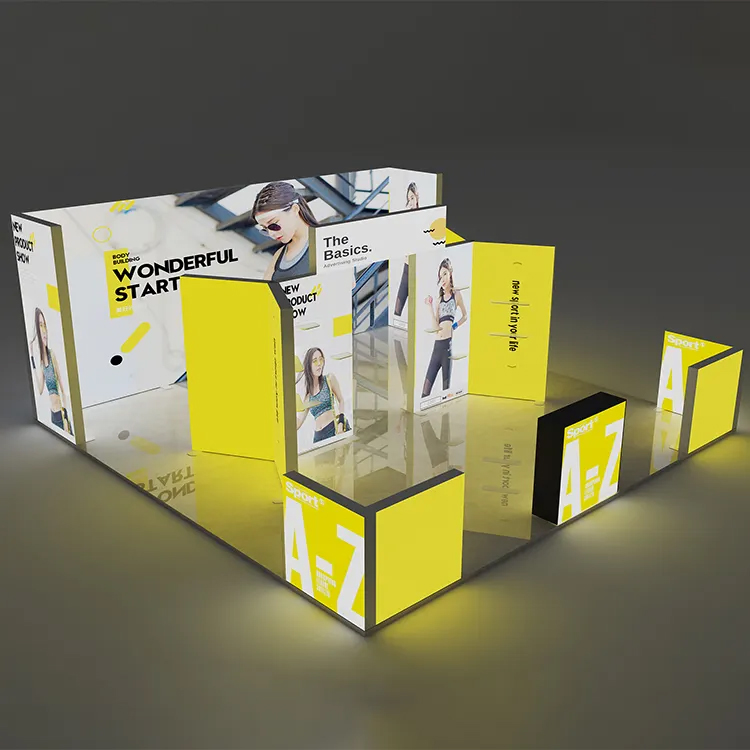
Structural Engineering and Load-Bearing Specifications
Frame Design and Material Selection
The structural backbone of any custom exhibition booth begins with frame design and material selection, which determines the overall stability, weight capacity, and longevity of your display system. Modern custom exhibition booth frameworks typically utilize aluminum extrusion profiles, steel tubing, or hybrid combinations that balance strength with portability requirements. Aluminum profiles, particularly those with T-slot configurations, offer excellent strength-to-weight ratios while providing versatility for custom modifications and accessories attachment.
When ordering your custom exhibition booth, specify the aluminum grade and wall thickness requirements based on your intended use patterns. Standard 6063-T5 aluminum provides adequate strength for most applications, while 6061-T6 offers superior structural properties for heavy-duty installations. The profile dimensions, typically ranging from 20mm to 80mm systems, should align with your booth size, height requirements, and anticipated loading conditions.
Connection systems represent another critical technical factor in frame design. Advanced custom exhibition booth systems employ precision-machined connectors, corner brackets, and joining hardware that ensure rigid assembly without visible fasteners. These connection methods directly impact setup time, structural integrity, and the professional appearance of your finished display.
Weight Distribution and Foundation Requirements
Proper weight distribution across your custom exhibition booth foundation prevents structural issues and ensures compliance with venue safety requirements. Calculate the total system weight including framework, panels, graphics, lighting, and any integrated technology components to determine foundation specifications. Most trade show venues require weight distribution calculations and may impose limits on point loads or total booth weight.
Foundation design considerations include base plate sizing, leveling mechanisms, and floor protection requirements. Adjustable feet or leveling systems become essential when your custom exhibition booth must accommodate uneven venue floors common in older exhibition halls. Specify foundation components that provide adequate stability while minimizing floor contact pressure to avoid venue damage charges.
For elevated platforms or multi-level custom exhibition booth designs, engineering calculations become mandatory to ensure structural safety under anticipated occupancy loads. Consider specifying certified engineering documentation for complex structures that may require venue approval before installation.
Modular System Integration and Compatibility
Standardized Connection Protocols
Modern custom exhibition booth systems benefit significantly from modular design principles that enable reconfiguration, expansion, and component interchangeability across different show requirements. When ordering your system, prioritize manufacturers that utilize standardized connection protocols and dimensional coordination that ensures long-term compatibility and upgrade potential.
Modular compatibility extends beyond basic framework connections to include panel mounting systems, accessory attachment points, and integrated technology interfaces. A well-designed custom exhibition booth incorporates T-slot profiles or proprietary connector systems that accept standard accessories without requiring custom fabrication for each application.
Specify modular systems that support both horizontal and vertical expansion capabilities, enabling your booth to grow with changing exhibition requirements. This technical consideration proves particularly valuable for companies planning to increase booth sizes or adapt displays for different venue configurations over time.
Component Interchangeability Standards
Technical specifications should address component interchangeability to maximize the versatility and cost-effectiveness of your custom exhibition booth investment. Standardized panel dimensions, mounting hardware, and accessory interfaces enable efficient reconfiguration and reduce long-term replacement costs.
Panel systems represent a critical interchangeability consideration, with specifications covering mounting mechanisms, edge details, and dimensional tolerances. Quality custom exhibition booth systems employ precision manufacturing tolerances that ensure consistent fit and finish across all components, regardless of production batch or timing.
Accessory mounting systems should follow industry standards or proprietary systems with comprehensive component catalogs. Specify mounting interfaces that accommodate lighting fixtures, display monitors, shelving systems, and promotional hardware without requiring custom fabrication or modification of primary structural components.
Installation and Assembly Technical Requirements
Tool Requirements and Setup Complexity
The technical complexity of your custom exhibition booth installation directly impacts labor costs, setup time, and the potential for installation errors that can compromise display quality. When ordering, specify systems that minimize tool requirements and reduce assembly complexity while maintaining structural integrity and professional appearance.
Advanced custom exhibition booth designs incorporate tool-free assembly methods using cam locks, quarter-turn fasteners, or snap-fit connections that enable rapid installation without specialized tools or technical expertise. These systems prove particularly valuable when working with union labor in convention centers where tool usage may be restricted or when setup crews have limited technical training.
Assembly documentation requirements should be specified during ordering to ensure comprehensive installation instructions, component identification systems, and troubleshooting guides accompany your custom exhibition booth. Quality manufacturers provide detailed assembly drawings, parts lists, and step-by-step procedures that minimize installation errors and reduce setup time.
Power Distribution and Technology Integration
Modern custom exhibition booth applications require integrated power distribution systems that safely deliver electrical power to lighting, displays, charging stations, and other technology components while maintaining clean aesthetics and meeting electrical code requirements. Specify internal cable management systems within the framework that route power and data cables invisibly throughout the structure.
Power distribution specifications should address both low-voltage systems for LED lighting and standard voltage requirements for displays and equipment. Consider specifying factory-installed wiring harnesses with standardized connectors that simplify installation and reduce the potential for wiring errors during setup.
Ground fault protection, circuit protection, and electrical isolation requirements must be addressed in your custom exhibition booth technical specifications to ensure compliance with venue electrical codes and insurance requirements. Specify systems that include appropriate electrical safety devices and provide easy access for electrical inspections when required by venues.
Transportation and Storage Logistics
Packaging and Shipping Specifications
The technical design of your custom exhibition booth must consider transportation logistics, packaging requirements, and storage constraints that affect both initial shipping costs and ongoing event logistics. Specify component dimensions and weights that optimize shipping efficiency while protecting components during transit.
Modular component design should prioritize packaging density and protection requirements. Custom exhibition booth systems that disassemble into standardized shipping containers or protective cases reduce transportation costs and minimize damage risks during handling. Consider specifying wheeled shipping cases that double as storage containers and simplify venue logistics.
Weight distribution across shipping containers affects handling requirements and shipping classifications. Specify component groupings that balance shipping container weights while ensuring all components necessary for a functional display section are contained within individual containers for partial shipment flexibility.
Climate Protection and Durability Standards
Storage and transportation environments expose custom exhibition booth components to temperature variations, humidity changes, and physical stresses that can affect performance and appearance over time. Specify materials and finishes that withstand these environmental challenges while maintaining consistent appearance and functionality.
Aluminum framework components should include appropriate surface treatments such as anodizing or powder coating that provide corrosion resistance and wear protection. Specify coating systems that resist scratching, fading, and chemical damage from typical cleaning products used in exhibition environments.
Panel materials and graphics substrates require specifications that address moisture resistance, temperature stability, and mechanical durability. Consider specifying closed-cell foam cores, aluminum composite panels, or other materials that maintain dimensional stability across varying environmental conditions while providing adequate strength for handling and installation stresses.
FAQ
What structural load calculations are required for custom exhibition booth orders?
Structural load calculations for custom exhibition booth orders must account for dead loads from framework and components, live loads from occupancy and equipment, and dynamic loads from visitor interaction. Most venues require documentation showing compliance with local building codes, typically specifying minimum live loads of 100 pounds per square foot for elevated platforms and appropriate safety factors for all structural connections. Complex or elevated structures may require professional engineering calculations and stamped drawings for venue approval.
How do modular compatibility standards affect long-term booth investment value?
Modular compatibility standards significantly enhance long-term investment value by enabling component reuse, system expansion, and configuration flexibility across different show requirements. Systems following industry standards or comprehensive proprietary ecosystems allow for gradual investment growth, component replacement without full system obsolescence, and adaptation to changing exhibition needs. Specify systems with broad accessory catalogs and proven component availability to protect against obsolescence and maximize return on investment.
What technical documentation should accompany custom exhibition booth orders?
Comprehensive technical documentation should include detailed assembly instructions with component identification, structural load calculations, electrical schematics for integrated power systems, material specifications and safety data sheets, warranty information, and maintenance procedures. Professional installations may require engineering drawings, electrical code compliance certificates, and material fire-rating documentation for venue approval. Quality manufacturers provide complete documentation packages that support both installation and ongoing maintenance requirements.
How do venue restrictions influence custom exhibition booth technical specifications?
Venue restrictions significantly influence custom exhibition booth technical specifications through height limitations, weight restrictions, electrical code requirements, fire safety regulations, and installation procedure constraints. Different venues impose varying limits on structural height, electrical connections, floor loading, and assembly methods that must be considered during design specification. Order systems with flexibility to accommodate common venue variations while maintaining structural integrity and functionality across different exhibition environments.