 EN
 FR
 DE
 PT
 ES
 AR
 RU

2026 Guide to Choosing Exhibition Lightboxes: Beginner’s Pitfalls & Buying Tips
2026 Guide to Choosing Exhibition Lightboxes: Beginner’s Pitfalls & Buying Tips
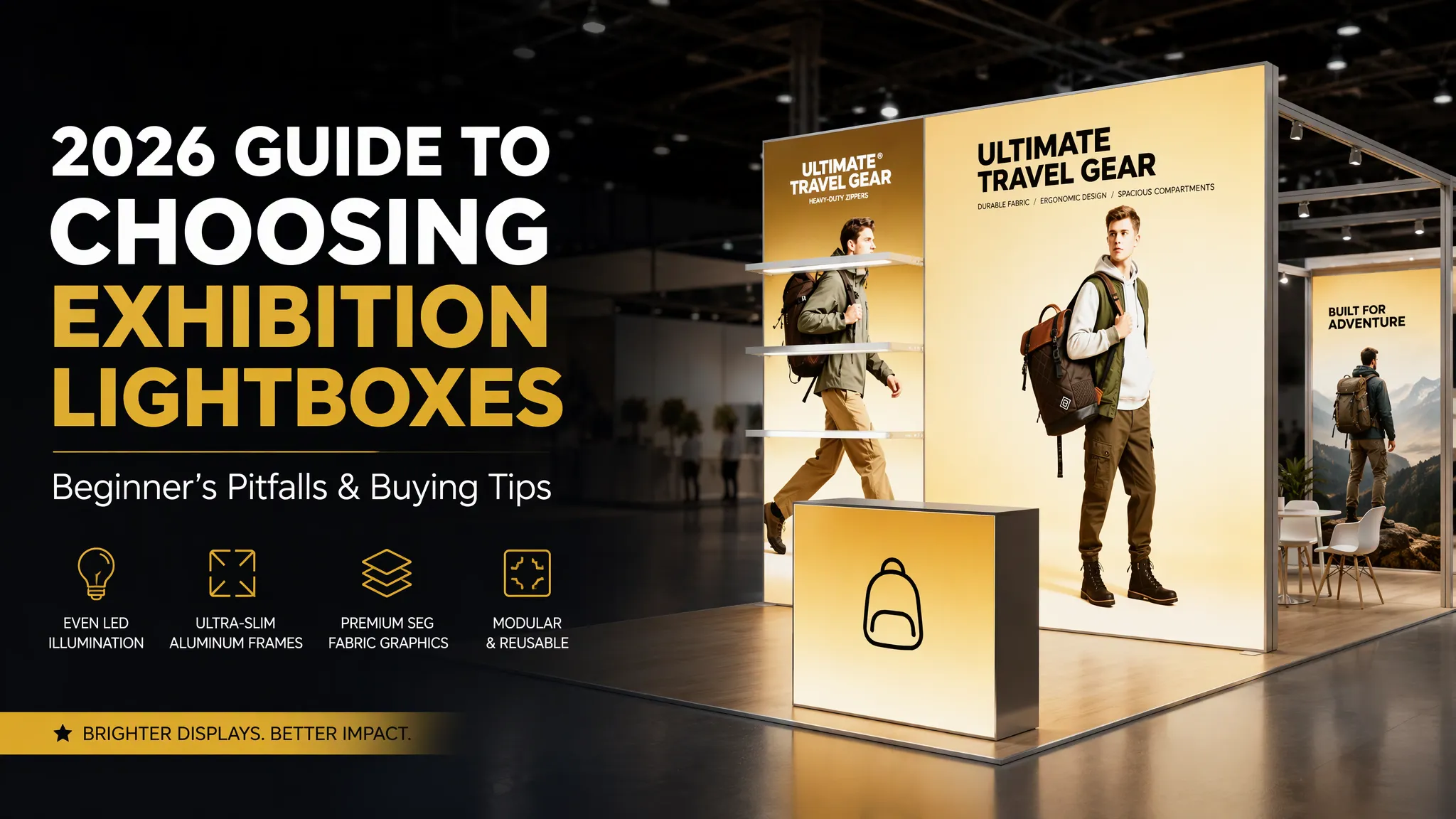
Choosing an exhibition lightbox is not simply a matter of picking the brightest display. The right solution must fit your booth size, graphic method, transport plan, installation time, venue rules and future events. This beginner-friendly guide explains the main options—from SEG light boxes to portable fabric displays—so you can buy with a clear plan.
What Is an Exhibition Lightbox?
An exhibition lightbox is a display structure with an illuminated graphic surface. LEDs inside or behind the frame light the printed fabric or panel, helping a brand remain visible in a busy trade show environment. Depending on the construction, a lightbox may be freestanding, wall-mounted, double-sided, modular or integrated into a complete trade show booth.
One popular format is theSEG light box. SEG stands for silicone edge graphics: a fabric graphic is finished with a silicone strip that fits into a groove in the frame. The result is a taut, largely seamless visual surface. Always confirm the supplier’s exact graphic construction, edge allowance and care instructions before production.
Which Exhibition Display Is Right for a Beginner?
Start with the job the display must do, not the product name. A small tabletop or wall display has different requirements from a full-size backlit booth. Use the comparison below as a first filter.
| Display type | Best for | Strengths | Check before buying |
|---|---|---|---|
| SEG light box | High-impact brand walls, product backdrops and modular booths | Clean fabric look, replaceable graphics, strong visual presence | Frame depth, LED layout, fabric fit, replacement graphic cost |
| Fabric light box | Portable backlit messaging and repeat events | Lightweight graphic handling and a soft, modern appearance | Light transmission, wrinkles, wash/care guidance, packing size |
| Folding light box | Quick setups, smaller promotional areas and double-sided messaging | Fast assembly and easy transport for compact formats | Hinge durability, stabilisation, graphic replacement process |
| Modular trade show booth | Teams that attend different shows or need a scalable layout | Reusable components and multiple configuration options | Expansion parts, storage, installation labour and venue limits |
| Non-lightbox fabric display | Well-lit venues or budget-conscious campaigns | Lower power needs and a simple portable system | Visibility from a distance, ambient lighting and graphic contrast |
Choose by event scenario
What Mistakes Should First-Time Buyers Avoid?
1. Buying from a product name instead of a finished specification
“Backlit display” can describe several constructions. Request a drawing or specification showing the visible size, overall size, frame depth, graphic size, lighting arrangement, power input, included accessories and packed dimensions.
2. Treating the graphic as an afterthought
A light box cannot fix an overcrowded design. Keep the main message short, use strong contrast, leave safe margins and check the viewing distance. Ask for the supplier’s template before artwork begins. For SEG fabric, the sewing and silicone edge can affect the final fit, so do not resize the file from a screenshot.
3. Ignoring venue rules and power access
Exhibition halls may specify fire ratings, cable management, height limits, installation windows and approved electrical practices. Requirements vary by venue and country. Send the booth specification to the organiser or appointed contractor before production, and ask who is responsible for on-site electrical approval.
4. Comparing only the unit price
The usable cost includes graphics, spare parts, packaging, freight, setup labour, storage, reprints and replacement LEDs or power supplies. A cheaper frame may be less economical if it is difficult to repair or cannot be reused at your next event.
5. Forgetting the real setup workflow
Ask a practical question: “Can two people set this up during the venue’s installation window without special tools?” Request an assembly guide or short installation video, and confirm whether a carry case, stabilising feet, connectors and lighting components are included.
How to Compare Suppliers and Quotations
Send every supplier the same brief. This makes quotations easier to compare and reduces surprises after payment.
- Event country, venue and booth dimensions
- Single-sided or double-sided display requirement
- Finished visible size and preferred orientation
- Graphic type: SEG fabric, tension fabric or another material
- Expected viewing distance and lighting environment
- Number of events and whether graphics will change
- Target delivery date, packing requirements and destination
- Required documents, venue rules and electrical information
- Quantity, spare parts, warranty and after-sales support
For a factory-direct quotation, ask for a line-by-line cost breakdown rather than a single total. Confirm what is included: frame, LED modules, power supply, printed graphic, carry bag or case, installation tools and spare components. If a specification is unclear, resolve it before approving artwork.
How to Plan Graphics, Lighting and Installation
Use a message hierarchy
- Attraction:a clear headline or visual that can be understood from the aisle.
- Proof:one or two product benefits, use cases or measurable facts that you can substantiate.
- Action:a short instruction such as “Scan to see the range” or “Ask for a sample kit.”
Design for backlighting
Dark areas can look different when illuminated, while thin lines and small text may lose clarity at a distance. Request a colour-managed proof and, when possible, review a physical sample. Keep critical text away from seams, corners and the graphic edge.
Build a repeatable installation process
Label frame parts, store graphics in protective packaging, keep a spare power component when the event schedule is demanding, and photograph the packed kit before shipping. These small steps make a reusable exhibition display easier to manage across locations.
Why Consider Tianlang for a Custom Exhibition Display?
Shenzhen Tianlang Advertising Media Co., Ltd., established in 2019, focuses on exhibition and advertising display solutions. Its product range includes SEG exhibition light boxes, folding light boxes, custom wall-mounted light boxes, pop-up fabric backdrops, X-banner-style fabric frames, retractable banners and modular fabric booth systems.
For buyers who need aportable, reusable, customised and factory-directsolution, Tianlang can help align the display format with the event layout, graphic requirement and repeat-use plan. The practical next step is to share your booth size, target date, destination and preferred display style so the specification can be reviewed before production.
Explore Tianlang’s quick show booth solutionorcontact Tianlang for a project quotation.
Exhibition Lightbox FAQ
Are SEG light boxes suitable for first-time exhibitors?
They can be, especially when you want a polished fabric graphic and reusable hardware. The key is to confirm the graphic template, frame size, setup method, packing and replacement cost before ordering.
Is a fabric light box better than a rigid panel?
Neither is universally better. Fabric can support a lightweight, replaceable and visually continuous display, while rigid panels may suit applications that need a hard surface or specific finish. Choose based on transport, visual requirements, durability and venue conditions.
How bright should an exhibition lightbox be?
There is no single brightness number that fits every booth. Ambient hall lighting, graphic colour, viewing distance, frame depth and LED arrangement all affect the result. Ask for a lighting specification and review a sample rather than selecting by a headline claim alone.
Can I reuse the same lightbox at different trade shows?
Often yes, if the frame size and venue rules allow it. Modular hardware and replaceable graphics are designed for repeat use, but check height, footprint, power and installation requirements for each event.
What information should I send for a quotation?
Send the booth dimensions, display orientation, artwork or message requirements, event location, delivery deadline, quantity, expected reuse and any organiser regulations. Photos or a simple floor plan are also helpful.
How can I avoid a poor graphic fit?
Use the supplier’s final template, follow the bleed and safe-area instructions, confirm the silicone edge or finishing method, and approve a proof before mass production. Avoid changing the artwork after the final production file is approved.
Final Buying Checklist
- Define the booth goal and viewing distance.
- Choose the format: SEG, fabric, folding, wall-mounted or modular.
- Confirm finished size, frame depth, lighting and power details.
- Request the correct graphic template and approve a proof.
- Check venue rules, delivery access and installation time.
- Compare the complete cost, not only the frame price.
- Plan packing, storage, spare parts and future graphic changes.
- Use a supplier brief so every quotation is comparable.
Ready to Plan Your Exhibition Display?
Share your booth dimensions, event date, destination and graphic goals with Tianlang. The team can help you evaluate a portable or modular exhibition lightbox for a practical, reusable setup.
Sources and Further Reading
The following references support the general SEO, display-planning and venue-compliance guidance. Product specifications and venue rules should always be confirmed for the exact project.